
What’s Included in Your Bike, Scooter Warranty and What’s Not
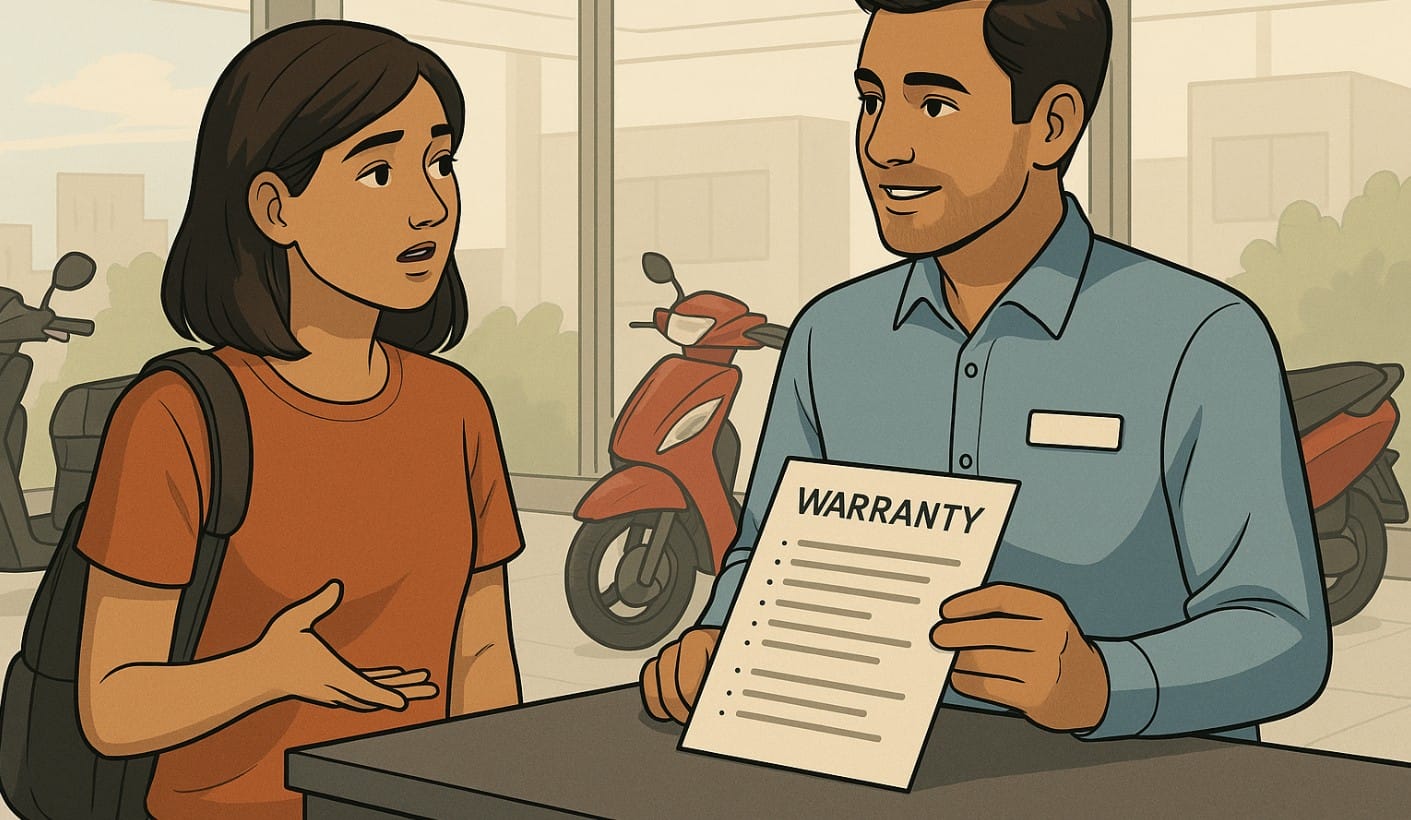
When you buy a new scooter or bike in India, you’re told it comes with a warranty sometimes for two years, sometimes five. But what does that really mean?
Most buyers assume that “warranty” means free repair for anything that goes wrong. But that’s not how it works. Every warranty comes with limits, exclusions, and conditions. And if you don’t follow the rules, you could lose the coverage without even realizing it.
Here’s what you really need to know about your two-wheeler’s warranty so you stay protected when it actually matters.
1. What’s Included in a Standard Manufacturer Warranty
A typical scooter or bike warranty in India covers:
- Engine parts (piston, crankshaft, valves, timing chain)
- Transmission and gearbox
- Fuel system (injector, fuel pump, carburetor)
- Electrical components like ignition coil or control unit
- Frame and chassis integrity
These are usually covered for 2 to 5 years, depending on the brand and model.
This coverage only applies to manufacturing defects, not issues from accidents, misuse, or normal wear.
2. What’s Not Covered Under Warranty (Even in a New Vehicle)
Your warranty won’t cover:
- Tyres, brake pads, clutch plates, spark plugs these wear out over time
- Plastic panels, seat covers, paint fading
- Damage from accidents, scratches, or dents
- Water damage from pressure washing or riding through deep water
- Routine maintenance like oil change, air filters, or wheel alignment
If it’s something that wears out over time or caused by external damage it’s not the company’s responsibility.
3. Should You Buy Extended Warranty?
Most brands now offer optional extended warranty for ₹1,000-₹5,000 depending on model.
What it includes:
- Longer coverage (up to 5-7 years total)
- Same coverage rules as the standard warranty
- Only on key components like engine, gearbox, and sometimes electricals
What it doesn’t include:
- New coverage types (you won’t suddenly get free tyres or paint jobs)
- Unlimited repairs limits may apply to certain claims
If you plan to keep the scooter long-term or ride heavily, it’s usually worth it for peace of mind.
4. What Voids Your Warranty (Even If the Bike Is Brand New)
This is where most people lose their coverage without realizing it:
- Missing free services or delaying scheduled maintenance
- Using non-genuine parts for repair or accessories
- Getting repairs done at unauthorized service centers
- Installing third-party electrical items (LED kits, wiring changes, loud horns)
- Water entry into engine or electronics
Stick to the brand’s official service plan, and always ask if something you add might void coverage.
5. EV Warranty: Battery, Motor & Charger – Treated Separately
If you’re buying an electric scooter:
- Battery warranty is usually separate 3 to 8 years depending on brand
- Some use time-based warranty, others use charging cycles
- Motor and controller may follow the main warranty period
- Software or app problems are usually only covered within the first year
- Charger, cables, and accessories are often excluded unless you buy extra coverage
Always ask: “What happens if the battery fails in year 4? Do I pay full or get partial support?”
6. What You Should Ask at the Showroom
Before buying, ask the salesperson:
- What’s included in the standard warranty?
- What’s not covered, even in the first year?
- How do I claim the warranty through this branch or any service center?
- If I move cities, can I get support elsewhere?
- What’s the cost and coverage of extended warranty?
If they hesitate to explain or brush it off, ask for the brand’s printed warranty guide.
Summary: Know the Limits Before You Need the Help
Warranty is like a contract not a bonus gift. You get protection if you follow the rules. You lose it if you skip the fine print.
So don’t just take the warranty booklet and throw it in the storage box. Read it once. Follow your service schedule. Don’t modify key parts. And ask questions when in doubt.
That way, if something really goes wrong, your support is still active and you won’t end up paying out of pocket for something that was supposed to be covered.

