
Are BLDC Fans Worth It? Compare Energy Savings & Performance vs. Regular Fans
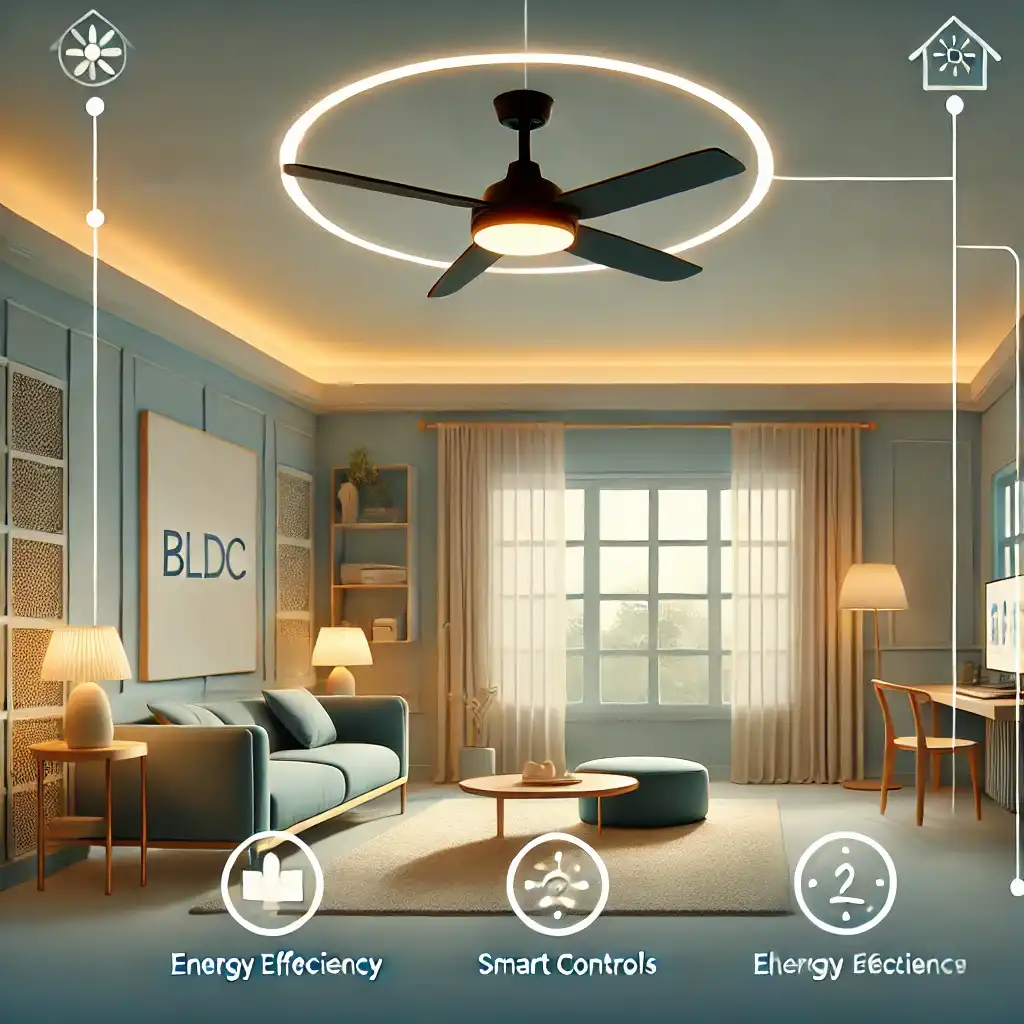
Fans are essential appliances in Indian homes, running for long hours daily. With electricity costs rising and a push for energy-efficient appliances, many buyers are considering BLDC (Brushless DC Motor) fans as a replacement for traditional induction motor fans.
But are BLDC fans truly worth the higher price? Do they actually reduce electricity bills? And how do they compare with regular fans in terms of cooling, durability, and long-term value?
This guide provides a detailed comparison of BLDC and regular fans, breaking down their power consumption, features, cost-effectiveness, and overall performance to help you make an informed decision.
1. What is a BLDC Fan and How Does It Work?
A BLDC fan uses electronic commutation instead of the traditional coil-based motor system found in regular fans. Instead of mechanical brushes, BLDC fans use permanent magnets and a smart electronic circuit to regulate speed and airflow.
How BLDC Fans Differ from Regular Fans
- No friction loss: Unlike regular fans that lose energy due to friction in the motor, BLDC fans use magnetic fields to rotate the blades smoothly.
- Electronic control: Instead of capacitors and coils, BLDC motors adjust speed through precise electronic switching, allowing better efficiency and quieter operation.
- More energy-efficient: These fans consume only 26W – 35W, while regular fans use 75W – 90W for the same air delivery.
2. BLDC vs. Regular Fans – Key Differences
| Feature | BLDC Fan | Regular Fan |
|---|---|---|
| Energy Consumption | 26W – 35W | 75W – 90W |
| Efficiency | 85-90% | 40-50% |
| Electricity Bill Savings | ₹1,500 – ₹2,500 per year | Higher energy costs |
| Noise Level | Silent operation | Can get noisy due to mechanical brushes |
| Motor Heating | Minimal heating | Can overheat with prolonged use |
| Performance on Inverter | Runs 3X longer on backup power | Consumes more energy, drains inverter faster |
| Control Features | Remote, Wi-Fi, Smart App | Manual, wall control |
| Lifespan | 10-15 years | 5-8 years |
| Initial Cost | ₹3,000 – ₹6,000 | ₹1,500 – ₹3,500 |
Key Takeaway:
- BLDC fans cost more initially but provide substantial long-term savings.
- They run cooler, last longer, and support smart features like remote control and voice assistance.
3. Are BLDC Fans Cost-Effective? Understanding Long-Term Savings
Many buyers hesitate to purchase BLDC fans because they are more expensive upfront. However, the real savings come from lower electricity bills.
Electricity Cost Savings (Per Fan, Per Year)
| Fan Type | Power Used Daily (12 Hours) | Monthly Electricity Cost (₹8/kWh) | Annual Electricity Cost |
|---|---|---|---|
| Regular Fan (75W) | 27 kWh | ₹216 | ₹2,592 |
| BLDC Fan (28W) | 10 kWh | ₹80 | ₹960 |
| Annual Savings per Fan | 17 kWh saved | ₹136 saved per month | ₹1,632 saved per year |
Break-Even Analysis: How Long Until a BLDC Fan Pays for Itself?
- Extra cost of a BLDC fan: ₹1,500 – ₹2,500 more than a regular fan.
- Annual electricity savings: ₹1,500 – ₹2,500 per fan.
- Break-even time: 1 to 2 years.
If you use a BLDC fan for 5-7 years, you can save ₹7,500 – ₹12,000 per fan just on electricity bills.
4. Benefits of Switching to BLDC Fans
1. Massive Energy Savings
BLDC fans consume 50-65% less electricity, making them ideal for homes where fans run 12+ hours daily.
2. Smart Features for Convenience
Most BLDC fans come with:
- Remote control for adjusting speed.
- Smart integration with Alexa/Google Assistant.
- Auto sleep mode and speed scheduling to save energy.
3. Better Performance on Inverters
During power cuts, BLDC fans draw less power, allowing them to run 3X longer on inverter backup than regular fans.
4. Quiet and Durable Operation
Unlike regular fans that generate motor noise, BLDC fans operate silently and have fewer mechanical parts, increasing their lifespan to 10-15 years.
5. Best BLDC Fans in India (2025)
| Model | Power Consumption | Control Options | Smart Features | Price (₹) |
|---|---|---|---|---|
| Atomberg Renesa Smart+ | 28W | Remote, App | Alexa, Google Assistant | ₹3,500 – ₹4,500 |
| Orient Electric I-Tome | 26W | Remote | Ultra-Low Power Consumption | ₹3,800 – ₹5,200 |
| Crompton Energion Hyperjet | 35W | Remote | High-Speed Airflow | ₹3,500 – ₹4,500 |
| Havells Stealth Air Smart | 32W | Remote, App | IoT, Silent Operation | ₹4,000 – ₹5,500 |
6. Should You Buy a BLDC Fan?
Yes, If You:
- Want to reduce electricity bills by ₹1,500 – ₹2,500 per fan annually.
- Prefer quieter operation for bedrooms and offices.
- Need longer runtime on inverters during power cuts.
- Want smart features like remote control, IoT integration, and timer settings.
- Plan to use the fan for 5+ years, making the cost savings worthwhile.
No, If You:
- Use fans only a few hours daily, where savings won’t be significant.
- Do not need smart features and prefer basic manual controls.
7. Final Thoughts – Are BLDC Fans Worth the Investment?
If you are considering replacing an old fan or upgrading to a new one, BLDC fans are a future-proof choice. They offer:
- Up to 65% lower electricity consumption.
- Better airflow control with remote and smart features.
- A lifespan of 10-15 years, making them a durable investment.
- Quick cost recovery within 1-2 years through electricity savings.
For homes where fans run throughout the day, a BLDC fan will pay for itself quickly while keeping energy bills low.
Verdict:
BLDC fans are absolutely worth the investment, providing long-term savings, efficiency, and convenience. If you are upgrading your home appliances for a smarter, energy-saving lifestyle, this is the best time to switch.

