
Find Headphone/Earphone That Fits Your Hearing, Comfort, and Daily Use
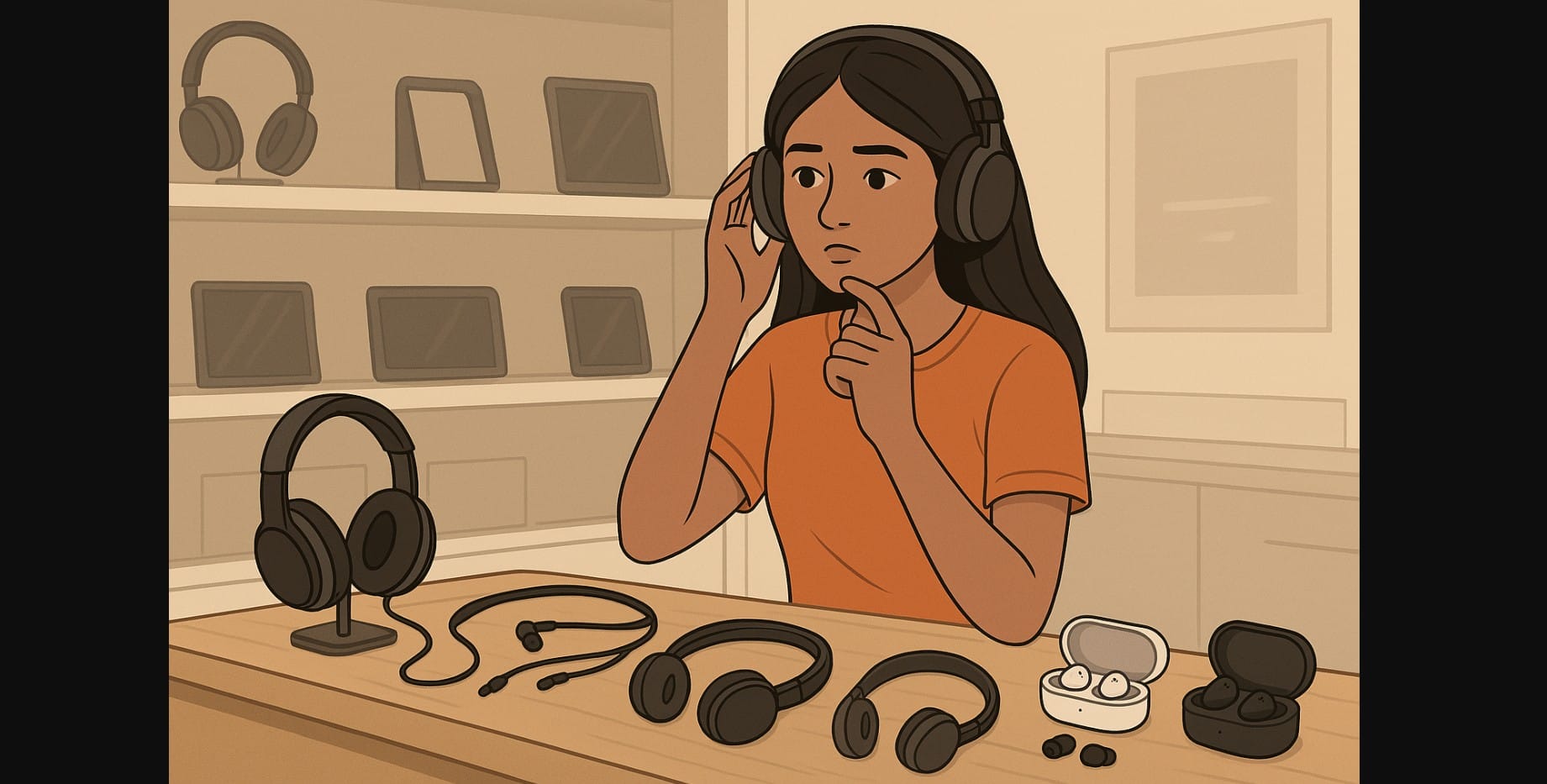
Many people in India buy audio gear based on bestsellers, discounts, or what a YouTube reviewer claims is “perfect.”
But what works for one person can easily feel wrong to someone else. You might end up with earbuds that hurt after 20 minutes, headphones that feel too tight, or speakers that sound too sharp.
The truth is, how you listen, where you listen, and what you listen to should shape your audio choices. No one else can decide that for you not even a review with millions of views.
1. First Look at Your Daily Headphone/Earphone Use
Start by understanding how and where you use audio:
- Are you usually at a desk, commuting, cooking, or multitasking?
- Do you use headphones for 10 minutes at a stretch or three hours at a time?
- Is your room quiet, shared, or full of background activity?
For example:
- Students attending online classes might need better call clarity and long-wear comfort
- Commuters need gear that cancels outside noise and stays in place
- People working from home may want something that handles calls and music equally well
- Those living in noisy areas need something that keeps outside sounds under control
When your environment is part of the decision, you avoid wasting money on features you’ll never use.
2. Your Hearing Preferences Are Unique
What sounds balanced to one person might feel too sharp or bass-heavy to someone else. If you’re unsure where you stand, pay attention to:
- Whether you often lower the volume even at low settings
- If you prefer softer vocals or energetic bass in music
- Whether background noise like fans or traffic ruins your focus
- If you find long listening sessions tiring, even at mid-volume
Some people hear higher frequencies more sharply, others need extra clarity in speech tones. If you’ve ever disliked a popular audio product, this might be why it wasn’t wrong, it just wasn’t built for you.
3. Good Fit Affects Sound More Than You Think
In Indian weather, the physical design of audio gear plays a big role in daily comfort:
| Type | Practical Use in India |
|---|---|
| In-ear earbuds (TWS) | Great for portability and noise isolation, but can irritate in heat |
| Over-ear headphones | Good for long learning sessions, less ideal in humid spaces |
| On-ear headphones | Handy for commutes, but pressure on ears builds over time |
| Neckbands | Easy for daily use and calls, but often compromise on sound detail |
Fit isn’t just about comfort it shapes how well you hear, how much outside noise leaks in, and how long you’ll actually use the product without removing it.
4. The Content You Listen To Should Guide Your Choice
| What You Mostly Hear | What to Prioritize |
|---|---|
| Podcasts or classes | Clear voice reproduction, no exaggerated bass |
| Music-heavy playlists | Good instrument separation, smooth lows |
| YouTube and OTT shows | Balanced audio with strong midrange |
| Spiritual or soft background audio | Gentle treble, consistent volume across tones |
| Games or editing tasks | Precision, directionality, and response time |
Choosing gear based on what you actually listen to prevents mismatch. There’s no point getting powerful bass if you mostly watch spoken-word videos.
5. Audio Fatigue Is Real And Often Ignored
If you feel discomfort while listening like a headache, ear pressure, or mental fatigue the problem might be your gear’s tuning or build. Watch for signs like:
- Needing breaks even during short sessions
- Sounds feeling too sharp or tinny
- Voices sounding distant or hollow
- Annoyance with Bluetooth delays or call distortion
Some ears are more sensitive than others. You may benefit from a smoother sound signature or wired options with lower latency. That’s not a limitation it’s just smart matching.
6. Noise, Heat, and Shared Spaces Change How You Hear
Indian homes and cities aren’t quiet by default. A passing bike, a TV in the next room, or a ceiling fan can interfere with how well you hear especially at low volumes.
This affects:
- Whether you need noise control
- How well your gear isolates or leaks sound
- If you need transparency modes to stay aware of surroundings
- Whether your setup stays comfortable in warm rooms
No product suits all situations. Urban noise might demand one type of mic and speaker setup, while a quiet rural space might require something more open.
7. Choose Audio Gear That Solves Your Listening Problems
Instead of chasing ratings or hype, focus on this:
- Do I hear dialogue clearly without turning up the volume?
- Can I wear this gear for as long as I need to, without removing it?
- Is the mic good enough for people to hear me without repeating myself?
- Do I enjoy the sound across the kind of media I use most?
When you answer these clearly, it becomes much easier to pick the right format, features, and fit no confusion, no regret.
Don’t match someone else’s definition of “best.” If you find bass tiring, avoid bass-heavy models. If you dislike sealed earbuds, go for open-fit. If you’re unsure about wireless, stick with wired until you’re confident.
Good audio gear isn’t about features alone it’s about how it fits into your day, your space, and your hearing comfort.

