
From Wattage to Safety – 10 Features That Define a Good Electric Kettle in India
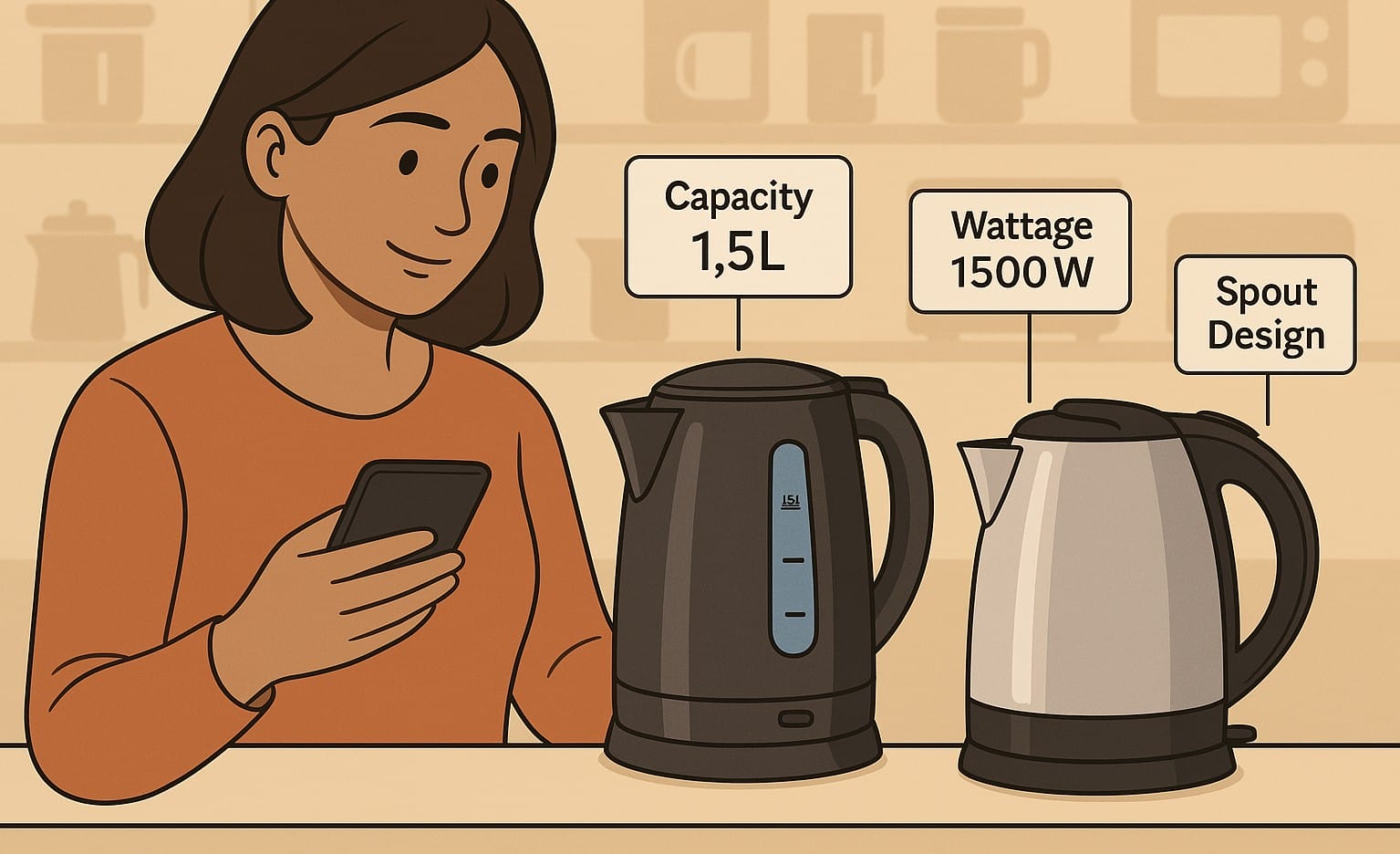
Electric kettles may seem like a plug-and-play appliance, but in Indian homes where water quality varies, sockets differ, and usage patterns range from one cup to family-sized batches, choosing the right features becomes essential. It’s not just about boiling water, it’s about boiling it safely, quickly, and without daily frustration.
Many buyers focus on brand or looks, but overlook details that directly affect how long the kettle lasts or how easy it is to clean. In this post, you’ll find the features that genuinely make a difference in Indian kitchens so you don’t end up replacing it within months or avoiding it after a few messy spills.
1. Capacity – Don’t Buy Bigger Than You Need
Electric kettles in India come in a range from 0.5 to 2 litres. The right size depends on how many people use it and how often.
| Capacity | Best For |
|---|---|
| 0.5 – 1.0 L | Solo use, travel, small kitchen counters |
| 1.2 – 1.5 L | Couples, nuclear families, 1-2 rounds/day |
| 1.8 – 2.0 L | Shared kitchens, big families, offices |
Why it matters:
- Larger kettles take longer to boil
- They consume more electricity if you regularly heat more than needed
- Small kettles are faster and easier to store
If you’re only boiling water for 1-2 cups, don’t buy a 2L model.
2. Wattage – The Right Balance Between Speed and Load
Most kettles in India range from 600W to 2000W. More wattage = faster boiling.
| Wattage | Suitability |
|---|---|
| 600-1000W | Slower but lighter on old sockets |
| 1200-1500W | Balanced for home kitchens |
| 1800-2000W | Fastest, best for heavy or repeated use |
Caution: High-wattage kettles require a proper 15A socket plugging them into weak extensions is risky.
For most Indian homes, 1500W hits the sweet spot.
3. Auto Shutoff and Boil-Dry Protection – Essential Safety
You should never buy a kettle without both of these.
3.1 Auto Shutoff
- Turns off the kettle once water reaches boiling
- Prevents overheating and saves power
- Especially important in homes with elders or multitasking cooks
3.2 Boil-Dry Protection
- Detects if the kettle is empty or nearly dry
- Cuts power to avoid burning the coil
Both features are standard in good models but double-check before buying.
4. Mouth Opening – Wider is Always Better
Narrow-neck kettles may look sleek, but they’re difficult to clean. A wide-mouth design:
- Makes it easier to scrub or wipe the interior
- Prevents leftover residue buildup
- Allows better air drying after cleaning
Essential if you live in a hard water zone or use the kettle daily.
5. Lid Type – Affects Cleaning, Filling, and Safety
| Lid Type | Pros & Cons |
|---|---|
| Flip-up or hinged | One-hand operation, great for pouring; harder to clean inside |
| Detachable lid | Full access for cleaning, but easier to misplace |
| Push-button release | Easy to use but fragile on low-end models |
Hinged lids are good for daily use. Detachable ones suit those who prioritize cleaning.
6. Cord Length and Base Type – Don’t Overlook This
6.1 Cord Length
- Look for at least 1 metre too short = hard-to-reach sockets
- Cheap models often have cords that limit placement
6.2 Base Type
- 360° Swivel base lets you place the kettle in any direction
- Detachable base means safer pouring and easier storage
- Fixed-base kettles are cheaper but less convenient
A good base improves ease of use more than most people expect.
7. Handle Grip and Weight Balance – A Daily Comfort Issue
A kettle that’s heavy or awkward to hold will frustrate you quickly.
- Look for a solid, non-slip handle with enough space for fingers
- Avoid handles that feel thin, sharp, or heat up
- Test how it feels when filled it should remain balanced and steady
You’ll be using it daily comfort matters.
8. Spout Design – Small Detail, Big Impact
Poorly designed spouts lead to water spills, messy counters, or even burns.
- Look for a sharp, well-angled spout for drip-free pouring
- Avoid spouts that are too wide or blunt
- Some high-end models even include a mesh filter to trap residue
Don’t ignore the pour it affects every use.
9. Inner Material and Descaling Ease
| Interior Type | Cleaning Notes |
|---|---|
| Stainless steel | Most durable and easy to descale |
| Glass | Shows residue quickly, easy to wipe |
| Plastic | Only if BPA-free, and for light use only |
If you live in a hard water area (Delhi, Jaipur, Hyderabad, etc.), make sure the model supports descaling with vinegar or citric acid.
Look for a model that doesn’t hide the cleaning instructions.
10. Electric Kettle Extra Features Worth Having (Only If You’ll Use Them)
- Keep-warm mode – Useful for slow sippers or shared kitchens
- Water level indicator – Helps avoid overfilling
- Silent boil – Reduces click/pop noise while heating
- Removable filters – Keeps your tea or water cleaner
These features are helpful, but don’t compromise safety or cleaning ease to get them.
Summary – Don’t Buy Blind
In India, electric kettles are used for everything from morning green tea to evening hot water prep. But many people buy based on brand or looks alone and end up with models that overheat, spill, or break down too fast.
If you’re buying one, prioritize:
- Safe wattage
- Comfortable pouring
- Easy cleaning
- Smart shutoff
Skip the guesswork and sales fluff. Focus on what fits your routine.

