
Indian Dishwasher Maintenance Made Easy – Filters, Loading, Cleaning
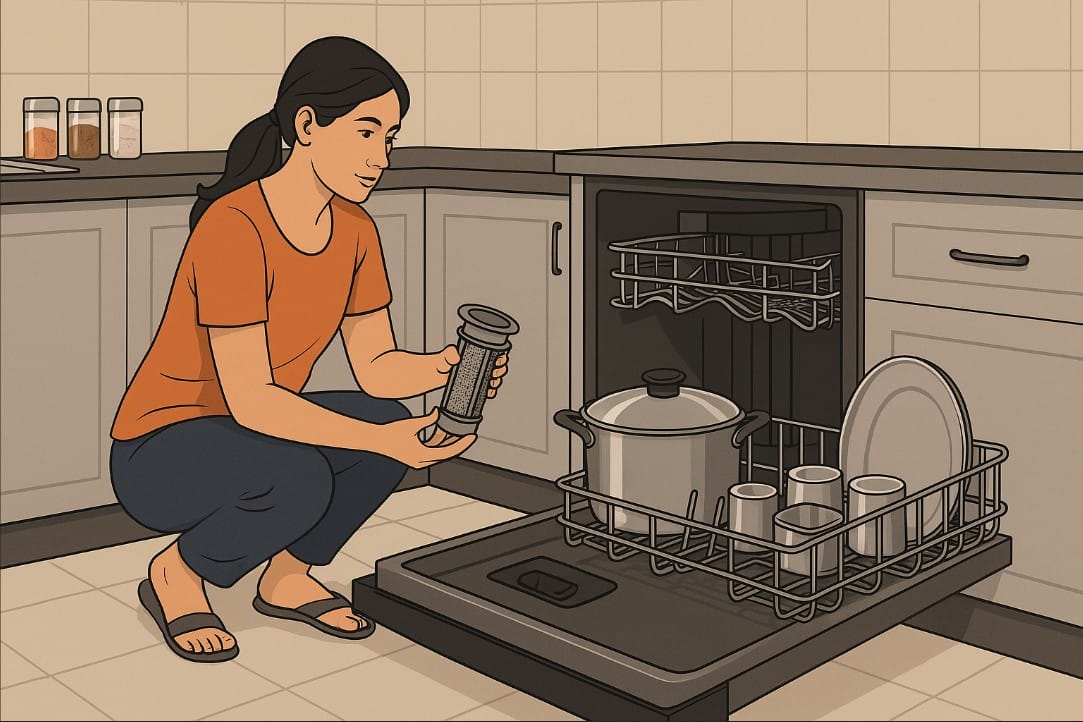
A dishwasher is a big time-saver in Indian homes, but if you don’t use it the right way, it can start giving you half-clean utensils, foul smells, or worse completely stop working.
The good news? You don’t need fancy tools or professional servicing. Just a few simple habits like cleaning the filter, placing utensils the right way, and running an empty cycle now and then can keep your dishwasher running smoothly for years.
This guide shows you exactly how to maintain your dishwasher for Indian cooking from greasy masala to steel dabbas without wasting time or making mistakes.
1. Clean the Filter – The Most Important Step of Dishwasher You Can’t Ignore
Every dishwasher has a filter basket at the bottom this traps leftover food, oil, and masala particles from your plates.
How to do it:
- Open the bottom rack
- Twist and lift the filter out (no tools needed)
- Rinse it under running water
- Use a soft brush to remove stubborn residue
- Wipe the filter compartment with a cloth
- Reinsert it it should click back into place
Do this once a week if you cook daily. A clogged filter is the #1 reason your dishwasher smells or doesn’t clean well.
2. How to Place Indian Utensils Properly (Dishwasher Loading Matters More Than You Think)
Most people don’t realize that bad loading = bad cleaning. Even if your dishwasher is working fine, blocked spray arms or overcrowded racks can ruin results.
Here’s how to do it right:
Lower Rack – Heavy and Greasy Utensils
- Place kadhai, patila, and pressure cooker bodies here
- Angle them upside down, tilted so water can drain
- Keep space between them don’t nest
- Do not block the central spray arm
Upper Rack – Lighter and Smaller Items
- Place bowls, cups, dabbas, lids, and small plates
- Tilt bowls and dabba to face down for better cleaning
- Avoid placing anything tall that blocks the upper spray arm
Cutlery Basket or Tray
- Place spoons, forks, and knives handle-down (unless sharp)
- Don’t overload keep some separation for water flow
- Avoid large ladles or steel spatulas here
3. Do NOT Load These
| Utensil | Why Not |
|---|---|
| Aluminum | Turns black, corrodes |
| Brass / Copper | Discolors, reacts with detergent |
| Wooden spoons | Warp, crack, absorb water |
| Nonstick pans (most types) | Coating may peel off |
| Plastic containers without marking | May deform or melt |
4. Clean the Dishwasher Spray Arms (Every 2-3 Weeks)
If utensils aren’t getting fully clean, check if the spray arms are blocked.
How:
- Pull out both racks
- Twist and remove the lower and upper spray arms
- Rinse under water
- Use a toothpick to unblock small holes
- Reinsert securely
Don’t ignore clogged spray arms especially if you use lots of oily masala dishes or rice-based meals (which leave starch residue).
5. Run a Monthly Deep Clean (Takes 10 Minutes)
Once a month, run an empty wash cycle with one of these:
- Dishwasher cleaner liquid (e.g., Finish, IFB)
- White vinegar (1 cup in a bowl on top rack) + baking soda (sprinkled on bottom)
This clears:
- Grease buildup
- Odours from leftover food
- Limescale from hard water
6. Use the Right Detergent, Salt & Rinse Aid
Using regular dish soap is a common mistake it creates excess foam and damages the machine.
Use:
- Dishwasher detergent (tablet, powder, or gel)
- Dishwasher salt – essential in hard water areas (prevents limescale)
- Rinse aid – helps with drying, especially on steel and glass
If your utensils feel cloudy or water-stained, you’re likely missing rinse aid or salt.
7. Keep the Door Slightly Open After Each Wash
After every cycle:
- Open the door partially and let it stay ajar for 10-15 minutes
- This allows steam to escape and avoids moisture buildup
Prevents foul odour, mold, and keeps seals in good condition.
8. Descale Your Dishwasher Every 3-4 Months (If You Live in Hard Water Areas)
If you live in:
- Delhi NCR
- Chennai
- Ahmedabad
- Pune (some parts)
You should run a descaling cycle every few months using a descaler powder.
Look for white chalky residue on the heating coil or dull utensils that’s a sign of limescale.
Summary – Small Habits Keep Your Dishwasher Performing Like New
| Task | Frequency | Why It Matters |
|---|---|---|
| Clean filter | Weekly | Keeps drainage and cleaning efficient |
| Clean spray arms | Monthly | Removes food blocks and oil buildup |
| Deep clean (empty run) | Monthly | Prevents odour, grease, and smell |
| Descale | Every 3-4 months | Hard water protection |
| Use salt & rinse aid | Ongoing | Better wash + drying, no spots |
| Place utensils properly | Daily | Avoids poor cleaning and damage |
A dishwasher is meant to save you effort, not create new chores. But like any hardworking appliance, it needs a bit of regular care especially in Indian kitchens, where oily cookware and heavy meals are the norm.
If you clean the filter once a week, avoid blocking the spray arms, and use the right detergent and salt, you’ll avoid 90% of the problems that make people give up on dishwashers.
Just a few smart routines and your dishwasher will stay fresh, clean, and reliable every single day.

