
Solar DIY vs Professional Installation – True Cost, Safety & Eligibility Compared
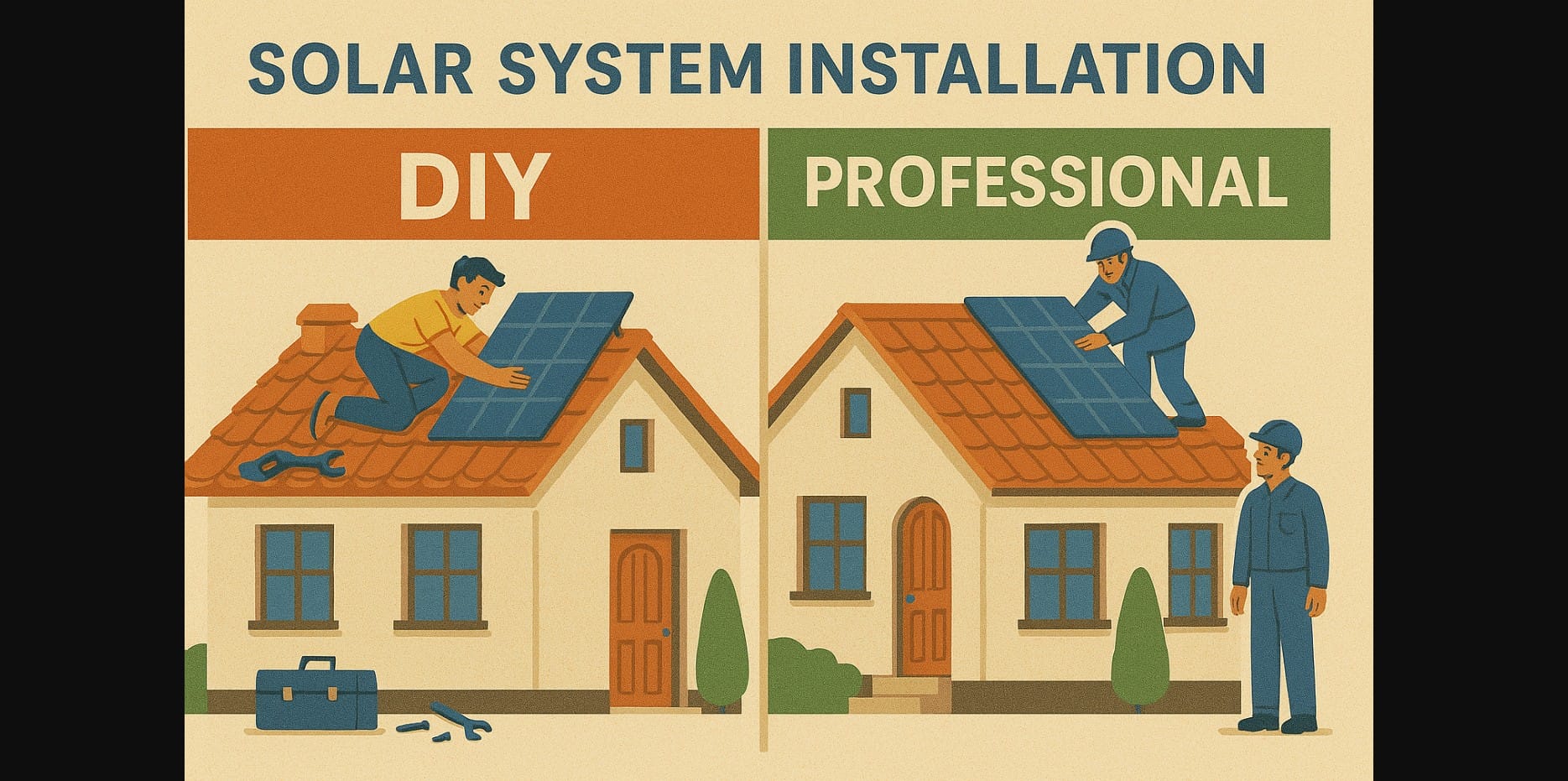
With online videos, solar kits on e-commerce sites, and rising electricity costs, it’s tempting to think why not install solar panels myself and save even more?
DIY solar sounds like a budget-friendly shortcut. And in some limited cases, it might be. But when it comes to grid-connected rooftop solar in India especially with subsidies, net metering, safety rules, and electrical risks DIY can quickly turn from smart to costly.
Here’s a clear, side-by-side comparison of DIY vs professional solar installation in India so you can make the right choice for your home.
1. What You Pay (and What You Miss) with Each Path
Do-It-Yourself Solar Setup Costs
- Buy panels, inverter, wiring, and mounts yourself
- No installer fee or labor cost
- You may save ₹20,000-₹40,000 for a 1-3 kW system
But
- You don’t get the government subsidy
- You may not qualify for net metering
- Hidden costs: tools, safety gear, mount fabrication, bad wiring corrections
Professional Solar Power Installation Costs
- System cost includes: design, installation, wiring, labor, service
- Eligible for PM Surya Ghar subsidy (up to ₹78,000)
- Installer handles net metering and DISCOM paperwork
A 3 kW professional setup costs around ₹1.5-1.8 lakh before subsidy, and ₹90,000-1.1 lakh after subsidy. So yes, DIY is cheaper upfront but only if you don’t factor in missed benefits and possible mistakes.
2. How Much Time and Skill Does DIY Really Demand?
Installing solar yourself isn’t just about fixing a few panels and plugging in wires. It includes:
What You’ll Need to Learn
- Wiring high-voltage DC circuits safely
- Proper tilt angle and direction for your region
- Load calculations and inverter sizing
- Local DISCOM safety norms and net metering rules
Time Investment
- Research: 1-2 weeks to learn system design and safety
- Procurement: 4-7 days to source all parts
- Installation and testing: 3-5 full days
- Net metering (if attempted): up to 1 month (and likely rejections if not compliant)
Unless you’re an electrical engineer or solar technician, this learning curve can be steep and risky.
3. Safety and Compliance Risks of DIY in India
High-Voltage DC Risk
Solar panels generate 30-50 volts per panel. A 3 kW setup can easily produce 100-400V DC enough to cause serious shock or fire if mishandled.
Improper Mounting
Loose or weak structures can lead to:
- Roof leaks during monsoon
- Panel detachment in strong winds
- Safety hazards during cleaning
No Legal Grid Connection
Without a DISCOM-approved inverter, earthing system, and compliance certificate, your setup:
- Won’t qualify for net metering
- Can be disconnected during inspection
- May void your home insurance during fire or surge claims
4. Maintenance and Warranty: Who Has Your Back Later?
DIY Installations
- No installer = no one to troubleshoot inverter errors
- Panels and inverters may not be covered if installation is faulty
- Replacement or upgrade later can be hard if your setup isn’t standard
Professional Installations
- Most vendors offer 5-25 year component warranties
- Optional AMCs include cleaning and annual checks
- Inverter alerts or faults can be resolved by service teams
5. DIY vs Professional Solar Installation Comparison
| Factor | DIY Solar | Professional Installation |
|---|---|---|
| Upfront Cost | Lower (₹45K-₹75K for 1-2 kW) | Higher (₹70K-₹1.9L, but eligible for subsidy) |
| Govt Subsidy | Not eligible | ₹30,000-₹78,000 (via MNRE portal) |
| Net Metering | Hard to arrange, often rejected | Managed by approved installer |
| Installation Quality | Depends on personal skill and effort | Done by trained technicians |
| Safety Compliance | No official safety check | DISCOM-compliant + certified components |
| Long-Term Reliability | Risk of poor performance or system fault | Service support and warranty coverage |
| Recommended For | Remote farms, off-grid DIY users | Homes wanting grid-tied savings and reliability |
6. When Does DIY Solar Make Sense in India?
You can consider DIY if:
- You want to power a small off-grid device, shed, or borewell
- You’re technically confident and can handle wiring and mounting
- You don’t need net metering or government subsidy
- You’re installing below 1 kW for trial or learning purposes
7. For Most Homeowners, Professional Installation Is the Safer Bet
Especially if you:
- Want to lower your monthly electricity bills
- Want access to government subsidy and net metering
- Live in a city or semi-urban area with DISCOM compliance rules
- Prefer to avoid the risks of doing it alone
Remember, a solar system isn’t just a one-time gadget. It’s a 20-year power investment on your rooftop. What saves a few thousand today can cost much more tomorrow if it’s installed wrong.

