
The 108 MegaPixels Trap: Why Your Smartphone Camera Still Takes Bad Photos
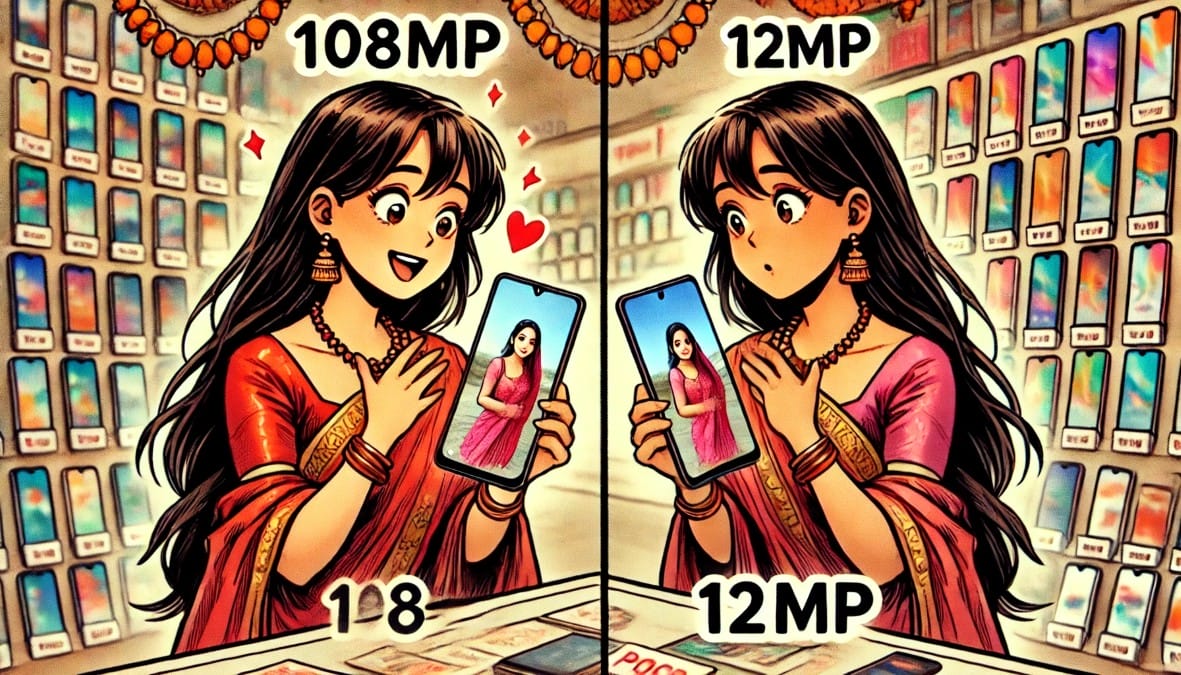
When you walk into a mobile store or scroll through online offers, every phone seems to shout 50MP, 64MP, 108MP. It’s natural to think a higher megapixel count means a better camera.
But that’s not always true.
Many people in India buy phones based only on the megapixel number, only to find that their photos look dull, blurry, or bad in low light. On the other hand, some budget phones with fewer megapixels can surprise you with great results.
This post breaks down what really makes a phone camera good — in simple terms, without technical confusion. Whether you click family photos, temple visits, selfies, or festival moments, you’ll understand what to look for in a camera beyond just the numbers.
1. What Megapixels Actually Do (And What They Don’t)
Megapixels (MP) refer to how big your photo can be. More MP means:
- You can zoom or crop more
- You can print large photos clearly
But it doesn’t mean:
- Your photo will look better on WhatsApp, Instagram, or your phone screen
- Colours, sharpness, or skin tones will be accurate
- Night photos will improve
In real-life use, 12MP or 50MP can be enough if the phone’s sensor and software are good.
2. What Indian Phone Buyers Should Really Focus On
A. Sensor Size (Even if Megapixels Are Lower)
- Bigger sensors capture more light — better for indoor and night photos
- Brands like Sony (IMX) or Samsung (ISOCELL) make popular camera sensors
- These matter more than just the megapixel count
Many phones under ₹15K now offer decent 50MP sensors with good daylight quality. Don’t chase 108MP unless you know it’s backed by a good sensor.
B. Photo Quality on WhatsApp, Instagram, and Family Albums
If you’re sharing photos with friends or on WhatsApp:
- Phones automatically compress photos
- Even a 12MP photo looks great
- What matters more is colour, clarity, and skin tone balance
So ask yourself — does this phone make faces look natural? Does it handle backlighting well?
C. Good Image Processing (Not Just Hardware)
A good camera phone needs smart software to:
- Remove noise
- Brighten dark spots
- Make colours look natural
- Avoid fake skin whitening
Phones like Google Pixel and iPhones use smart processing to deliver sharp, realistic images — even with lower MP counts.
Many Indian phones (Realme, Redmi, Samsung) also use AI filters. Try them in store or check real photo samples before you buy.
D. Front Camera Isn’t Just Selfies – It’s Your Daily Use Camera
In India, people use the front camera a lot for:
- Video calls on WhatsApp
- Online classes and Zoom
- Front camera selfies at temples or functions
Look for:
- 8MP or 13MP with wide-angle lens
- Natural skin tone
- Fast focus in sunlight or mixed lighting
Don’t pick a phone with a high MP front camera if it makes faces look washed out or unnatural.
E. Night Photography Is Still a Struggle for Budget Phones
- Even a 108MP phone may perform badly in low light
- Look for Night Mode in camera settings
- A wider aperture (f/1.8 or f/1.9) helps in festivals, birthday parties, or indoor lighting
For most Indian buyers under ₹15,000–₹20,000, low-light will be the weak point. Don’t expect miracles — check if the phone clicks stable, usable images at night.
F. Ignore the Extra Cameras (Macro, Depth, AI)
Most phones now show 3 or 4 cameras — but often:
- 2MP macro = poor close-up quality
- AI or depth sensor = mostly for marketing
- Ultrawide = useful, but quality varies
Your main camera does 90% of the work. Focus on that instead of total camera count.
Practical Use Cases – What You Should Look For
| You Mostly Use Camera For… | Look For This |
|---|---|
| Family photos, travel, festivals | 50MP+ with good daylight colours, auto HDR, AI mode |
| WhatsApp sharing, Instagram | Balanced colour, sharp details, 12–64MP with software optimization |
| Night or indoor photos | Night mode, f/1.8–f/2.0 aperture, larger sensor preferred |
| Selfies, video calls | 8MP+ front camera with wide angle and skin tone accuracy |
| Kids’ sports, motion capture | Stabilization (EIS or OIS), fast focus, burst mode |
Final Thoughts – Don’t Fall for Megapixels
You don’t need a 108MP phone to take a good photo and a higher number doesn’t guarantee better results. What truly matters is how your phone handles light, colour, focus, and processing.
Before choosing your next camera phone, look for:
- A good main sensor with balanced colours
- Reliable front camera with natural skin tones
- Night mode or better low-light support
- Real-world photo samples (not just specs)
If your photos are mostly for WhatsApp, social media, or personal memories focus on photo quality, not megapixel hype.
A phone that takes clear, natural photos will serve you far better than one that just looks great on paper.

