
Compare electric and petrol scooters or bikes based on cost, charging, range, and daily usability
One of the biggest choices Indian two-wheeler buyers face is whether to go electric or petrol. Petrol vehicles have been the default for decades reliable, widespread, and familiar. But electric two-wheelers are now everywhere in cities, promoted as the future of transport.
So, should you switch to an EV or stick with what’s tried and tested?
This guide compares both options side by side based on real Indian usage, not just brochure claims to help you decide what fits your lifestyle, roads, and budget.
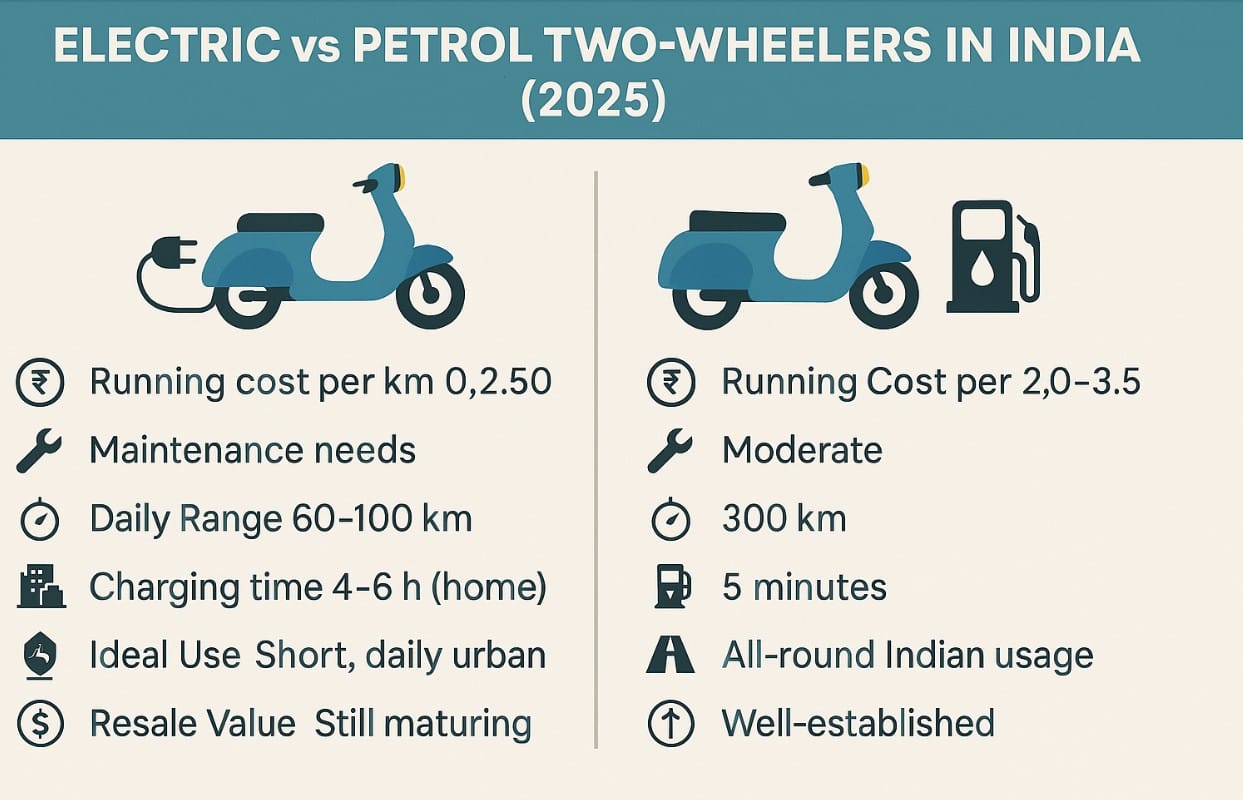
Quick Comparison: EV vs Petrol Two-Wheelers in India
| Feature | Electric Vehicle | Petrol Two Wheeler |
|---|---|---|
| Running Cost per km | ₹0.25 – ₹0.50 | ₹2 – ₹3.5 |
| Maintenance Needs | Low | Moderate |
| Daily Range (Realistic) | 60-100 km | 300-500 km |
| Refueling/Charging Time | 4-6 hrs (home) | 5 mins |
| Road Noise/Vibration | Silent and smooth | Moderate engine noise |
| Pollution | Zero tailpipe emissions | Emits CO2 and pollutants |
| Availability (Pan India) | Limited | Universal |
| Resale Value | Low (as of 2025) | Stable |
| Ideal For | Short, city-only travel | Mixed use, long rides |
1. What’s the Actual Difference?
Petrol two-wheelers run on internal combustion engines and need regular refueling, oil changes, and servicing. They’re available in a wide range from gearless scooters to high-performance bikes and are supported everywhere in India.
Electric two-wheelers (EVs) are powered by rechargeable batteries and don’t use petrol. They run quietly, require fewer moving parts, and are cheaper to operate. However, they depend heavily on where and how you can charge them.
So the real difference isn’t just the fuel. It’s in daily experience, cost, maintenance, and flexibility.
2. Upfront and Ongoing Costs Compared
Initial Price
EVs still cost more than petrol two-wheelers before subsidies, but the gap is shrinking.
- Electric scooter average: ₹1.0L-₹1.5L
- Petrol scooter/bike average: ₹75,000-₹1.3L
- Subsidies: FAME II + state benefits (up to ₹15,000-₹25,000 for EVs)
If you qualify for subsidies and live in a state with incentives, the price difference may be negligible or even in favour of EVs.
Running Cost per km
- EVs: ₹0.25 to ₹0.50/km (charging at home)
- Petrol: ₹2.5 to ₹3.5/km (at ₹100/litre and 40-50 km/l mileage)
If you ride daily, EVs start saving money very quickly. For someone commuting 30 km/day, the fuel savings can cross ₹20,000/year.
Servicing and Maintenance
- Petrol vehicles need regular oil changes, spark plug replacements, air filters, and clutch maintenance.
- EVs have no engine oil, no gearbox, and fewer wear parts. However, battery health and electronics become the key concerns.
In general, EVs are cheaper to maintain but you’ll eventually face battery replacement costs after 4-6 years, which can be expensive.
3. How Far Can You Travel?
| Type | Range on Full Tank/Charge | Notes |
|---|---|---|
| Petrol Scooter | 300-500 km | Refuels instantly |
| Electric Scooter | 60-120 km | Depends on speed, load, weather |
If your daily travel is under 30-40 km and you can charge at night, EVs are perfectly usable. But for longer routes or unpredictable travel, petrol still gives unmatched flexibility.
4. Charging vs Refueling: Experience in India
Petrol
- 100% coverage across India
- Takes less than 5 minutes to refuel
- No dependency on location, backup power, or weather
Electric
- Charging at home is most convenient (but not available to everyone)
- Public chargers exist in metros like Delhi, Pune, Bengaluru, but are limited
- Charging time: 4-6 hours (home), 1-2 hours (fast charging)
- Some brands offer roadside assistance and battery swap options
5. Where Each Works Best
| Scenario | Better Option | Why |
|---|---|---|
| Daily city commute < 30 km | Electric | Low cost, smooth ride, no gear hassle |
| Rural, small-town roads | Petrol | Easier refueling, better service access |
| Multiple trips daily | Petrol | Quick refuel, high range |
| Home charging available | Electric | More affordable and convenient |
| No access to charger/parking | Petrol | No infrastructure dependency |
| High resale or brand flexibility | Petrol | Strong second-hand market |
6. What’s Changing in 2025?
- More EV brands like Ola, Ather, TVS, and Bajaj have expanded service networks in major cities
- Battery swap stations are emerging but still limited to pilot projects
- State policies (like Delhi, Maharashtra) offer better subsidies and free registration for EVs
- EV financing is now more accessible, with lower EMIs and interest rates from banks
However, charging infrastructure in Tier 2/3 towns is still patchy, and resale value of EVs is not well-established yet.
7. What About Resale?
Petrol vehicles have a clear resale market in India prices vary by brand, condition, and mileage, but there’s always demand.
For EVs:
- The resale market is new and untested
- Battery health is a major concern for second-hand buyers
- Market value is uncertain due to changing tech and warranty limitations
So if resale is important, petrol is a safer choice today.
8. Final Decision Guide
Ask yourself these five questions:
- Is your daily travel under 40 km? – EV can work well
- Do you have space to charge at home overnight? – EV makes sense
- Do you need a vehicle that works anywhere, anytime, no matter the terrain or town? – Petrol is more reliable
- Are you planning to keep the vehicle 5+ years? – EV’s battery cost may affect long-term value
- Is resale or loan flexibility a top priority? – Petrol wins for now
Electric two-wheelers are here to stay and for city users with predictable routines, they offer unmatched savings and comfort.
But for riders outside metros, or for those who need long range, resale assurance, or roadside flexibility, petrol still holds the edge.

