
Compare Solar Expansion and Energy Efficiency for Homes
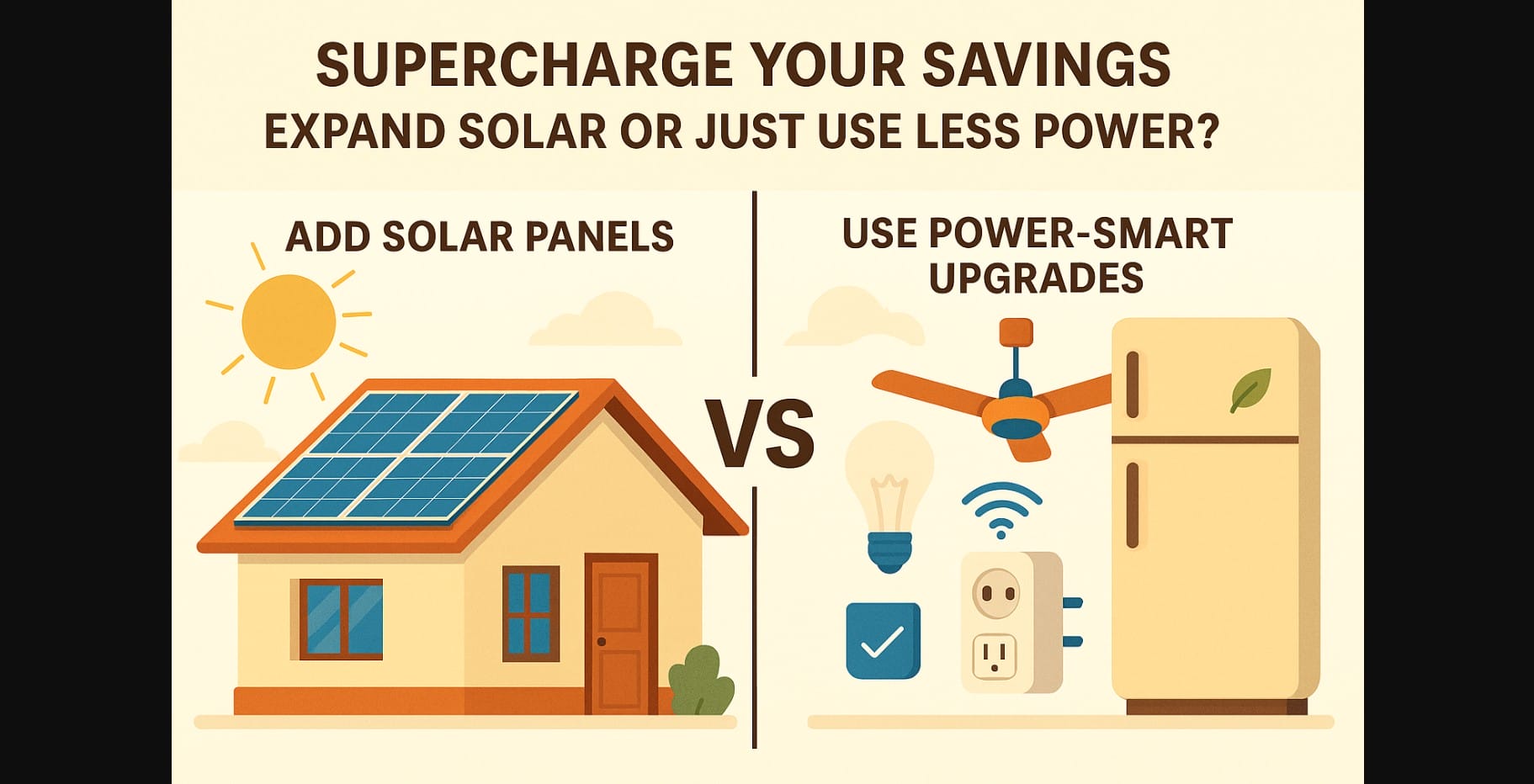
You’ve installed solar, but your electricity bill hasn’t disappeared. Now you’re asking:
- Should I add more panels to bring it down further?
- Or should I reduce my consumption instead?
This is a common dilemma for homes especially in urban and semi-urban areas where:
- Usage changes with seasons
- Appliances run day and night
- Grid dependency remains after sunset
Both options panel expansion and energy efficiency can help. But which gives you better value, faster savings, and longer-term control? Let’s break it down.
1. Are You Using Your Current Solar Setup Properly?
Before deciding on expansion or upgrades, check these 4 things:
| Check | Why It’s Important |
|---|---|
| Are your high-load devices running during the day? | Solar offsets daytime usage, not night-time |
| Is your inverter’s capacity already near full? | If yes, adding panels may require inverter change |
| Are you exporting large units to the grid? | You may not benefit much from more generation |
| Are your night-time appliances drawing grid power? | Efficiency upgrades may help more than panels |
If your solar is under-utilized, expansion won’t fix the problem but smart usage might.
2. When Adding More Solar Panels Actually Makes Sense
Here are situations where expanding your system offers real benefits:
- Your power consumption has increased
Maybe you’ve added a new fridge, washing machine, or another family member is now at home during the day. - You have a hybrid inverter and want to add batteries later
More panels will help recharge your battery faster and power more loads during the day. - You’re eligible for net metering without export caps
If your state allows full net metering, adding panels can earn you credit for excess units. - Your inverter has unused input capacity
If you’re currently using only 70-80% of your inverter’s capacity, adding 1-2 panels is a cost-effective upgrade.
Adding panels is a good idea only if your inverter, roof space, and usage pattern can support it.
3. When Cutting Power Consumption Is a Smarter Choice
For many Indian homes, energy efficiency offers faster savings at lower cost. Here’s why:
| Upgrade | Why It Works |
|---|---|
| Replace old ceiling fans with BLDC | Saves up to 60% power per fan, runs silently and cooler |
| Switch to inverter fridge | Fridges run 24/7 switching can cut ~30-40% of its draw |
| Add smart timers to geysers/pumps | Prevents unnecessary drain and idle run |
| Replace old tube lights with LEDs | LED tubes use 60-80% less energy with same brightness |
| Turn off standby loads | Devices like routers, TVs, and printers consume idle power |
These upgrades not only lower your bill they also reduce the size of solar system you’ll ever need.
4. Solar Expansion vs Power Efficiency
Let’s compare common solar panel expansion with basic upgrades:
| Action | Cost (₹) | Monthly Savings | ROI Timeline |
|---|---|---|---|
| Add 2 panels (600W) | ₹20,000-25,000 | ₹300-₹500 | 4-5 years |
| Replace 3 fans with BLDC | ₹9,000-₹12,000 | ₹200-₹350 | 2-3 years |
| Replace fridge with inverter model | ₹14,000-₹18,000 | ₹250-₹400 | 2.5-4 years |
| Add timer to pump/geyser | ₹2,000 | ₹100-₹200 | 1-1.5 years |
| Use smart plugs for standby control | ₹1,500 | ₹100-₹150 | 1 year or less |
Small upgrades = faster ROI, easier maintenance, and often more effective than adding panels.
5. How to Make the Right Call for Your Home
Ask yourself:
| Question | Best Option |
|---|---|
| Are your panels generating well but bills remain high? | Improve energy efficiency |
| Are you still using old fans, CFLs, or fridge? | Upgrade appliances first |
| Do you use most of your power at night? | Reduce consumption or add battery |
| Do you have spare inverter capacity + high daytime use? | Consider panel expansion |
| Is your electricity tariff in high slabs? | Use both efficiency + solar timing tricks |
Use your solar monitoring app or monthly bill to see if your solar is offsetting enough of your real usage and if not, what times or appliances are to blame.
6. Combine Both Approach for Maximum Impact
You don’t have to choose one over the other.
Start with:
- LED lights, BLDC fans, smart timers
- Monitoring daily usage via inverter app
- Adjusting usage timing (use washing machine/pump during 11am-2pm)
Then:
- If solar still isn’t enough, consider adding 1-2 panels to improve self-consumption
- Or, plan a battery backup to cover night usage instead of adding panels
7. Expand Solar Panels vs Cut Power Use
| Approach | Ideal When… | ROI Time |
|---|---|---|
| Panel Expansion | High day use, spare inverter input, battery planned | 3-5 years |
| Appliance Upgrade | Old devices, night-time load, unnecessary drain | 1.5-3 years |
| Load Scheduling | Running fans/geyser/pump at wrong time | Instant benefit |
| Combo Strategy | For homes aiming to go near-zero electricity bills | Best long-term savings |
8. Don’t Just Add More Solar Panels
Check for waste before expanding your solar setup. Make sure you’re not losing power overnight or using an old fridge that consumes more energy than your solar system produces.
Often, saving more money is about using what you have better.

