
Gaming Laptop Naming Confusion in India: Same Name, Different Specs
In India, the same laptop name like ASUS TUF A15 or Lenovo Legion 5 can mean completely different things depending on where you buy it or what variant you’re looking at. Even though the name stays the same, brands quietly change GPU wattage, screen quality, upgrade support, and more.
You could get anything from a Nvidia RTX 3050 to an RTX 4060, or a AMD Ryzen 5 to a Ryzen 7, all under the same product listing. This confusion isn’t accidental. It’s a result of global naming practices, mixed with regional stocking strategies and listing shortcuts used by Indian retailers.
This guide shows you how to avoid getting the weaker version of a laptop that looks the same but performs very differently.
1. Why Laptop Brands Reuse the Same Model Name
Laptop brands follow a global product line strategy. Once a model name is established, they use it across years, regions, and multiple configurations. For example:
- Same body, different internals: The chassis design might stay the same, but inside, one version could have a budget GPU while another has a high-end one.
- Yearly refresh, old name: Even when a 2023 model gets updated with 2025 specs, it might still carry the same name with just a minor code difference (like “FA506” vs “FA507”).
- Cost control: Reusing names makes marketing and distribution easier and cheaperbut it passes the confusion onto you.
2. India Retail Listings Make It Worse
In India, this confusion is amplified for a few reasons:
- E-commerce shortlisting: Platforms like Flipkart and Amazon often group multiple variants under a single listing to simplify browsing but specs can vary massively.
- Offline stores reusing old stock: Some retailers sell older configurations with outdated specs under the same model name, especially during sales.
- Missing part numbers: Many listings don’t show the full SKU or part number, making it hard to verify what you’re really getting.
3. Same Laptop Series, Different Internals: What Indian Buyers Often Miss
Brands reuse popular laptop names across many configurations. For example:
- ASUS TUF FX507ZC (RTX 3050) and FX507ZU (RTX 4050) are both called “TUF A15”
- Lenovo Legion 5 Pro with 130W RTX 4050 easily beats another Legion 5 with 85W RTX 4060
- MSI rotates the same build across Katana, Pulse, and Vector with only minor changes
Unless you check the full model code, you won’t know which version you’re getting.
4. How to Decode the Actual Hardware Behind the Name
Every laptop has a long code like FX507ZU4-LP541WS. That’s what you need to check.
- “ZU” might mean RTX 4050, while “ZC” means RTX 3050
- “B12VGK” in MSI = 3060; “B12VFK” = 4060
- HP fb0145AX vs fb1017AX = different RAM/SSD/display even though both are “Victus 15”
This is the only way to tell what you’re buying don’t trust broad labels like “Legion 5” or “TUF A15.”
5. Most Sellers Hide GPU Wattage But It Affects Real-World FPS
Two laptops with the same RTX 4060 won’t perform the same if:
- One runs the GPU at 60W
- The other runs it at 115W or more
High-watt GPUs give smoother performance in demanding games. Low-watt ones throttle faster, especially in Indian heat. But most listings in India don’t show GPU wattage at all.
You’ll need to search for the exact variant’s specs in reviews or teardown videos to know for sure.
6. Brands Reuse the Same Chassis Under Different Names
MSI Changes Names More Than Internals
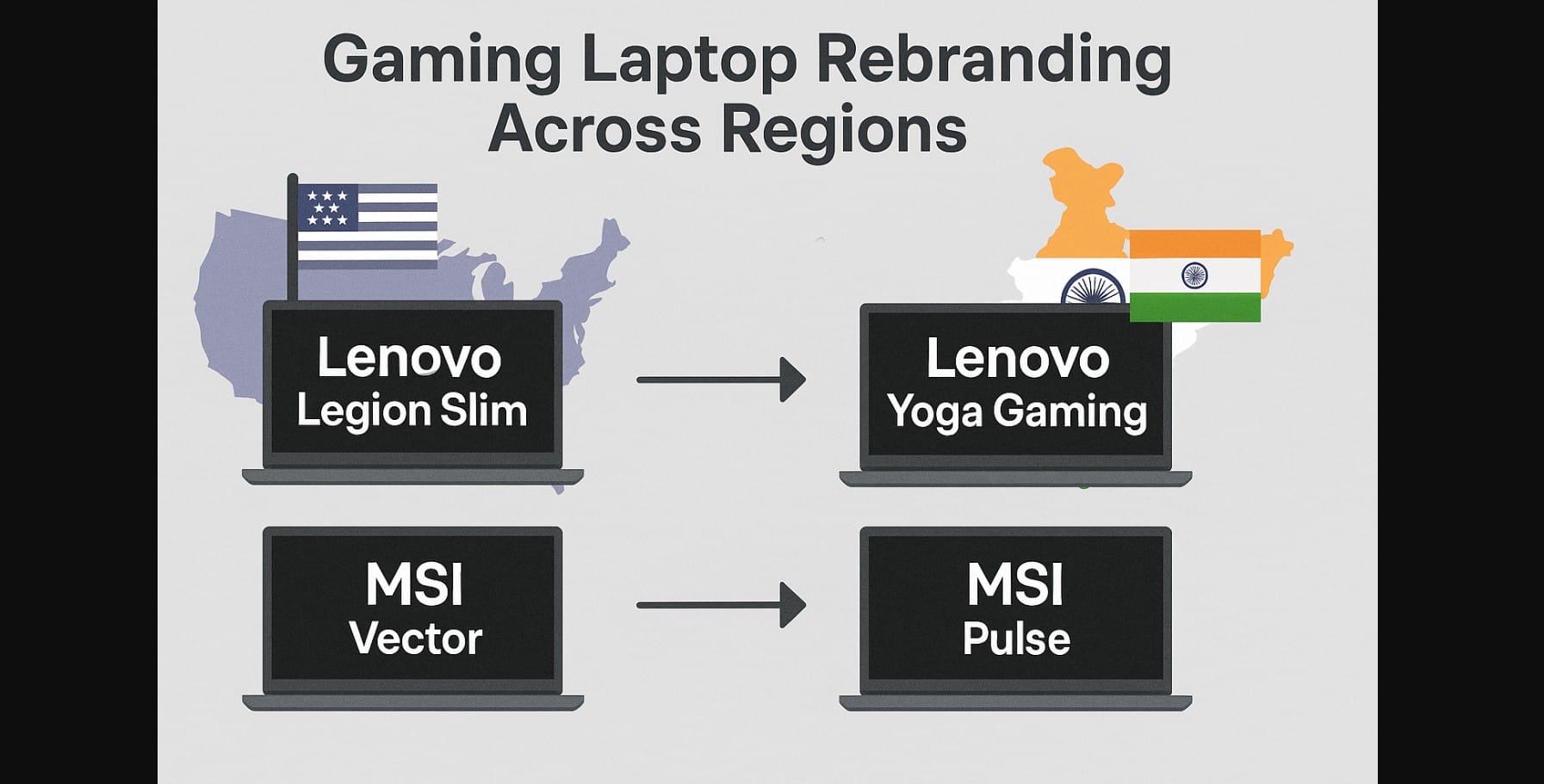
MSI reuses the same frame across Katana, Pulse, Vector, and Alpha the differences are often just paint, panel, or GPU class.
Lenovo and ASUS Also Rename Models for Retail Use
- Lenovo sells Legion Slim as Yoga Gaming in select stores
- ASUS TUF chassis may be listed online as both FX507 and A15
- Acer’s Nitro V and Nitro 5 AN515 can look identical but have different internals
7. How to Avoid Buying a Weaker Version Without Knowing It
Always Check the Full Specifications
Read every detail in the product listingnot just the highlighted specs. Look for:
- GPU model and TGP (Total Graphics Power)
- Display specs: refresh rate, panel type, brightness
- CPU generation and full model name
- RAM type and speed (DDR5 vs DDR4)
- SSD type (NVMe Gen 4 vs Gen 3)
Search the Exact Model Number
Look for a detailed SKU like FA507NV-LP123WS instead of just “TUF A15”. Then search that SKU online to find full reviews, benchmarks, and teardown videos.
Compare Across Sellers
Don’t assume one “Victus 16” is the same everywhere. Check specs across multiple platforms and take screenshots before buying in case you need to dispute a mismatch.
Beware of Older Listings During Sales
Big sales often bring older stock back at attractive prices. These might carry outdated GPUs like RTX 3050 or Gen 3 SSDs still under the same model line name.
8. What You Risk If You Don’t Double-Check the Variant
You could easily pay ₹15,000-₹20,000 more for:
- A TN panel instead of a IPS
- A low-power RTX GPU that performs like a last-gen card
- A version that won’t get BIOS or driver updates in India
It’s not just about performance these differences can impact long-term usability and resale value.
9. Don’t Assume a Familiar Name Means Familiar Performance
In India, you have to check the details not just the label. Brands constantly refresh internals, rename models, and release special SKUs across platforms and retailers.
To avoid regret:
- Never buy based on YouTube series reviews alone
- Always verify GPU wattage, screen specs, and thermals for the specific variant
- Use the official support pages to cross-check before paying
In India, where laptop prices already carry import taxes and limited stock variety, getting the wrong configuration can be a costly mistake.

