
Gas Stove Safety in India – What ISI Mark, FFPD & Knob Placement Actually Mean
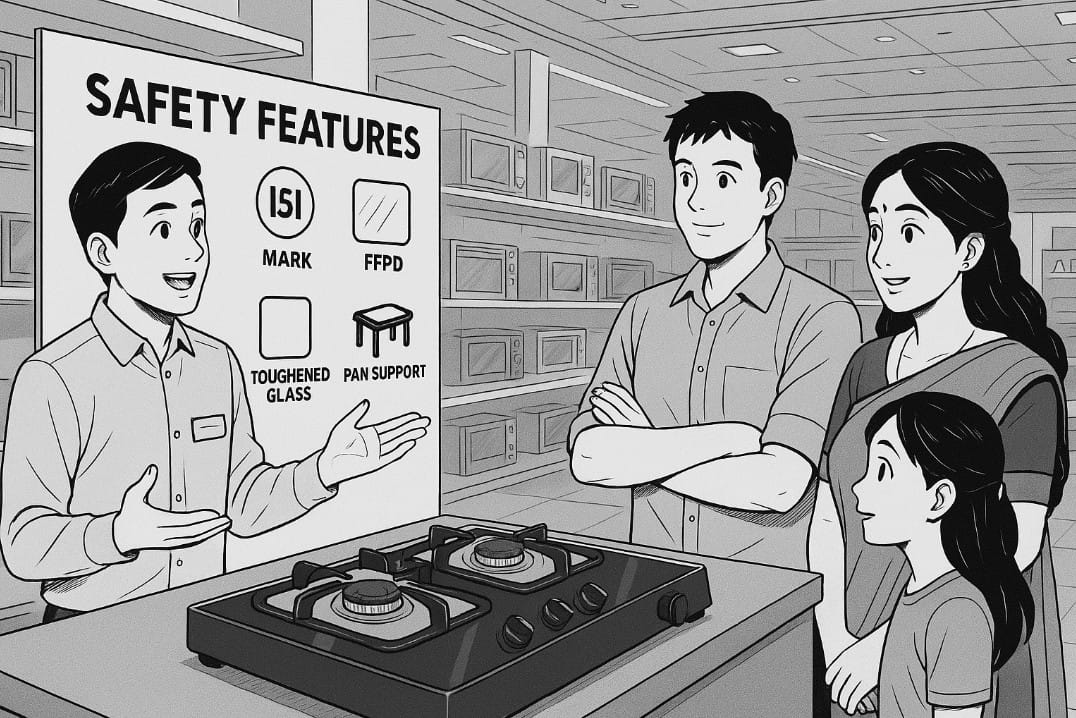
A gas stove is one of the most-used appliances in Indian kitchens but also one of the riskiest if you buy without checking the right safety features. Gas leaks, loose knobs, broken glass tops, and unstable burners are real hazards.
In this guide, you’ll learn how to check for certified safety features, what the ISI mark really guarantees, and which features matter most in Indian kitchens using LPG or PNG.
1. What Is the ISI Mark on Gas Stove – and Why It Matters
The ISI mark is not just a formality. It means the stove meets standards set by the Bureau of Indian Standards (BIS) for:
- Safe flame operation
- Sturdy burner design
- Leak-proof gas flow
- Safe ignition setup
- Material strength (for both glass and steel bodies)
Always look for this mark (usually near the burner or side panel).
If it doesn’t have an ISI mark, don’t buy it even if the brand is well-known.
2. Flame Failure Protection Device (FFPD) – What It Does
This is one of the most useful modern safety features, especially for:
- Busy kitchens
- Households with children or elders
- Gas stoves near windows (wind can blow out flames)
How it works:
If the flame goes out (due to wind or spill), the FFPD automatically cuts off the gas supply. This prevents gas leakage and the risk of fire or suffocation.
Now available even in ₹5,000–₹7,000 gas stove models in India.
FFPD is a must-have for PNG (piped gas) users, where flow is continuous.
3. Toughened Glass Tops – Only Safe If ISI-Certified
Glass top stoves are safe only when made with heat-resistant, tested material.
- Choose models labeled “ISI-certified toughened glass”
- Avoid thin glass or unbranded imports
- Never place hot utensils directly on the glass
Check for brand assurance on thermal resistance and drop tests
4. Stable Pan Supports – Prevent Tipping & Spills
Poorly designed pan supports can lead to:
- Hot utensils tipping over
- Unbalanced pressure cookers
- Spilled boiling water or oil
What to look for:
- Heavy-duty cast iron or coated metal grates
- Anti-skid rubber pads under the stove
- Even burner height across all sides
Wider, heavier supports are safer for Indian cookware like tawa, kadhai, and cooker.
5. Knob Safety – Small but Often Ignored
Low-quality knobs are a common failure point:
- Can loosen and rotate unexpectedly
- Some melt or crack in high heat
Check for:
- Heat-resistant knobs (usually bakelite)
- Smooth turning with firm stopping point
- Distance from burners to avoid heat transfer
In better stoves, the knobs are placed slightly lower or angled for extra protection.
6. Regulator and Gas Pipe Quality
Your stove is only as safe as its connection.
Make sure:
- Your regulator is ISI-certified
- You use a BIS-approved rubber or stainless steel braided pipe
- No pipe touches the burner area directly
PNG installations must be done by an authorized technician don’t DIY conversions.
7. Everyday Safety Practices That Matter
Even a safe gas stove needs safe habits.
- Never leave food unattended on an open flame
- Always turn off the regulator after cooking
- Avoid using water to clean near burner holes
- Keep matches/lighters away from kids
- Ensure ventilation if you’re cooking for long hours
Summary: Is Your Glass Top Gas Stove Safe?
| Feature | Why It Matters |
|---|---|
| ISI Mark | Confirms basic safety standard compliance |
| FFPD | Prevents gas leaks if flame goes out |
| Toughened Glass | Withstands heat and impact |
| Sturdy Pan Supports | Prevents pots/kadhais from tipping |
| Heat-Resistant Knobs | Avoid melting or sudden turning |
| BIS-Certified Pipe | Prevents gas leaks through cracks |
| Anti-Skid Feet | Adds stability on any platform |
Gas stoves have evolved but so have the risks if you ignore safety. Whether you’re cooking for yourself or a large family, make sure your stove protects you as much as it performs.
When buying, don’t just ask about features or price. Ask:
- Is it ISI certified?
- Does it have flame failure protection?
- Are the knobs and pan supports safe for long-term use?
Spend once, cook safely every day.

