
Step-by-Step Process for Purchasing Your First Bike in India
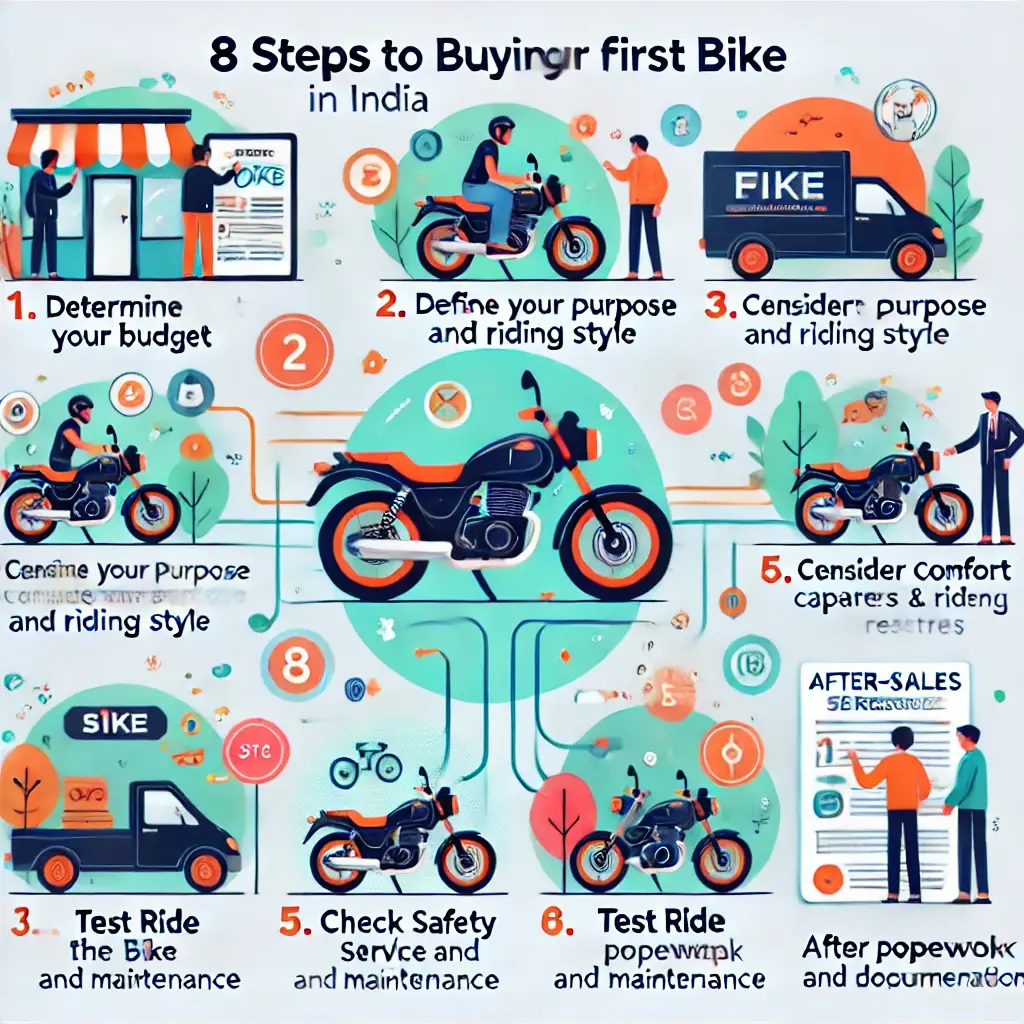
Purchasing your first motorcycle in India is a significant decision that involves more than just picking a model. It’s about choosing a bike that fits your lifestyle, budget, and safety needs. With an abundance of motorcycles in different price ranges, engine capacities, and features, the process can be overwhelming. Whether you’re new to riding or just ready to buy your first bike, this guide will help you make an informed and confident decision.
In this guide, we’ll walk you through everything you need to know about selecting and purchasing your first motorcycle in India, including details about popular models, key considerations, and additional tips to make your bike-buying experience hassle-free.
8 Steps for Choosing the Right Bike:
Step 1: Determine Your Budget
The first and most crucial step in buying a motorcycle is deciding how much you are willing to spend. Bikes in India are available across various price segments, and your budget will significantly influence your options. Here’s a rough guide to help you decide:
Entry-Level Budget (₹70,000 – ₹90,000)
- Target: Daily commuting, lightweight bikes, low maintenance
- Engine Capacity: 100cc to 125cc
- What to Expect: Affordable motorcycles that are easy to maintain and have good fuel efficiency.
Popular Bikes in Budget-Range:
- Hero Splendor Plus (₹75,000) – Known for reliability, this 97.2cc commuter bike is one of the most fuel-efficient motorcycles in India.
- Bajaj Pulsar 125 (₹86,000) – Offers a stylish design, great performance, and good mileage.
- Honda CD 110 Deluxe (₹76,000) – A robust commuter bike with a 110cc engine known for its simplicity and comfort.
Mid-Range Budget (₹1,00,000 – ₹1,50,000)
- Target: Balanced performance, comfort for long rides
- Engine Capacity: 150cc to 200cc
- What to Expect: More powerful motorcycles with better comfort, slightly higher performance, and sportier designs.
Popular Bikes in Mid- Range:
- Honda Unicorn (₹1,19,000) – A commuter bike with a 124cc engine, great for city commuting with excellent fuel efficiency.
- Yamaha FZ-S Fi V3 (₹1,23,000) – A muscular 149cc bike with a great balance of performance and comfort, popular for both urban and highway riding.
- Suzuki Gixxer SF (₹1,45,000) – A fully-faired, sporty 155cc motorcycle, ideal for those who enjoy performance and style.
Premium Budget (₹1,50,000 and Above)
- Target: Long-distance riding, high performance, advanced features
- Engine Capacity: 250cc and above
- What to Expect: High-performance motorcycles with advanced features, better ride quality, and stylish designs.
Popular Bikes:
- KTM 250 Duke Adventure (₹2,49,000) – A sport-oriented 250cc bike offering excellent acceleration, cornering, and overall performance.
- Royal Enfield Meteor 350 (₹2,05,000) – A cruiser with a 349cc engine, ideal for long-distance touring and comfortable rides.
Step 2: Define Your Purpose and Riding Style
Before purchasing a bike, it’s important to define how you plan to use it. Are you primarily using it for commuting, long-distance touring, or weekend rides? Understanding your requirements will help narrow down your options.
For Daily Commuting:
Look for lightweight bikes with good fuel efficiency and comfort. These bikes should be easy to handle in heavy traffic and offer good mileage to reduce running costs.
- Hero Splendor Plus (97.2cc)
- Honda CB Shine (124cc)
- TVS Star City Plus (110cc)
For Long-Distance Touring:
Touring motorcycles are built for comfort over long distances, often with larger engines, comfortable seating, and smooth suspension systems. You may also want features like larger fuel tanks and better ergonomics.
- Royal Enfield Meteor 350 (349cc) – A cruiser designed for long journeys.
- Bajaj Avenger 220cc – Known for its comfort and touring capabilities.
For Sporty Rides:
If you’re looking for performance and style, bikes in the 150cc to 250cc range offer a sporty design, superior acceleration, and a thrilling riding experience.
- Yamaha R15 V3 (155cc) – A high-performance bike with aggressive styling and excellent cornering capabilities.
- KTM 125 Duke (124cc) – A sporty motorcycle designed for performance enthusiasts.
Step 3: Consider Engine Capacity and Performance
Engine capacity plays a vital role in determining the bike’s performance. A larger engine generally offers more power but requires better handling skills, especially for new riders.
100cc to 125cc Engines:
Ideal for city commutes, these bikes are lightweight, fuel-efficient, and easy to handle, making them great for beginners.
- Hero Splendor Plus (97.2cc)
- Bajaj Pulsar 125 Neon (124cc)
150cc to 200cc Engines:
These bikes offer more power for those who want to take occasional highway trips or need a little extra performance for overtaking and quick acceleration.
- Yamaha FZS-FI V3 (149cc)
- Suzuki Gixxer SF 150 (155cc)
Above 200cc Engines:
Ideal for experienced riders, these bikes offer significant power, higher top speeds, and greater performance on highways.
Step 4: Evaluate Comfort and Ergonomics
Comfort is key, especially if you plan to spend long hours riding. The bike should fit your body type and provide a comfortable riding posture, with easy access to the handlebars and footrests.
Seat Height:
Check the seat height to ensure you can comfortably reach the ground with both feet when seated. A lower seat height is ideal for beginners.
Handlebars and Foot Peg Position:
Ensure the handlebars are at a height that allows for a relaxed riding position, and the foot pegs are positioned for optimal leg comfort.
- Royal Enfield Meteor 350 – Comfortable for long-distance rides, offering a cruiser-style riding posture.
- Yamaha FZS-FI – Comfortable seating and great ergonomics for both city commutes and highway trips.
Step 5: Check Safety Features
Safety is non-negotiable. Look for the following features:
- Anti-lock Braking System (ABS): Ensures the wheels don’t lock up during emergency braking, reducing the risk of skidding.
- Disc Brakes: Better braking power than drum brakes, providing safer stops.
- LED Headlights: For improved visibility at night.
Step 6: Test Ride the Bike
Once you’ve shortlisted a few bikes, it’s time to take them for a test ride. A test ride allows you to gauge how the bike feels in real-world conditions and helps you make the final decision.
What to Focus on During the Test Ride:
- Handling: Does the bike feel stable and easy to maneuver, especially in tight traffic or while turning? The bike should feel agile and responsive, especially when navigating through heavy traffic or narrow lanes.
- Comfort: Ensure the seat is comfortable, and that the bike’s riding position doesn’t cause strain. Check how the suspension feels over bumps and potholes.
- Braking: Test the brakes under different conditions. They should feel responsive and smooth, without any issues like fading or skidding.
- Power Delivery: Check how smooth the acceleration is. For beginners, a smooth, linear power delivery is ideal to avoid sudden jerks.
Take the bike on various surfaces, such as roads with potholes, traffic, and open highways, to see how it handles different conditions. Ensure that the bike feels comfortable at different speeds and provides a sense of stability.
Step 7: After-Sales Service and Maintenance
After-sales service is a crucial factor when purchasing a motorcycle. Some brands are known for better service networks and affordable spare parts, which can save you money and effort in the long run.
- Service Network: Choose a brand with a widespread and easily accessible service network across India. This ensures that you have access to reliable service, whether you’re in a metro city or a small town.
- Spare Parts Availability: Make sure that spare parts for your chosen bike are easily available and affordable. Some brands may have more expensive parts or longer wait times for parts, so it’s essential to check.
- Warranty and Support: Most bikes come with a standard 2-year warranty, but it’s worth checking for extended warranties or service packages that may save you costs in the long run.
Brands Known for Excellent After-Sales Service:
- Honda: Known for its widespread service network and excellent customer service. Honda offers hassle-free maintenance and a wide range of service centers.
- Bajaj: Offers affordable spare parts and good service centers across India. Bajaj motorcycles are easy to maintain and generally have low repair costs.
- Hero: A trusted brand with a vast network of service centers and low-cost maintenance. Hero bikes are designed for durability and have lower ownership costs.
Step 8: Finalize the Paperwork and Documentation
Once you’ve chosen your bike, it’s time to complete the paperwork. Here’s what you need to take care of:
- Registration: The bike needs to be registered with the local Regional Transport Office (RTO). This process is generally handled by the dealership but may require you to provide personal identification and address proof.
- Insurance: Ensure that the bike is covered with third-party or comprehensive insurance. Comprehensive insurance is recommended as it offers better coverage, including theft, natural calamities, and accidents.
- Road Tax: Pay the necessary road tax to the state government as per the local regulations. Some states may offer discounts or lower taxes for electric vehicles or low-emission motorcycles.
- Pre-Delivery Inspection (PDI): Make sure the dealership conducts a thorough inspection before delivering the bike to you. This includes checking for any damage, confirming that all features are in working condition, and ensuring the bike is fully functional.
Take Your Time
When selecting a motorcycle, prioritize comfort, safety features, and after-sales service. Whether you’re opting for a simple commuter bike like the Hero Splendor Plus or a more powerful machine like the Royal Enfield Meteor 350, make sure to take the time to test ride and evaluate all factors.
Take your time to test different bikes, evaluate all features, and don’t rush the decision-making process. A motorcycle is an investment in your mobility and enjoyment, so choose wisely and ride safely!

