
Inclusive Smart Homes in India – Tech That Supports All Ages & Abilities
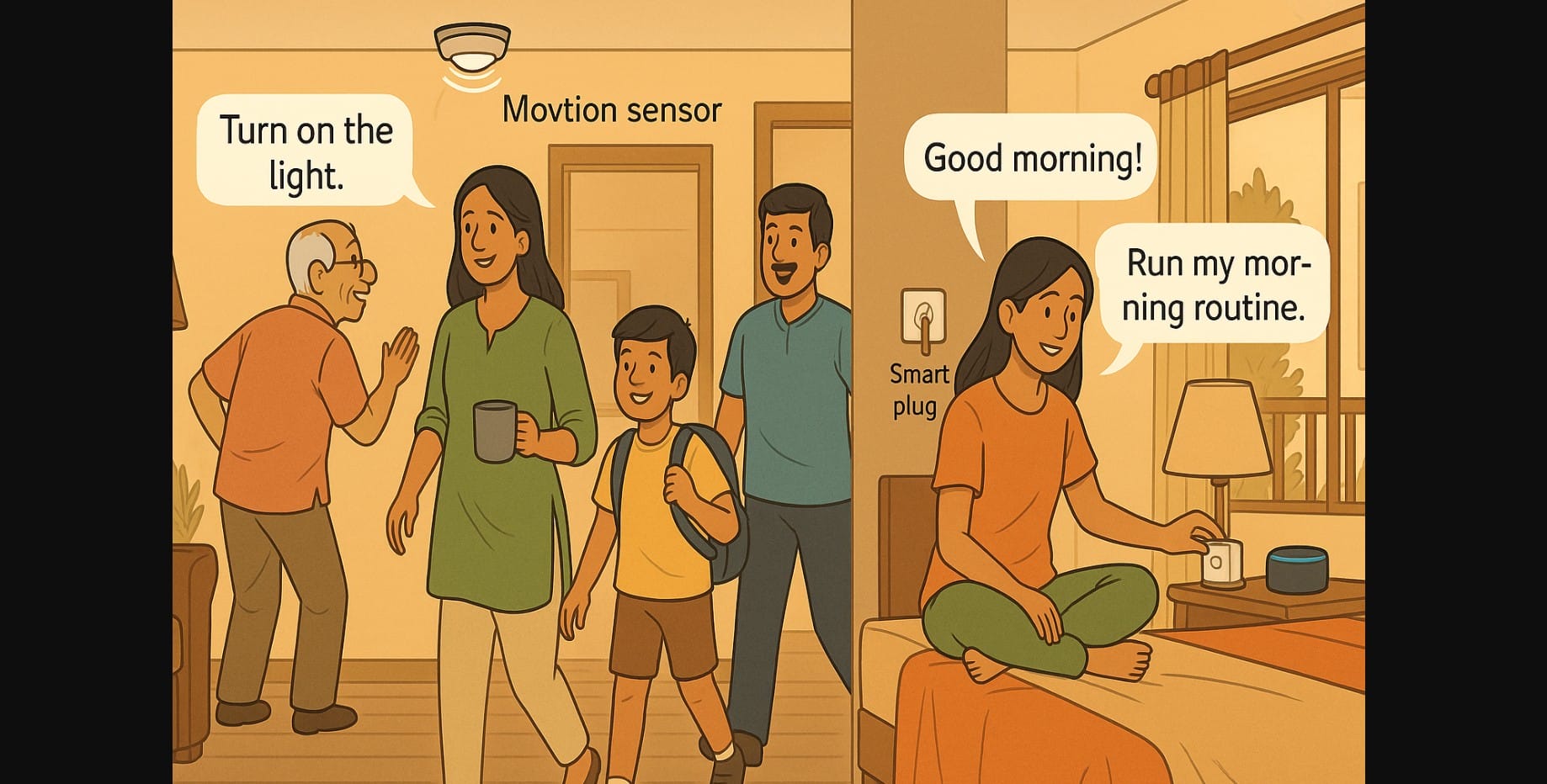
Smart homes are often seen as gadgets for tech-savvy people or luxury buyers. But in real Indian households where grandparents, kids, and helpers all share space the smartest homes are the ones that work for everyone.
From voice commands that help elders avoid switches, to automatic lights that guide someone safely at night, smart home tech can offer real relief and independence for people of all ages and abilities.
Let’s look at how you can build a smart home that supports comfort, safety, and dignity for everyone in your family.
1. Why Inclusive Smart Homes Matter in India
Most homes aren’t built for convenience:
- Light switches are too high for kids
- Geysers get left on and overheat
- Fans run all day because nobody remembers to turn them off
- Elders struggle to bend, reach, or remember routines
Smart home devices offer simple solutions that make a difference not just for efficiency, but for quality of life.
2. Smart Home For Elderly Family Members – Comfort, Safety & Simplicity
Older adults often struggle with:
- Reaching switches
- Remembering to turn things off
- Navigating dark rooms
- Communicating quickly in emergencies
How Smart Devices Help:
- Voice control for lights, fans, and plugs no need to walk or stretch
- Smart plug timers to auto shut off geysers, irons, or heaters
- Motion-activated lights in washrooms and hallways
- Smart doorbells with mobile alerts so they don’t miss visitors
- Emergency voice routines like: “Alexa, call my daughter”
Assistants like Google Nest support Hindi or Hinglish, making it even easier for older users.
3. Smart Home For Children – Safe and Easy Control
Kids are curious and love gadgets but they may not always be able to reach switches or safely handle appliances.
Smart Setup Ideas:
- Voice-controlled fans and lights they can activate from bed or study area
- TV plug on a timer so it turns off after 30 minutes automatically
- “Study Time” or “Bedtime” routines to create structure and consistency
- Night lights or dimming lights to help them fall asleep
You stay in control, but they get to explore their space safely.
4. Smart Home For Differently Abled Users – Independence & Comfort
Smart devices can offer life-changing support for users with physical or cognitive limitations.
Inclusive Tech in Action:
- Voice and app control of lights, fans, doors, and plugs no need to reach or move physically
- Motion sensors to automate lights or music in specific areas
- Visual + audio reminders for medication or tasks
- Custom routines to simplify daily transitions like waking up, meal prep, or bedtime
- Camera integration for caregivers to check in remotely if needed
The goal isn’t to rely on tech it’s to support independence with consistency.
5. Caregivers Also Benefit from Smart Home Support
Whether it’s a parent, part-time helper, or nurse, caregivers can use smart tech to:
- Pre-schedule routines like geyser heating, lights on/off, or TV access
- Use a shared app login to control devices without giving full access
- Set alerts for when a device has been left on too long
- Ensure motion sensors are working as intended to track movement gently
This creates a structured, safe environment for everyone involved without extra burden.
6. Room-by-Room: How to Build an Inclusive Setup in India
| Room | Smart Upgrades That Support All Users |
|---|---|
| Bedroom | Voice-controlled lights and fans, “Goodnight” routine |
| Living Room | Smart TV plug, ambient lighting, voice assistant |
| Kitchen | Plug timer for kettle/toaster, hands-free voice commands |
| Washroom | Motion-activated light, geyser auto-off |
| Balcony | Sunset-based auto lighting, smart alerts for open door/motion |
| Entryway | Smart doorbell with two-way talk, phone alerts for family |
You don’t need to automate everything just the parts that help real people in your home.
7. Smart Devices That Work Well for All Ages & Abilities
Start with just a few simple tools:
- Smart plugs – for controlling high-risk or hard-to-reach appliances
- Voice assistant speaker – Google Nest Mini or Echo Dot in common areas
- Motion sensors – especially in washrooms, stairs, or hallways
- Smart bulbs – with dimming or auto-off capability
- Smart doorbell – to improve entry control and visibility
All of these can be managed via mobile apps even by caregivers or family members outside the home.
8. The Smartest Homes Are Built Around People
A smart home doesn’t need to be fancy. It just needs to:
- Make life easier for your elders
- Give confidence and safety to your kids
- Support independence for someone with a disability
- Make shared living more calm and coordinated
Smart homes in India are not just about voice control and automation they’re about inclusion, dignity, and care.

