
Induction Cooktop – How They Work, Gas vs Induction, and Types Explained
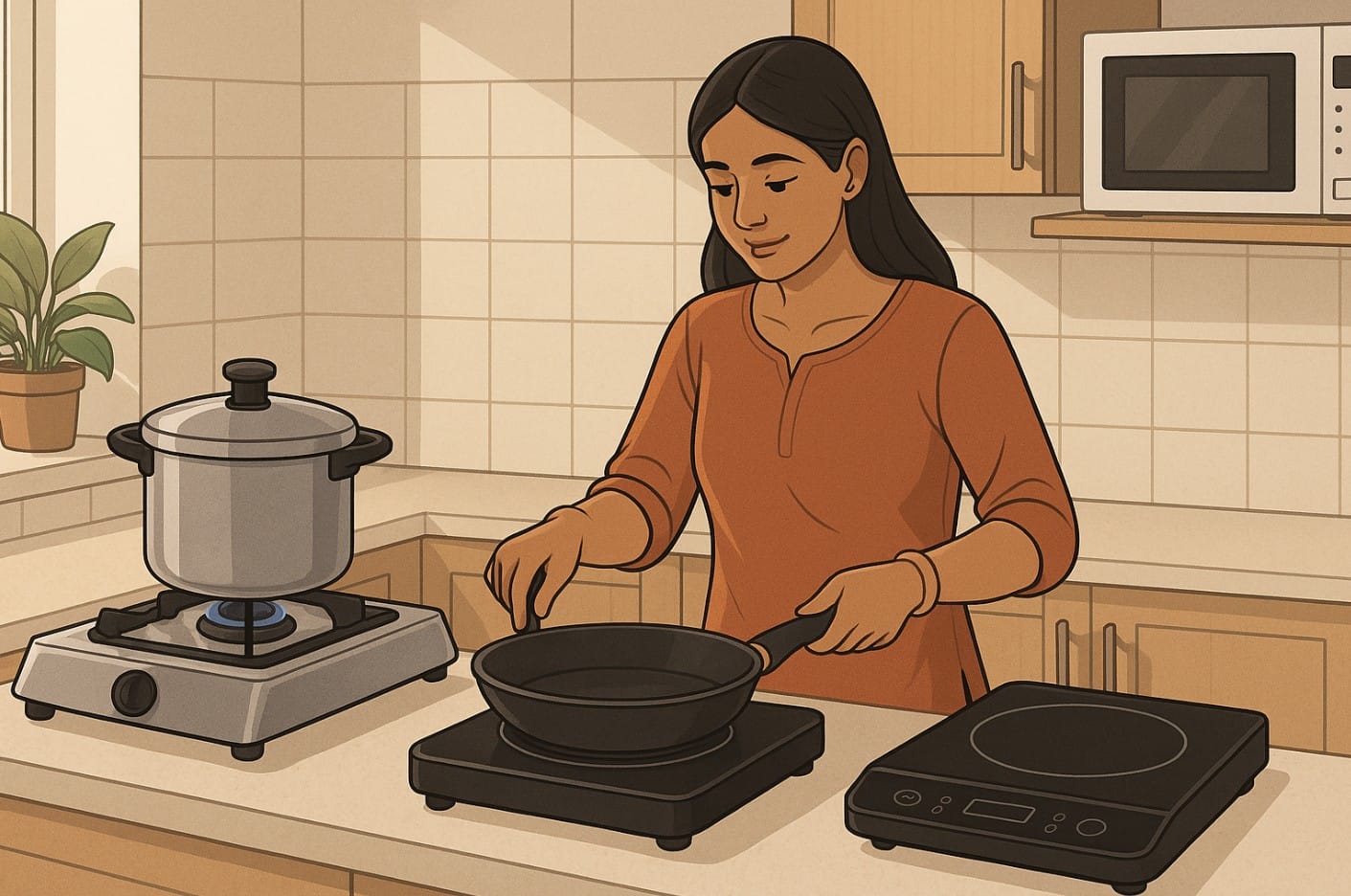
Induction stoves are no longer just backup appliances or tools for hostels. In 2025, more Indian homes are turning to induction cooking – for daily meals, tiffin prep, or as a safer, faster alternative to gas. But if you’re new to induction, it’s easy to feel confused: Does it really cook faster? Will it work with your existing cookware? Is it better than gas?
This post answers all that in one place. You’ll understand how induction cooking actually works, how it compares to traditional gas stoves, and what types of induction cooktops are available in India – so you can choose what fits your kitchen without guessing.
1. How Induction Cooking Actually Works
An induction stove heats the vessel directly using electromagnetic energy. Unlike gas or traditional electric coils, it doesn’t heat the surface – only the compatible pan or pot placed on it.
In Simple Terms:
- No visible heat or flame – but your cookware gets hot instantly
- It only works if the cookware has a magnetic base (iron or steel that attracts a magnet)
- Heat control is fast and precise – most models have preset temperature levels or direct wattage settings
2. Why Indian Homes Are Switching to Induction Cooktop
Induction cooktops offer more than just modern design. Here’s why they’re becoming a go-to option for Indian kitchens:
- No gas refills or leakage risk
- Safer for elderly or children – no open flame
- Faster cooking – boiling water or milk takes less time
- Energy efficient – less heat loss
- Easy to clean – flat glass surface, no burners to dismantle
- Compact and portable – fits into small counters or even temporary setups
Many Indian families now keep an induction cooktop as a secondary stove, especially during:
- Gas shortages or delays
- Heavy cooking during festivals or guests
- Quick morning tiffin prep or boiling milk/tea separately
3. Induction vs Gas Stove – What’s Right for Indian Kitchens?
Let’s break it down side by side:
| Feature | Induction Stove | Gas Stove |
|---|---|---|
| Heating Speed | Faster (esp. for boiling) | Slower but familiar |
| Temperature Control | Digital, preset levels | Manual flame adjustment |
| Cookware Compatibility | Needs flat, induction-compatible base | Works with most materials (except glass) |
| Operating Cost | Depends on electricity rates | Depends on LPG refill cost |
| Safety | No flame, auto cut-off | Flame + cylinder risk |
| Portability | Plug-and-use, lightweight | Not easy to move |
| Cleaning | Easy wipe-down surface | Needs burner cleaning, can leave soot |
| Ideal Use | Daily meals, tea, boiling, safe setups | Full meal prep, rotis, phulka, tadka |
Choose Induction Cooktop If:
- You want faster heating and cleaner setup
- You live in a rented space, hostel, or compact home
- You want a safe and portable option
- You already use cookware that supports induction
Stick With Gas Stove If:
- You use clay, aluminium, or curved-bottom vessels
- You cook items that need visible flame or direct fire puffing
- You live in an area with unreliable electricity
4. Types of Induction Cooktops Available in India
Indian kitchens are mainly using portable induction cooktops, but there are more options:
1. Portable Single-Zone Induction Stove
- Most common and budget-friendly (₹1500-₹3500)
- Ideal for daily use, boiling, sabzi, dal, milk
- Power range: 1200W-2100W
- Examples: Philips, Prestige, Bajaj, Usha, Havells
2. Double-Zone or Multi-Zone Stove
- Two or more heating zones
- Cook multiple dishes together (e.g., roti and sabzi)
- Bulkier and usually ₹5000+
- Suitable for medium-sized kitchens with more counter space
3. Built-in Induction Stove
- Fitted into your kitchen counter like gas hobs
- Looks sleek, no visible wiring
- Often comes with touch controls and ceramic finish
- More expensive and needs professional installation
- Ideal for modular kitchens or renovation setups
4. Hybrid Induction + Gas Combos
- Both options in one unit
- Found in premium modular setups
- Useful if you want gas for chapatis and induction for boiling
- Rare and priced ₹10,000+
Summary: Is Induction Cooktop/Stove Right for You?
| If You Want… | Choose… |
|---|---|
| Clean, safe, fast, and portable cooking | Portable induction cooktop |
| Double cooking zones or shared family use | Dual-zone induction model |
| Sleek, fixed solution with modern finish | Built-in induction hob |
| Flame + induction in one setup | Hybrid cooktop or combo setup |
| Flexibility to move between gas and electric | Keep both – induction as backup |
For Indian kitchens, an induction stove isn’t always a replacement but it’s often the upgrade you didn’t know you needed. Whether you’re tired of waiting for LPG refills, want faster boiling, or need a safer stove for a compact space, induction offers a lot of everyday convenience.
It all comes down to fit. If your cookware supports it, your usage is light to moderate, or your kitchen needs a second burner that’s fast and easy, a good induction cooktop just works. Once you understand how it compares to gas and which type fits your home, you won’t look back.

