
Summer, Monsoon, Winter: How Each Season Wears Down Your Inverter Battery
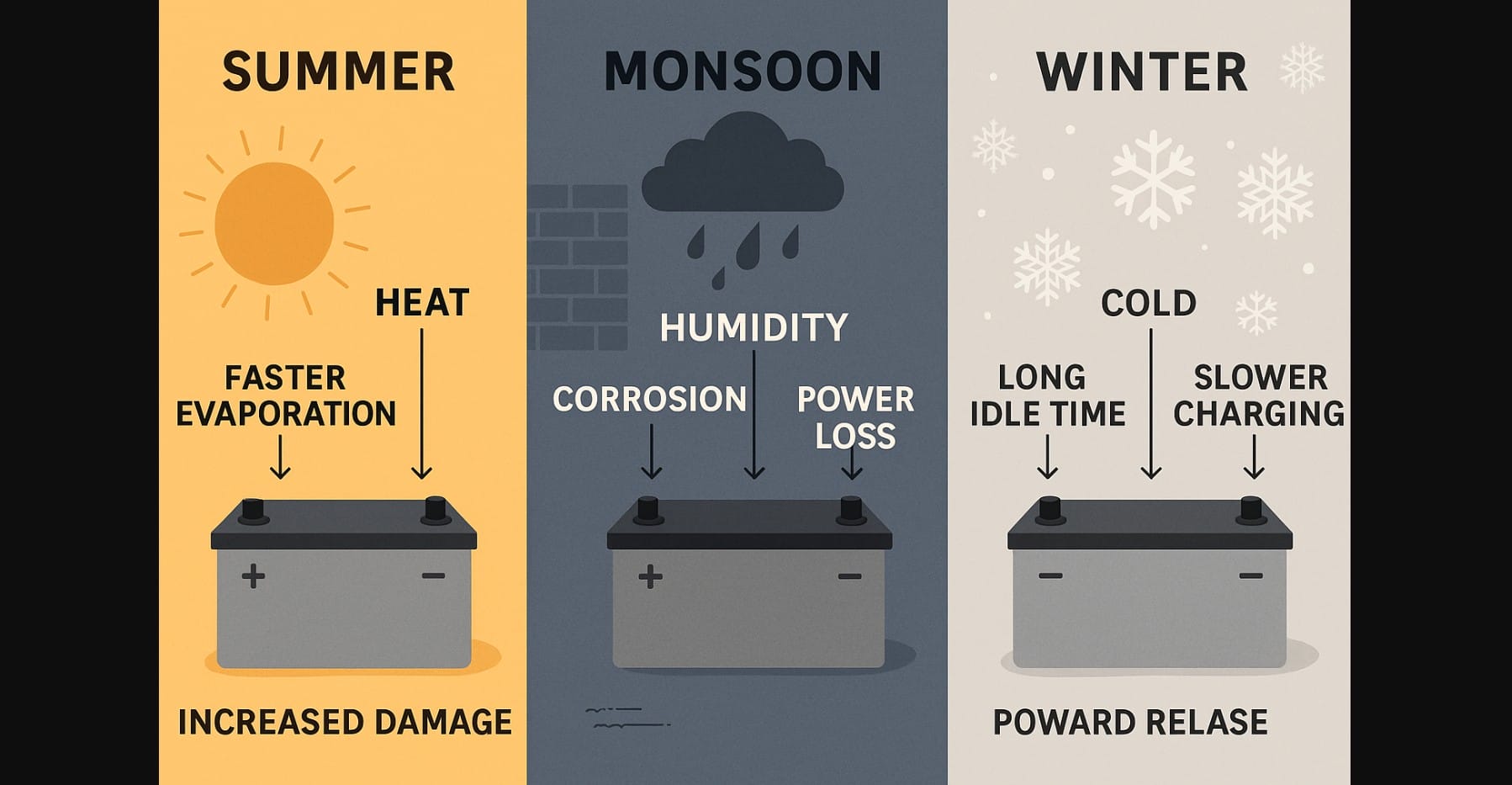
Even if you don’t overload your inverter or skip maintenance, your battery’s performance and lifespan can still decline. The reason is simple: India’s extreme weather impacts batteries differently across the year.
Heat speeds up chemical aging. Humidity causes corrosion. Cold weather slows charging. These effects add up over time especially in tubular lead-acid batteries stored indoors.
1. Indian Summer Heat: Silent Killer of Battery Life
High temperatures accelerate water evaporation, chemical degradation, and casing stress.
If your battery is installed in a closed room, metal trolley, or near heat sources, summer hits hard.
| Issue | Impact |
|---|---|
| Faster evaporation | Plates dry out, increasing risk of internal damage |
| Battery warms during charge | More energy lost as heat, less stored backup |
| Plastic casing deforms subtly | May cause cap leakage or air gaps |
| Inverter fan runs longer | Heat buildup increases charging time |
| Overcharging in hot rooms | Float voltage miscalibration shortens battery life |
Preventive steps:
- Ensure free airflow around the battery
- Keep it off the floor with a rubber mat or open trolley
- Refill distilled water more frequently during peak summer
2. Monsoon Humidity: Moisture Means Corrosion and Power Loss
During monsoon, even a well-functioning battery can start losing performance. Humidity mixes with dust and settles on the terminals and top cover.
Left unchecked, this causes rust, corrosion, and current leakage.
| Issue | Impact |
|---|---|
| Terminal corrosion | Reduces current flow, increases charge time |
| Surface moisture on casing | Leads to slow self-discharge |
| Rusting around bolts or trolleys | Weakens physical support |
| Acid smell in closed spaces | Gassing worsens with trapped humidity |
| Damp cabinets or corners | Encourage long-term terminal damage |
Preventive steps:
- Wipe terminals and battery casing weekly with dry cloth
- Leave battery cabinet doors open for ventilation
- Avoid wooden enclosures that trap moisture
3. Cold Winters: Low Usage Speeds Internal Aging
In winter, many homes experience fewer power cuts. That’s good but when your battery sits idle or underused for weeks, sulfation quietly sets in.
| Issue | Impact |
|---|---|
| Infrequent charge cycles | Lead sulfate hardens, blocking charge storage |
| Voltage drops faster in cold | Backup time shortens even if battery is full |
| Longer charge time | Electrolyte reacts slower at low temperature |
| Inverter shows float too early | Premature charge cut-off affects usable backup |
Preventive steps:
- Run the inverter with a controlled load once a week
- Avoid full discharge even if usage is low
- Ensure indoor battery temperature stays stable
4. How Regional Weather Changes the Inverter Tubular Battery
| Region | Weather Impact | Risk Factors |
|---|---|---|
| Delhi, UP, MP | Hot summers + cold winters | Needs both water management and winter cycling |
| Kerala, TN, Bengal | High humidity year-round | Terminal corrosion and moisture damage |
| Rajasthan, Gujarat | Dry heat | High evaporation, long charging times |
| Himachal, Northeast | Cold + low usage | Increased risk of sulfation and slow charging |
5. Seasonal Checklist for Inverter Battery
| Season | What You Should Do |
|---|---|
| Summer | Check water monthly, increase airflow |
| Monsoon | Wipe casing weekly, use dry trolleys |
| Winter | Charge regularly, run test backup cycles |
| All-Year | Avoid sealing battery in closed wooden boxes |
6. Where You Live in India Affects How Long Your Inverter Battery Lasts
You can’t change the weather, but you can protect your battery from the elements. Knowing how heat, moisture, and cold affect inverter batteries is important for keeping them lasting and working well.
High temperatures can make battery fluid evaporate, reducing capacity and increasing the risk of overheating, while very cold temperatures can lower the battery’s ability to hold a charge. Moisture can cause corrosion and short circuits if not managed properly.
By changing your care routines based on the seasons and environmental conditions, like keeping batteries in cool places during summer and insulated during winter, you can prevent early failures and prolong the life of your battery.

