
Best Cooling Technology: Inverter vs. Non-Inverter Refrigerators for India’s Climate
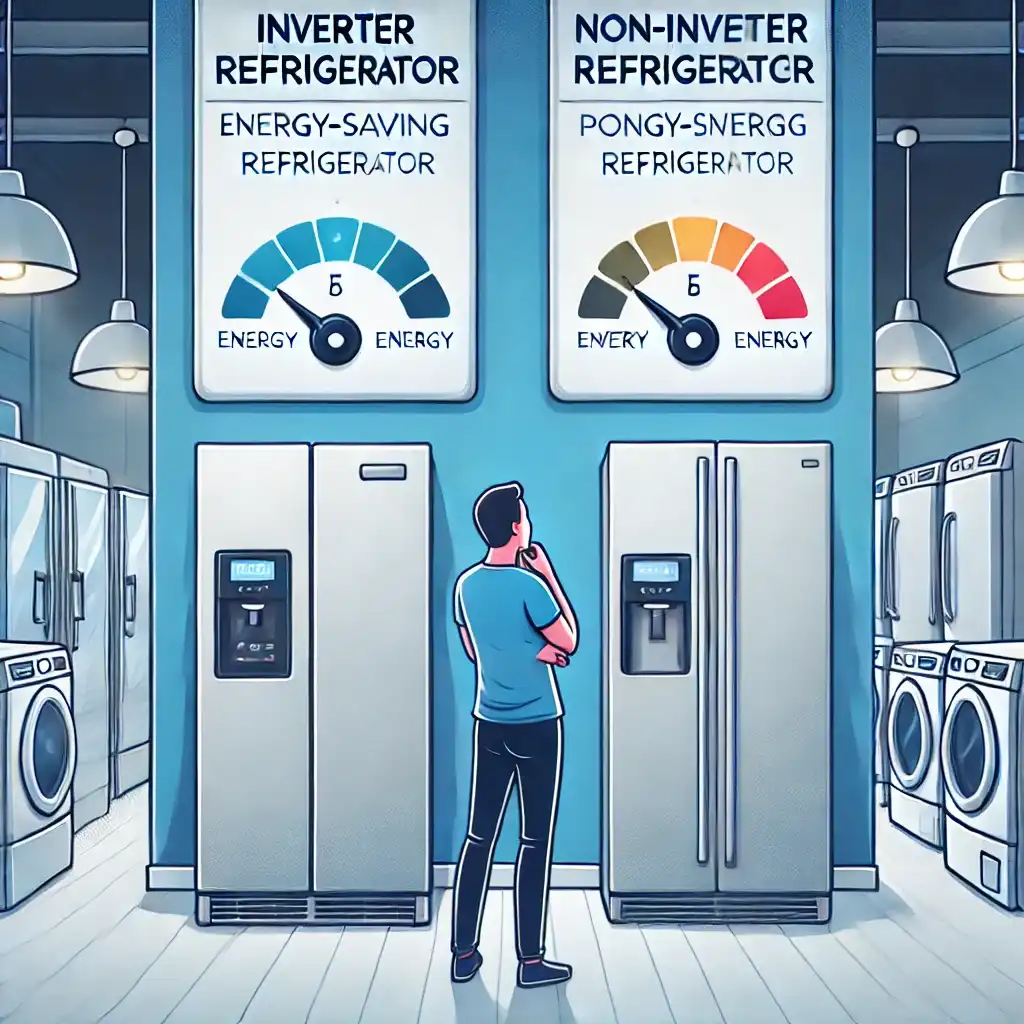
Choosing the right refrigerator compressor technology—inverter or non-inverter—is one of the most important decisions when buying a fridge in India. While many buyers focus on size and features, the compressor type directly impacts electricity bills, cooling efficiency, durability, and performance in power fluctuations.
Why Does This Matter in India?
- Rising Electricity Costs – Refrigerators run 24/7, making energy savings essential for long-term cost reduction.
- Frequent Power Fluctuations – Many Indian households experience voltage instability, which affects non-inverter models more than inverter ones.
- Hot & Humid Climate – Consistent cooling is necessary to keep dairy, fruits, and vegetables fresh for longer.
- Long-Term Savings vs. Upfront Cost – Inverter models cost ₹3,000-₹5,000 more upfront, but they save money on electricity bills over time.
This guide breaks down the differences between inverter and non-inverter refrigerators, covering:
By the end of this guide, you will know which refrigerator type is best suited for your needs and budget.
1. What is an Inverter Refrigerator?
An inverter refrigerator uses a variable-speed compressor that adjusts its cooling power based on temperature needs. Unlike traditional non-inverter models that switch on and off at full power, inverter compressors run continuously at different speeds, making them more energy-efficient and durable.
How Inverter Compressors Work
- Adapts to cooling demand by increasing or decreasing compressor speed
- Avoids frequent start-stop cycles, reducing power consumption
- Ensures stable temperature, keeping food fresh for longer
Key Features of Inverter Refrigerators
- Energy-efficient operation, saving 30 to 50 percent electricity
- Consistent cooling, avoiding sudden temperature fluctuations
- Quieter operation with minimal compressor noise
- Longer lifespan due to reduced wear and tear
- Works better during power fluctuations without requiring a stabilizer
2. What is a Non-Inverter Refrigerator?
A non-inverter refrigerator uses a fixed-speed compressor that turns on and off at full power to maintain the desired temperature. The compressor runs at full speed when cooling is needed and completely shuts off once the temperature is reached.
How Non-Inverter Compressors Work
- Runs at full speed when cooling is needed and shuts off once the fridge reaches the set temperature
- Temperature fluctuates due to the start-stop cycle
- Consumes more electricity compared to inverter models
Key Features of Non-Inverter Refrigerators
- Lower initial cost compared to inverter models
- Simple and reliable technology with fewer electronic components
- Common in single-door, double-door, and side-by-side refrigerators
- Effective cooling but with occasional fluctuations
Limitations of Non-Inverter Refrigerators
- Higher electricity consumption due to frequent compressor restarts
- Uneven cooling performance, affecting food freshness
- Noisier operation due to the on-off compressor cycle
- Requires a stabilizer in areas with frequent power fluctuations
3. Key Differences Between Inverter and Non-Inverter Refrigerators
| Feature | Inverter Refrigerator | Non-Inverter Refrigerator |
|---|---|---|
| Compressor Operation | Variable speed | Fixed speed (on-off cycle) |
| Cooling Consistency | Even temperature | Fluctuates due to start-stop cycle |
| Energy Consumption | Saves 30 to 50 percent electricity | Higher power consumption |
| Noise Level | Quieter | Louder due to frequent start-stop |
| Voltage Fluctuation Handling | Works well in low and high voltage conditions | Requires a stabilizer |
| Durability and Lifespan | Lasts longer with fewer breakdowns | Shorter lifespan due to frequent cycling |
| Initial Cost | Higher | More affordable |
| Best For | Long-term energy savings, better cooling | Budget buyers, occasional users |
4. Electricity Consumption and Energy Savings
Power Usage of Inverter vs. Non-Inverter Refrigerators
- Inverter models save 30 to 50 percent more electricity due to adaptive cooling
- Non-inverter models consume more power because the compressor runs at full speed when active
Real Electricity Cost Comparison in India
| Refrigerator Type | Annual Power Consumption | Estimated Annual Electricity Cost |
|---|---|---|
| Inverter Refrigerator (250L, 4-Star) | 150-200 kWh | ₹1,200 – ₹1,600 per year |
| Non-Inverter Refrigerator (250L, 3-Star) | 250-300 kWh | ₹2,000 – ₹2,400 per year |
Inverter refrigerators pay for themselves in electricity savings within three to four years.
5. Performance and Cooling Efficiency
Cooling Performance in Indian Summers
- Inverter refrigerators adjust cooling better in extreme temperatures
- Non-inverter models take longer to cool down after door openings
Food Freshness and Preservation
- Inverter models maintain stable temperature, keeping food fresh for longer
- Non-inverter models have minor fluctuations, affecting the freshness of dairy and vegetables
For Indian summers and food preservation, inverter refrigerators offer better performance.
6. Durability and Maintenance
| Factor | Inverter Refrigerator | Non-Inverter Refrigerator |
|---|---|---|
| Lifespan | Lasts 10 to 15 years due to smooth operation | Shorter lifespan of 7 to 10 years due to frequent start-stop cycles |
| Maintenance Needs | Lower repair costs as parts experience less strain | Higher maintenance needs due to wear and tear |
| Common Issues | Rare failures, but electronic components may need servicing | Compressor failure due to overheating or voltage issues |
Inverter refrigerators last longer and require fewer repairs over time.
8. Who Should Buy an Inverter vs. Non-Inverter Refrigerator?
Buy an Inverter Refrigerator If:
- You want long-term energy savings
- You live in an area with frequent power fluctuations
- You need consistent cooling for food freshness
- You prefer low noise levels
Buy a Non-Inverter Refrigerator If:
- You are on a tight budget and need a cheaper option upfront
- You use the refrigerator occasionally or as a secondary fridge
- You live in an area with stable electricity and do not need an inverter compressor
9. Conclusion – Which Refrigerator is Better for India?
If you are looking for long-term energy savings, stable cooling, and better durability, an inverter refrigerator is the better choice. It saves 30-50 percent on electricity bills, handles voltage fluctuations better, and reduces compressor wear and tear, ensuring longer lifespan and better food preservation.
However, if budget is your primary concern and you don’t use the refrigerator heavily, a non-inverter model may still be a cost-effective short-term option.
- Choose an Inverter Refrigerator if:
- You want lower electricity bills and higher efficiency.
- You live in an area with frequent power fluctuations.
- You need consistent cooling for food freshness.
- You want a longer-lasting and quieter refrigerator.
- Choose a Non-Inverter Refrigerator if:
- You need a cheaper upfront option.
- You live in a stable power supply area.
- You only need the refrigerator for occasional use.
Final Tips for Indian Consumers
- Check the BEE Star Rating – A 4-star or 5-star inverter model maximizes electricity savings.
- Look for stabilizer-free operation – If buying a non-inverter model, ensure it can handle voltage fluctuations.
- Compare brand warranties – Some inverter models offer 10-year compressor warranties, providing long-term peace of mind.
- Consider seasonal sales & discounts – Festival sales often bring inverter models closer to non-inverter pricing, making them a better deal.
By making an informed choice, you can ensure that your refrigerator is energy-efficient, cost-effective, and best suited to your lifestyle.

