
Is a Kitchen Chimney Necessary in Indian Homes? Here’s the Practical Answer
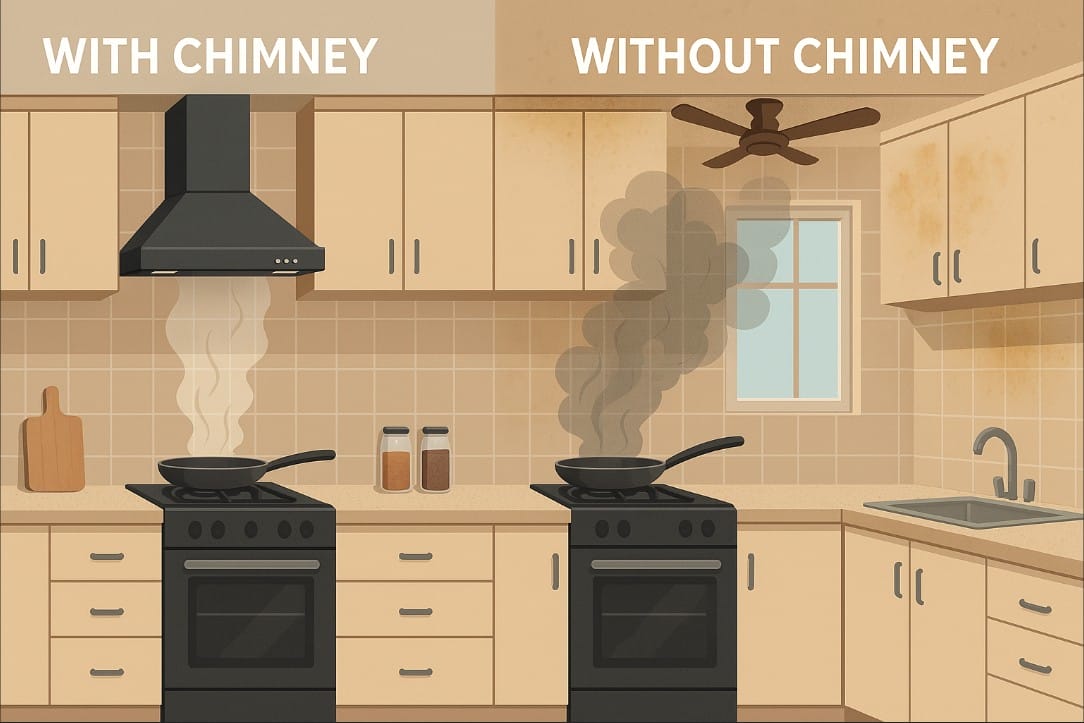
In many Indian households, buying a gas stove or hob brings up a common question should we also get a chimney?
Some people still think chimneys are only for fancy modular kitchens or big homes. But in reality, chimneys now serve a practical role in many Indian kitchens whether you live in a flat, a bungalow, or even a small 1BHK apartment.
This guide helps you understand whether a chimney is actually needed in your kitchen, based on how often you cook, what you cook, and how your kitchen is built.
1. What Does a Chimney Do in Indian Kitchens?
A kitchen chimney helps remove:
- Smoke from tadka or frying
- Oil fumes that stick to walls and tiles
- Heat and steam from pressure cooking or boiling
- Strong food smells after cooking
It pulls all of this through a suction fan and vents it outside your home. Over time, this helps keep:
- Your kitchen cooler while cooking
- Cabinets and tiles cleaner
- Your kitchen free from the greasy layer that builds up with daily cooking
Chimneys are not just for looks they reduce the amount of cleaning and heat buildup in most Indian kitchens.
2. Do You Need a Chimney? Ask These Questions First
You probably need a chimney if:
You cook Indian food with oil, masala, or tadka every day
These cooking styles create smoke and oil particles that stick to walls and attract dust.
Your kitchen has no strong cross-ventilation
If there’s no open window or airflow near the stove, smoke and heat stay inside.
You notice yellowing or stickiness on tiles, cabinets, or ceiling fans
This is often caused by oil vapor which a chimney helps reduce.
Your kitchen feels very hot while cooking
Chimneys help pull out excess heat along with smoke and steam.
3. Who May Not Need a Chimney in India
A chimney might not be necessary if:
- You only cook once a day or make light meals
- You mostly boil, steam, or reheat food (minimal oil use)
- Your kitchen has a strong exhaust fan placed near the stove
- You live in a very open or rural home with natural airflow
In such cases, a good exhaust fan and regular cleaning can be enough.
4. What Changes Over Time With and Without a Chimney
| Scenario | With Chimney | Without Chimney |
|---|---|---|
| Walls and cabinets | Stay cleaner longer | Build up sticky layers over time |
| Cooking environment | Cooler and smoke-free | Feels hotter, especially in summer |
| Odour after cooking | Quickly removed | Often lingers for hours |
| Daily cleaning effort | Easier | More scrubbing needed |
| Long-term look | Modern and clean | Needs frequent repainting or repairs |
Many Indian homes without chimneys end up cleaning tiles and fans every week a chimney reduces this workload.
5. Can an Exhaust Fan Replace a Chimney in Indian Kitchens?
Only in limited situations:
- If your kitchen is small and well-ventilated
- If you cook light food with very little oil or tadka
But for most homes with regular Indian cooking, an exhaust fan can’t pull out grease and heavy fumes as well as a chimney.
Final Summary – Here’s What Matters
You may not need a chimney in every Indian kitchen but in most cases, it makes a noticeable difference in cleaning, cooking comfort, and long-term maintenance.
You’ll benefit from a chimney if:
- You cook twice a day with masalas, frying, or pressure cooking
- You live in a flat or have a compact, enclosed kitchen
- You want to reduce the heat and smoke while cooking
- You’re tired of cleaning sticky walls and overhead cabinets
You can manage without it if:
- You cook simple meals with minimal oil
- Your kitchen has great airflow or outdoor access
- You already use a powerful exhaust fan placed near the stove
In modern Indian kitchens, a chimney isn’t a luxury it’s a practical way to protect your space, reduce effort, and make daily cooking more pleasant.

