
Made-in-India Laptops: Brand-wise Production, Exports & Local Assembly
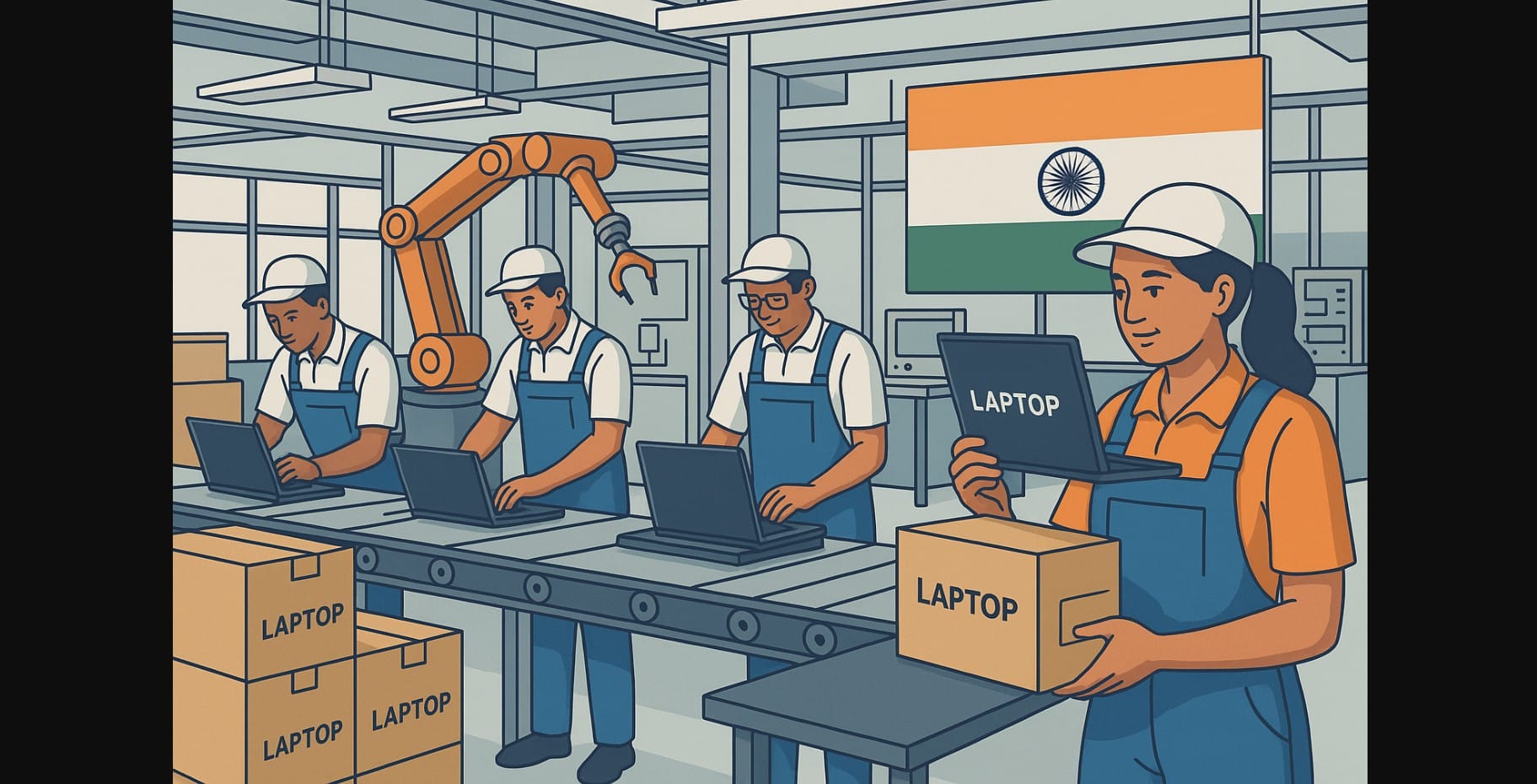
India is no longer just a smartphone manufacturing hub, it’s now building momentum in laptops too. Backed by the government’s ₹17,000 crore PLI 2.0 scheme and strict import licensing policies, global tech brands like HP, Dell, Lenovo, and Asus are now assembling laptops in India at scale. What was once limited to packaging and final assembly is evolving into a broader production ecosystem that’s reshaping pricing, availability, and service for Indian consumers.
Here’s the deep dive.
1. The Push Behind India’s Laptop Manufacturing Wave
- PLI 2.0 (2023): Allocated ₹17,000 crore to boost domestic production of laptops, tablets, and servers. Approved brands include HP, Dell, Lenovo, Acer, Asus, and MSI.
- Import Licensing (Nov 2024): Restrictions on importing finished laptops created an immediate push for local assembly.
- Export Momentum: India’s electronics exports jumped 47% YoY in mid-2025. Laptops now account for a growing share of that total.
These changes didn’t just affect large companies, they reshaped the entire ecosystem, encouraging Indian suppliers to scale up production of batteries, power components, and enclosures. Combined with rising laptop demand in India’s Tier 2 and Tier 3 cities, the policy shift has pushed global brands to move faster than expected on local execution.
2. HP & Dell Local Manufacturing: Driving Volume via Dixon Technologies
- Partner: Dixon Technologies
- Location: Chennai, Tamil Nadu
- Models Made: HP Pavilion, HP ProBook, Dell Inspiron, Dell Vostro
- Annual Output: Up to 2 million units
- Export Reach: Domestic sales + Middle East and Africa
- PLI Status: Approved manufacturer since Phase 1 of PLI 2.0
HP and Dell are also using India as a testing ground for SKU simplification and regional packaging strategies. Most units produced locally include pre-loaded regional languages and region-specific service bundles. This approach not only reduces costs but also improves market relevance, especially for enterprise and educational segments in India.
3. Lenovo: Long-Term Assembly Partner With Flex
- Partner: Flex, Sriperumbudur
- Models Assembled: ThinkPad E/L series, IdeaPad Slim
- Focus: Domestic sales and partial export
- Expansion Plans: Entry-level server production under consideration
Lenovo’s lead time for India-assembled models has significantly reduced, allowing faster refreshes of education and SMB models. Their Chennai-based Flex facility also allows greater agility in managing India’s seasonal demand surges, especially around exam season and festive sales, where laptop sales spike. This responsiveness offers Lenovo a competitive advantage in local B2B and D2C channels.
4. Acer, Asus, and MSI: Gaming and Consumer Segments Gain Ground
- Manufacturing Partners:
- Acer/Asus: Dixon, Optiemus
- MSI: Syrma SGS
- Models Built:
- Acer: Aspire
- Asus: Vivobook, ExpertBook
- MSI: GF and Thin laptops
- PLI Status: Active under PLI 2.0 (2023-2026)
These Laptop brands are using India to target budget-conscious buyers and students, often launching exclusive models not seen in Western markets. MSI’s locally assembled laptops benefit from lower import duties and better stock availability, a key pain point for buyers previously reliant on imported units with inconsistent supply.
5. Apple: Preparing for India-Based Production
- Discussions underway with Dixon for MacBook assembly
- Expected timeline: Late 2026 for trial production
Apple’s entry into India’s laptop assembly will depend heavily on success in smartphone exports and component ecosystem reliability. These early-stage moves signal that India is being considered for next-generation device design and not just final assembly.
6. 2025 Laptop Production in India
| Metric | Value |
|---|---|
| Annual Output (Laptops) | ₹10,000 crore |
| Export Growth (YoY) | 33% increase |
| Domestic Fulfillment Rate | ~18-20% of total laptop demand |
| Key Manufacturing States | Tamil Nadu, Uttar Pradesh, Telangana |
Additional insight: The 20% domestic fulfillment figure is up from just 8-10% in 2023, indicating real progress. While this still leaves a large gap to close, the number of new supplier tie-ups and MSME involvement in parts manufacturing has grown in parallel, an early sign of job creation and supply chain localization.
7. What’s Made in India vs. Still Imported for Laptop Manufacturing
Made in India (2025):
- Outer chassis and shells
- Batteries (via Optiemus, Dixon)
- Power adapters and chargers
- Basic PCBs, keyboard modules, touchpads
Still Imported:
- Intel and AMD processors
- RAM, SSDs, motherboards
- Display panels (LCD, LED)
Even as laptops are assembled in India, the value addition remains limited to 15-18% for most models. Government goals aim for 35-40% by 2026, but this will require deeper investments in logic board manufacturing, display panel fabs, and chip testing labs, all of which are in early planning stages.
8. How Laptop Buyers Are Already Benefiting
- Lower Retail Prices: 10-12% customs duty savings are passed to buyers
- Faster Availability: Global launch parity improving
- Improved Servicing: Faster repair turnaround due to local parts
- More India-Specific Models: Budget variants tailored for education and SMBs
For end-users, this shift reduces reliance on imports and improves post-sales support. Brands now maintain more localized spare part inventory and trained service engineers. It also opens the door for India-focused innovation, such as cheap laptops for rural areas, better battery backup, or Hindi/vernacular keyboard layouts.
9. Looking Ahead: 2026 and Beyond
- HP Goal: 13% of global PC output from India, targeting 33% by 2031
- MacBook Assembly: Possible Apple-Dixon tie-up to begin MacBook trial production
- PLI 3.0 Expected: Next phase may focus on component manufacturing and R&D
- Semiconductor Progress: Local fab rollout will determine long-term success
What happens between now and 2027 will decide if India remains a low-cost final assembly zone or becomes a regional tech design and export hub. Scaling up testing, tooling, and R&D, alongside component manufacturing, will be critical to raising value retention within the country.
Summary – Made-in-India Laptops
India has started to scale laptop production meaningfully in 2025. Brands like HP, Dell, Lenovo, and Acer are now assembling mainstream models locally, reducing costs and boosting service access. But for India to become a true laptop manufacturing powerhouse, deeper component manufacturing must follow. With the right policy support and brand commitment, the next two years could define India’s position in the global PC hardware map.
Sources:
- https://www.pib.gov.in/PressReleasePage.aspx?PRID=2092030
- https://knnindia.co.in/news/newsdetails/sectors/manufacturing/india-emerges-as-global-laptop-manufacturing-hub-amid-shift-from-china
- https://www.reuters.com/technology/india-plans-laptop-import-curbs-boost-local-manufacturing-sources-say-2024-10-18/
- https://m.economictimes.com/industry/cons-products/electronics/dixon-signs-deal-to-make-laptops-pcs-for-hp/articleshow/113198273.cms
- https://www.thehindu.com/news/national/tamil-nadu/dixon-technologies-to-set-up-1000-crore-laptop-manufacturing-unit-near-chennai/article69432130.ece

