
Night Sky Photography – Choosing Cameras That Handle the Dark
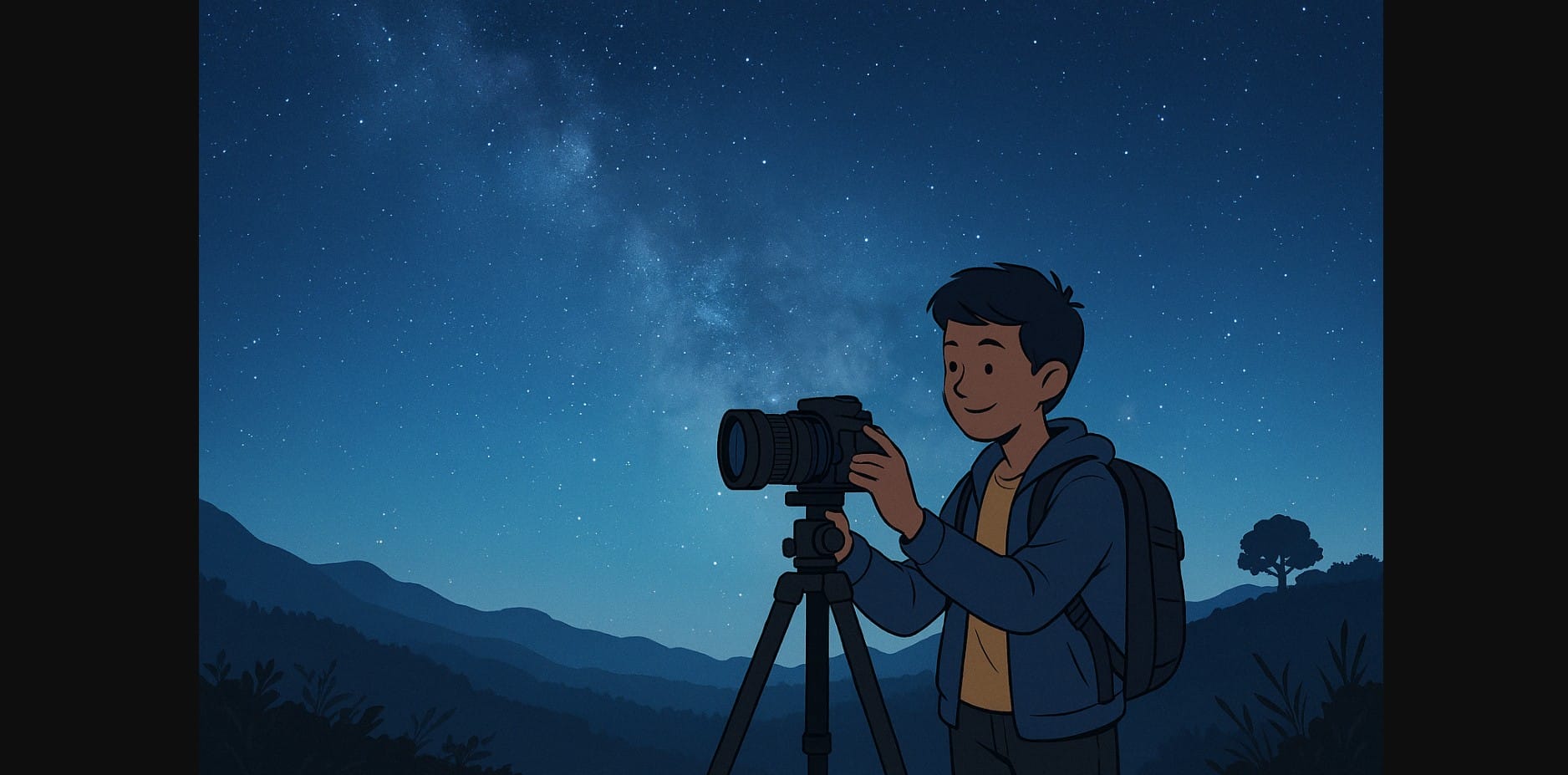
India may be known for its vibrant streets and color-filled festivals, but the stillness of its night skies is equally stunning. From the Himalayan deserts to coastal plains, our country offers unique windows into the Milky Way, meteor showers, lunar events, and star trails if you know how to capture them.
Astrophotography isn’t about snapping stars on the go. It’s about control, patience, and gear that works well in complete darkness. If you’re just starting out or building a kit for long-exposure night shooting, here’s what matters most.
1. Why Not Every Camera Can Handle the Night Sky
Shooting the stars isn’t like clicking portraits or street scenes. You need:
- Long exposure support without overheating
- Clean high-ISO performance
- Lenses that don’t distort or blur at wide apertures
- A body that works silently for minutes at a time without draining the battery
And in India, moisture, cold, dust, and light pollution add a few more challenges.
2. What to Look for in a Camera Built for the Astrophotography
Sensor Size and ISO Handling
Larger sensors collect more light. A full-frame sensor offers cleaner files with lower noise, especially at ISO 3200-6400.
That said, modern APS-C cameras are also capable especially if paired with a fast wide-angle lens. The key is to avoid cameras that smudge details aggressively when ISO goes up.
Full Manual Controls + Bulb Mode
You’ll be adjusting:
- Exposure time (usually 15-30 seconds or more)
- Aperture (f/2.8 or wider helps)
- ISO (higher ISO brings stars forward but adds noise)
Cameras with bulb mode let you go beyond 30 seconds useful for star trails, deep sky shots, and blending techniques.
RAW Shooting and Good Noise Control
Shooting in RAW is non-negotiable in astrophotography. It gives you control over:
- Color correction
- Noise reduction
- Bringing out faint stars or the Milky Way core
Choose a camera that doesn’t bake too much noise into the file before processing.
Battery Life and Stability in Cool Temperatures
Cold nights in places like Spiti or Coorg can kill battery life fast. Look for cameras with:
- Strong internal batteries (or the option for dummy batteries)
- Reliable long-exposure support without errors or freezing
Mirrorless systems tend to use up more battery carry extras if you plan a long night shoot.
3.Where to Shoot the Stars in India
While most urban areas are too polluted with light, many parts of India offer excellent night sky visibility:
| Location | Conditions |
|---|---|
| Spiti & Ladakh | High altitude, dry air, minimal light |
| Rann of Kutch | Flat, dry, and clean horizon |
| Coorg & Nilgiris | High elevation, occasional humidity |
| Rajasthan (Pushkar, Jaisalmer) | Dry, arid, wide open sky |
| Rural Maharashtra or Himachal | Great during new moon |
Plan your shoot on new moon nights and check for clear sky predictions using mobile apps like Stellarium, PhotoPills, or SkySafari.
4. Best Types of Cameras for Astrophotography
| Type | Strengths | Limits |
|---|---|---|
| Full-frame mirrorless | Best image quality, light weight | More expensive, battery may drain faster |
| Full-frame DSLR | Excellent low light, stable performance | Heavier and bulkier |
| APS-C mirrorless | Affordable, good detail with right lens | Slightly more noise at high ISO |
| Astro-modified cameras | Specially tuned for deep-sky colors | Niche, not flexible for everyday use |
5. What About Lenses?
Fast wide-angle lenses are the go-to for night sky work. Look for:
- Focal length: 14-24mm (for full-frame), 10-18mm (for crop sensors)
- Aperture: f/2.8 or faster lets in more light during short exposures
- Build: Minimal coma (star stretching), low distortion, good edge sharpness
Manual lenses are fine for night sky work autofocus isn’t used anyway.
6. Other Camera Gear You’ll Need for a Successful Night Shoot
- Tripod – absolutely essential
- Remote shutter or intervalometer – for time-lapses or bulb mode
- Lens warmer or anti-fog gear – prevents dew during long exposures
- Spare batteries + SD cards – especially for long sessions
- Apps and maps – to track moon phase, Milky Way position, and weather
Optional but helpful: star trackers (for deep sky), red headlamp, gloves, and power banks.
7. Night Photography Challenges to Keep in Mind
- Light pollution: Use pollution maps to find dark zones
- Lens fogging: Common in coastal or humid regions carry microfiber cloth
- Wildlife or stray dogs: In rural or hilly areas, night shoots need awareness
- Connectivity and safety: Always inform someone or shoot in small groups when exploring remote locations at night
8. Patience, Planning, and the Right Camera
Astrophotography isn’t about luck. It’s about choosing a reliable camera, understanding exposure, and putting in the effort to plan your shoot.
In return, you’ll walk away with frames filled with stars, trails, galaxies, or the glowing arc of the Milky Way often from places just a few hours outside your city.

