
Smart Reuse of Old EV Batteries: India’s Growing Second-Life Energy Market
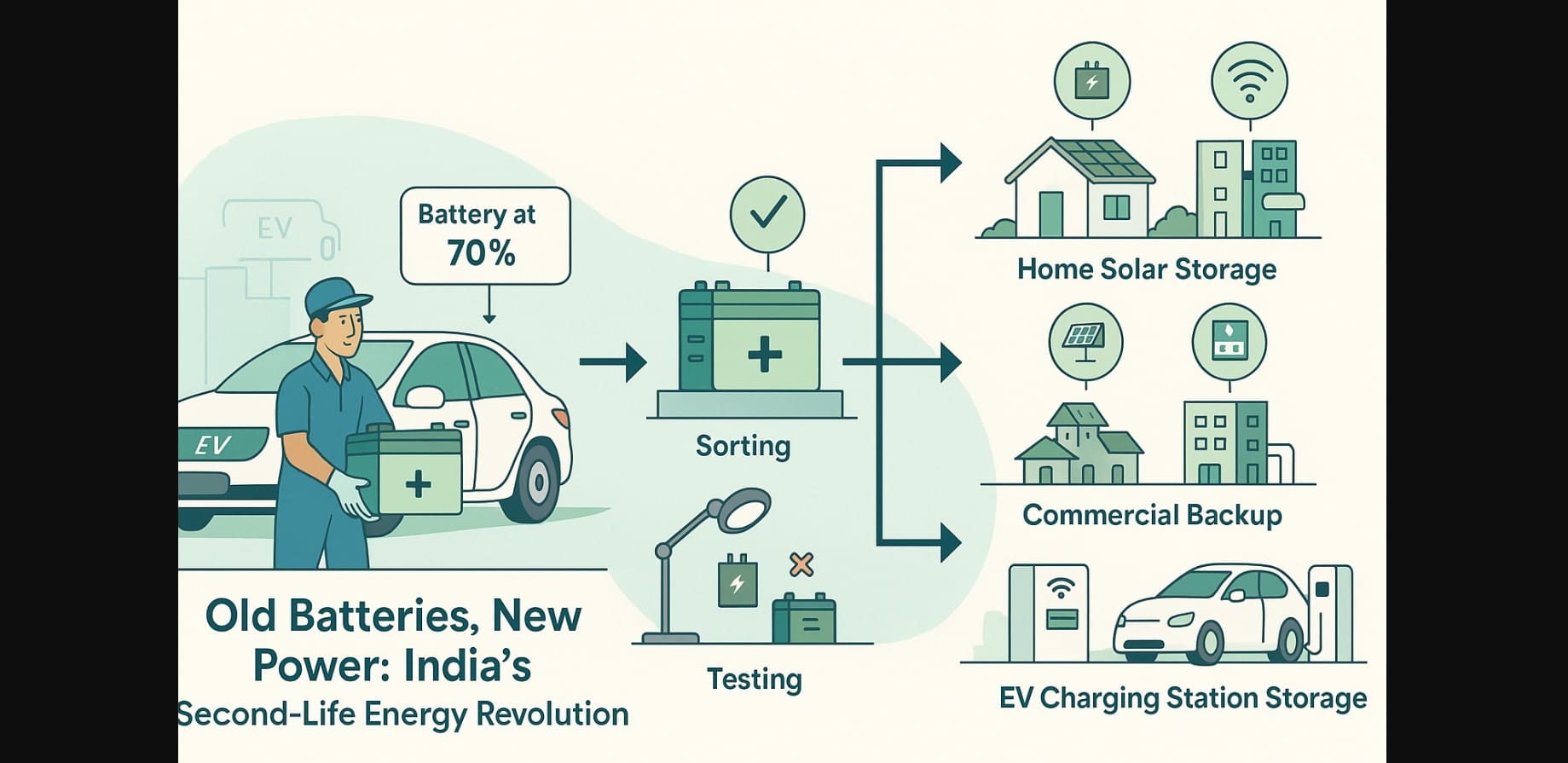
When an EV battery drops below about 70-80% capacity, it’s no longer ideal for powering a car or scooter.
You’ll notice:
- Shorter range
- Slower charging
- Less predictable performance
But that doesn’t mean the battery is useless. It still holds a large amount of energy enough to power homes, shops, villages, and backup systems. Instead of sending old batteries straight to recycling, India is moving toward second-life applications giving these batteries 5-8 more years of active use in lower-demand roles.
This shift is important for:
- Saving money
- Reducing electronic waste
- Making clean energy more affordable and accessible
1. How Second-Life Battery Reuse Works
The process of turning old EV batteries into useful power banks isn’t complicated but it’s carefully managed.
Here’s how it typically happens:
- Battery Removal – After 6-8 years of vehicle use, batteries are removed for evaluation.
- Health Testing – Each battery module is tested for remaining capacity, charging ability, and safety.
- Sorting
- Good modules (with 60-80% health) are selected for reuse.
- Poor or unsafe modules are sent for recycling to recover materials.
- Reassembly – Selected modules are reconfigured into new battery packs for stationary use.
- Deployment – These second-life batteries are then used in homes, businesses, microgrids, or backup systems.
Because the demands for stationary storage are lower and more predictable than vehicle usage, these reused batteries perform reliably at a much lower cost than new packs.
2. Smart Uses for Old EV Batteries in India
You don’t have to throw away an old EV battery there are many meaningful, practical ways it can keep serving energy needs.
A. Home Backup Systems
- You can use second-life batteries to store solar energy or back up essential appliances.
- Ideal for:
- Lights, fans, routers during blackouts
- Night-time solar storage in areas with frequent outages
- Affordable alternative to expensive inverters or UPS systems.
B. Microgrids and Rural Electrification
- Many villages in India are still off-grid or have unreliable power.
- Old EV batteries combined with solar panels can:
- Power schools, clinics, and community centers
- Support basic household needs without diesel generators
Second-life batteries make rural solar setups cheaper and faster to deploy.
C. Commercial and Industrial Backup
- Shops, warehouses, and small offices can use second-life batteries for:
- Computer backups
- Basic lighting and security systems during outages
- Cheaper than setting up brand-new battery banks or relying on diesel.
D. EV Charging Stations
- Some EV charging stations now use second-life batteries to:
- Store grid electricity during off-peak hours
- Discharge power during busy hours to support faster charging
- Helps manage load on local electricity grids.
These smart reuse cases are turning old batteries into a critical part of India’s energy transition.
2. Indian Companies and Initiatives Driving Second-Life EV Battery Projects
India isn’t just talking about reuse real projects are already running.
- Tata Power is piloting second-life battery setups to support solar installations and backup grids.
- Mahindra Electric is experimenting with giving end-of-life batteries a second chance through partnerships.
- Lohum, an Indian energy startup, is building battery reuse and recycling infrastructure.
- Sun Mobility is exploring second-life possibilities within its modular battery swapping networks.
Government initiatives are also supporting battery reuse and recycling ecosystems in the draft EV policies for 2025-2030.
Second-life battery reuse could soon become a standard part of India’s clean energy expansion not a niche experiment.
3. Things to Know Before Reusing or Buying Second-Life Batteries
While second-life batteries offer great value, you should be aware of their limits too.
Pros:
- Cost-Effective: 30-50% cheaper than buying brand-new batteries for storage needs
- Eco-Friendly: Reduces waste, mining, and raw material needs
- Good Enough for Backup: Fine for lights, fans, IT backups lower power demands
Cons:
- Lower Capacity: Expect shorter backup times compared to new batteries
- Unregulated Market (currently): Quality and safety standards are still developing in India
- Lifespan: Second-life packs may last 3-5 years depending on health and usage
What to Check:
- Battery health report or certification
- Warranty terms if offered
- Vendor reputation stick to trusted sources, not roadside sellers
Used properly, second-life EV batteries can power your needs safely and cheaply for years.
4. Old EV Batteries Aren’t Waste
| Topic | Second-Life Battery Facts |
|---|---|
| Remaining Capacity | 60-80% after vehicle use |
| Best Uses | Home backup, rural solar grids, EV station storage |
| Cost Advantage | 30-50% cheaper than new storage batteries |
| Risks | Shorter lifespan, unstandardized quality in some cases |
An EV battery’s first life powers your vehicle. Its second life can provide energy to homes and businesses.
In India, second-life batteries help the environment, save money, support rural areas, and promote clean energy. If you upgrade or retire your EV, remember the battery can still be used for a second life.

