
Should You Buy a 1-2 Year Old Flagship or a New Mid-Range Phone in India?
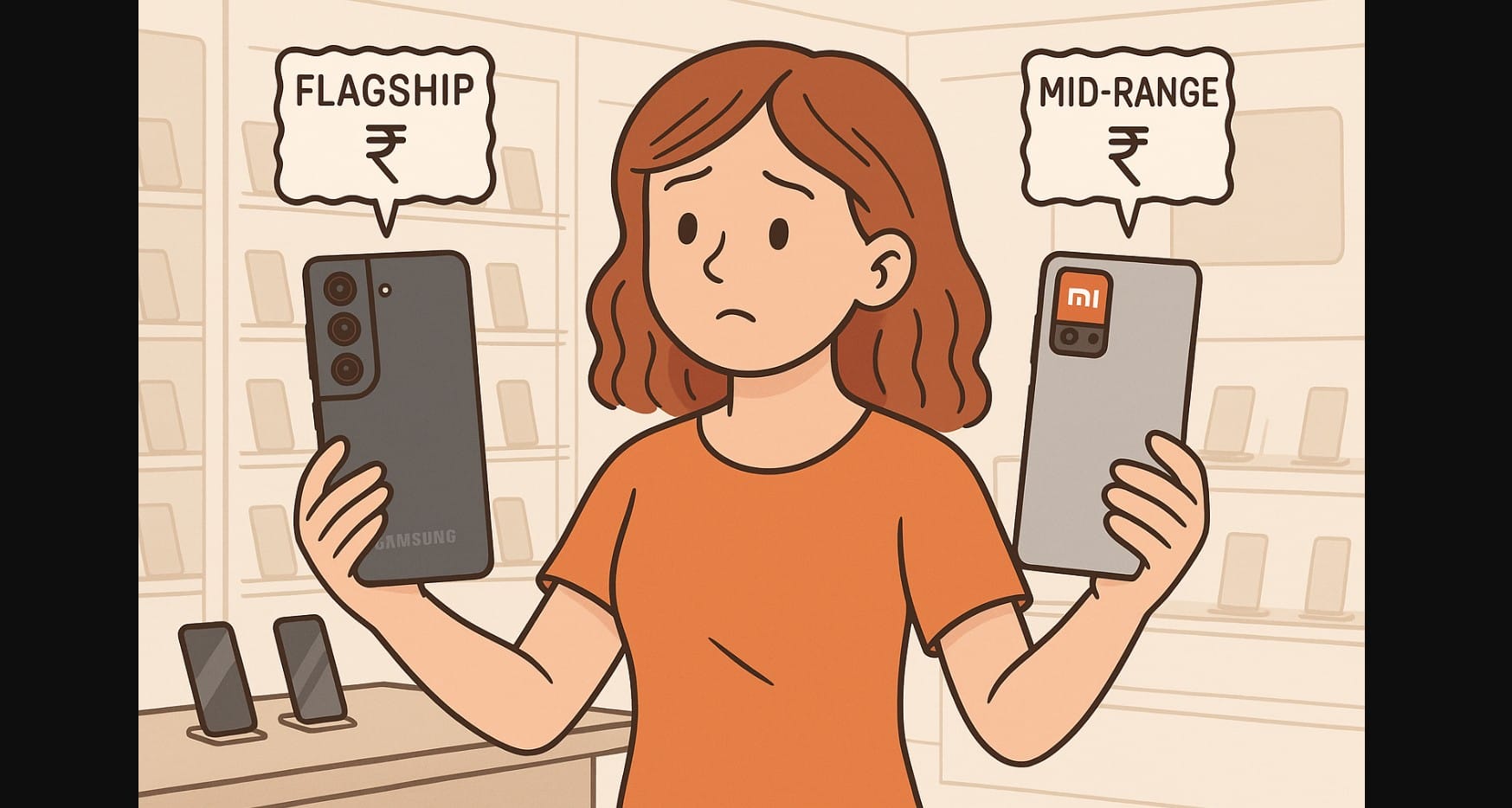
You’re looking to upgrade your phone and notice something odd: a high-end flagship phone from a year or two ago is available at the same price as a brand-new mid-range model. One offers top-tier hardware from the past, the other is built with current software and newer network standards.
So which one gives you more for your money?
In India, this is a common decision buyers face, and the answer depends on how you use your phone, how long you plan to keep it, and what trade-offs you’re willing to accept.
1. Performance and Speed: Still a Flagship Advantage
Flagship phones from 2023 or early 2024 often come with premium chipsets like Snapdragon 8 Gen 2, Dimensity 9200, or Apple’s A16 Bionic. These processors are still faster than most 2025 mid-range chips.
In contrast, newer mid-range phones use Snapdragon 7 Gen or Dimensity 8000-series chipsets, which are efficient but not built for heavy gaming or multitasking.
If you’re into performance-heavy tasks or gaming, the flagship still holds a clear edge.
2. Camera Hardware: Better Optics vs Software Tricks
Flagships usually offer better sensors, optical image stabilization (OIS), and advanced processing. Even after 1-2 years, the hardware advantage remains, especially for night photography, video stability, or portrait depth.
New mid-range phones may show higher megapixels on paper, but rely heavily on AI enhancements and post-processing rather than optics.
Verdict: Flagship phones capture better detail and more stable video.
3. Display and Build: Premium Still Feels Premium
Older flagship models typically use LTPO AMOLED panels, 120Hz+ refresh rates, and Gorilla Glass or metal frames. These still outperform most mid-range phones in brightness, color accuracy, and overall build.
Most new mid-range phones use AMOLED too, but with compromises in peak brightness, touch latency, or frame quality.
If design, symmetry, and screen quality matter, flagships still win.
4. Software and Update Lifespan: Check the Timeline
Many flagships from 2023 or early 2024 launched with Android 13 or iOS 16 and are now halfway through their update cycle. If the brand offers 4 years of updates, you may have 1-2 years left.
Mid-range phones launching in 2025 come with the latest OS version and typically offer 2-3 years of updates, depending on the brand.
If long-term software support is important to you, a newer device is usually the safer bet, unless the flagship has a known long update cycle.
5. Battery Health and Charging Speed: New Is Safer
Some older flagship models may have been manufactured over a year ago, so even if new, battery efficiency can vary. Make sure the device is unused and comes with full warranty.
New mid-range phones typically come with large 5000-5500mAh batteries and fast charging (67W-120W), and the charger is often included.
Unless you’re replacing the flagship’s battery, a new phone offers better uptime and lower risk.
6. Connectivity and Network Support: New Wins on Compatibility
Flagships from 2023-24 offer stable modems and strong antenna systems but may miss newer Indian 5G bands introduced later. They still perform well, especially if based on Qualcomm modems.
Newer phones in 2025 support more 5G bands, Wi-Fi 6E, Bluetooth 5.3, and even VoNR, ensuring better compatibility going forward.
If you’re focused on 5G or future-proof connectivity, newer mid-range phones offer broader support.
7. Resale Value and Maintenance: Think Ahead
Flagships lose a lot of value after two years and may cost more to repair if out-of-warranty. Broken screens or batteries can easily cost ₹8,000-₹15,000 depending on brand and availability.
New phones, on the other hand, have:
- Full manufacturer warranty
- Easy access to service centers
- Higher resale value over the next year
For low-risk, low-maintenance ownership, the new phone wins.
8. Overall Peace of Mind: Warranty, Returns, and Trust
Discounted flagship phones from previous years are often sold as new, boxed units during clearance sales, with full warranty. Just ensure you’re buying from a reliable source, not a marketplace reseller without brand coverage.
New phones:
- Come sealed, with a return window and full warranty
- Offer cashback, EMI, and exchange options
- Have lower upfront and ongoing risk
If peace of mind matters, go with a new phone.
In Summary
| Feature Area | Recent Flagship (1-2 Years Old) | New Mid-Range (2025) |
|---|---|---|
| Performance | Flagship-class SoC | Slower, more efficient |
| Camera | Bigger sensors, better optics | Software-heavy tuning |
| Display & Build | Premium materials | Mostly plastic |
| Software Updates | Shorter update window | Fresh update cycle |
| Battery & Charging | May need replacement | New battery, fast charge |
| 5G & Connectivity | Strong modem, fewer bands | More band coverage |
| Warranty & Support | May be limited or expired | Full coverage, easy return |
| Resale Value | Already depreciated | Resell-ready next year |
Final Verdict: Which Phone Offers More Value?
Choose a New 1-2 Years old flagship if:
- You value premium hardware, camera quality, or display finesse
- If It is sealed pack with official warranty support
- You’re a power user or gamer who needs top-tier specs
Choose a new mid-range phone if:
- You prefer fresh hardware, longer support, and peace of mind
- You care about 5G bands, resale, or future compatibility
- You want lower service risk, better warranty, and lower overall cost of ownership
What About Used or Refurbished Flagship Phones?
This comparison focuses only on new phones, either current-year mid-range models or recent flagships being cleared at a discount. If you’re exploring used or refurbished phones, battery condition, hidden damage, and warranty gaps become much more important, and need a separate evaluation.

