
DLP, LCD, LED or Laser? How to Pick the Right Projector in India
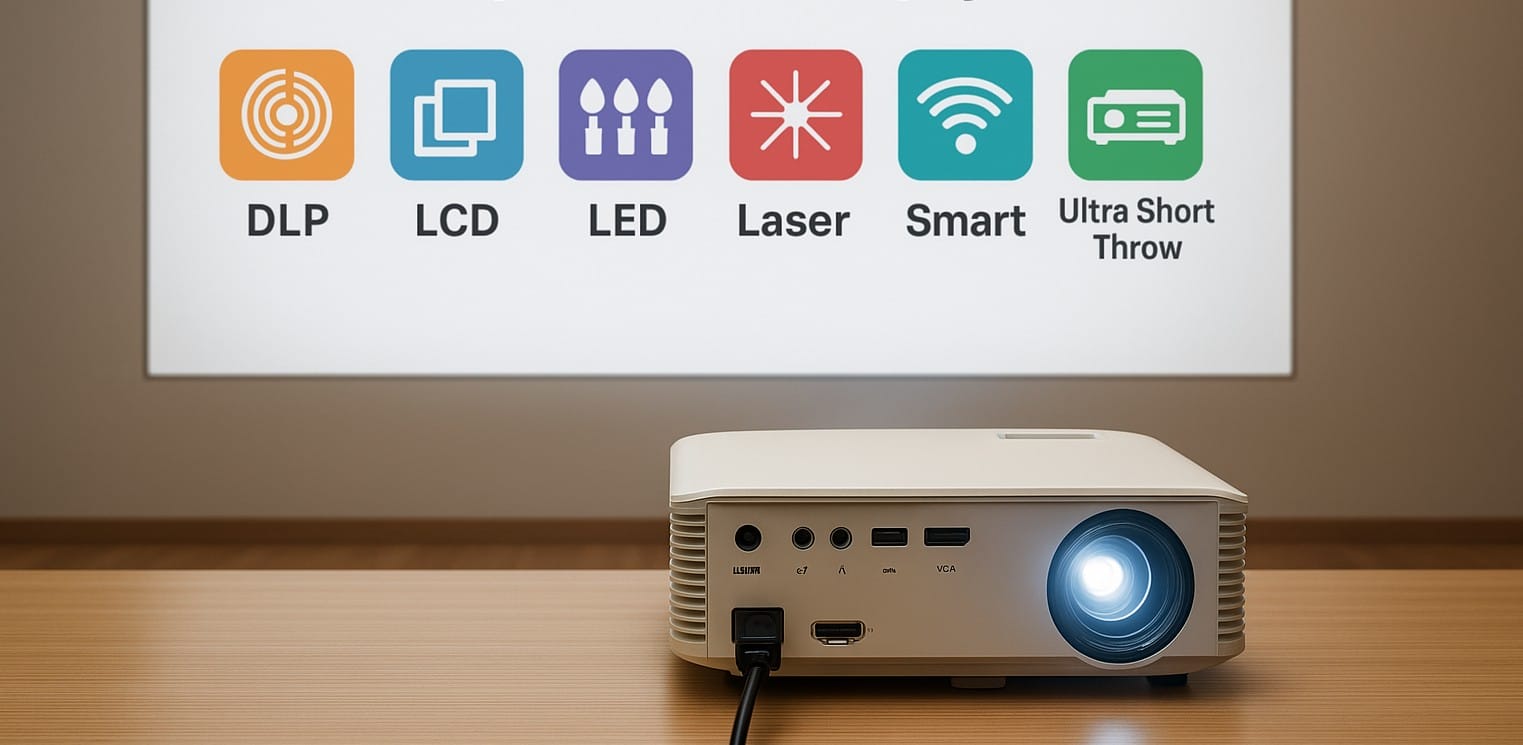
If you’re exploring projectors for your home, business, or tuition setup in India, You’ll often come across terms like DLP, LCD, LED, Laser, or even Smart projectors while browsing online or talking to a dealer. But what do these really mean, and which one makes sense for your use, be it a home movie setup, a tuition class, or a small shop demo?
This guide breaks down the most common projector types sold in India today, explains how they actually work in Indian homes and workspaces, and helps you figure out what’s worth your money, based on where and how you plan to use it.
Types of Projectors in India – Quick Comparison
| Projector Type | Brightness Level | Typical Price Range | Power Use | Works Best For |
|---|---|---|---|---|
| DLP | Medium | ₹15K-₹25K | Moderate | Movies, presentations in dim rooms |
| LCD | High | ₹18K-₹30K | Moderate | Classrooms, daylight home use |
| LED | Low-Medium | ₹10K-₹20K | Very Low | Hostels, inverter-friendly homes |
| Laser | Very High | ₹60K+ | Moderate | Events, large rooms, bright halls |
| Smart | Varies | ₹20K-₹40K | Varies | Streaming use, non-tech families |
| Ultra Short Throw | High | ₹70K+ | Moderate | Small flats, no-mount setups |
1. DLP Projectors – Compact and Good for Dark Rooms
DLP (Digital Light Processing) projectors use mirrors to form sharp images. They’re popular because they’re affordable, small, and easy to move around.
Where it works well in India:
You’ll see these often in homes where space is tight and lighting can be controlled. Many under-₹20K models offer reliable movie or presentation quality.
Best suited for:
- Bedroom movie nights
- Office slideshows
- Society club screenings in dimly lit rooms
Keep in mind:
They don’t perform well under tube lights or sunlight. Also, some people notice a slight rainbow flicker in fast-moving visuals.
2. LCD Projectors – Brighter Images for Daylight Use
LCD (Liquid Crystal Display) projectors use color panels to project vibrant visuals. They’re better at handling bright rooms compared to DLP models.
What makes them practical here:
If you run a coaching class or need something that works in a room without blackout curtains, LCD is often the safer choice. Colors appear more natural and consistent, especially for static content like diagrams or slides.
Works well when you’re:
- Teaching in a sunlit tuition room
- Hosting YouTube sessions during the day
- Using a projector in shops or showrooms
Possible downsides:
These are usually larger and need more space. They also require occasional cleaning to avoid dust build-up, which can affect image clarity.
3. LED Projectors – Long Life, Low Power, Great for Inverters
LED projectors use energy-efficient light sources that don’t get hot and last for years. Many combine LED lighting with DLP or LCD tech.
How it handles Indian conditions:
Low power use means these can run longer on inverters ideal for areas with frequent power cuts. Since they don’t generate much heat, they’re also safer in small, closed rooms or PGs.
Useful when:
- You need a portable unit for a shared space
- You’re using it in a hostel, rented flat, or small home
- Your room doesn’t have great ventilation
What to consider:
They aren’t as bright as LCD or Laser types, so they work best in darker settings or during evening hours.
4. Laser Projectors – Premium Experience with Zero Maintenance
Laser projectors use a high-powered laser beam to produce vivid, detailed images. They offer consistent performance for years without needing a bulb change.
Where they shine in India:
These are the kind you’d want for a luxury home theatre or to impress clients in a modern boardroom. They’re also used for event setups like weddings or stage displays.
Best for:
- High-end home installations
- Bright, large rooms with ambient light
- Professional or rental-grade event setups
Before you buy:
Laser projectors usually start above ₹60,000 and may be overkill for typical home use unless you really need sharp visuals in a bright setting.
5. Smart Projectors – Streaming-Ready and Simple to Use
Smart projectors come with Android OS or built-in streaming apps. You can watch YouTube, Netflix, or Zee5 without needing an external device.
Why they make sense for Indian homes:
These are perfect for people who don’t want extra wires or devices. If your family prefers using a single remote and watching online content, these make things easier especially for parents or kids.
Great choice if:
- You want plug-and-play streaming without a Fire Stick
- You’re setting it up for elders or non-tech-savvy users
- You’re placing it in a common room for family use
What you should know:
Cheaper models may not support all apps, and some can feel slow over time. You may still want to pair with a Fire Stick for better flexibility.
6. Ultra Short Throw (UST) Projectors – For Small Rooms and Tight Spaces
UST projectors sit just inches away from a wall and still give you a giant screen. No ceiling mounts or long wires needed.
How it helps in Indian setups:
Perfect for small flats or rooms where furniture placement makes traditional projectors tricky. You can place it on a low table near the wall and avoid shadows or movement disruptions.
Works best in:
- 1BHK flats, PGs, and compact city apartments
- Multi-use rooms shared by family members
- Situations where ceiling mounting isn’t possible
Things to note:
These are premium devices, often starting around ₹70,000. Not ideal if you’re on a budget or only need occasional use.
Summary – Choosing the Right Type of Projector
When you’re shopping for a projector in India, it’s easy to get lost in specs. But what truly matters is how and where you’ll use it. From energy-saving LED models that run smoothly on inverters, to bright LCD projectors for tuition classes, or high-end laser units for big events there’s a type for every need.
By focusing on your room lighting, power situation, screen size expectations, and who’s going to use it, you can narrow your choices much faster. You don’t need the most expensive projector you need the one that fits your setup.
In the next post, we’ll help you go one step further: Should you even buy a projector or stick with a big TV? We’ll compare them directly, based on space, cost, content, and practicality in Indian homes.

