
RO vs. UV vs. UF Water Purifiers: What Works Best for Indian Conditions?
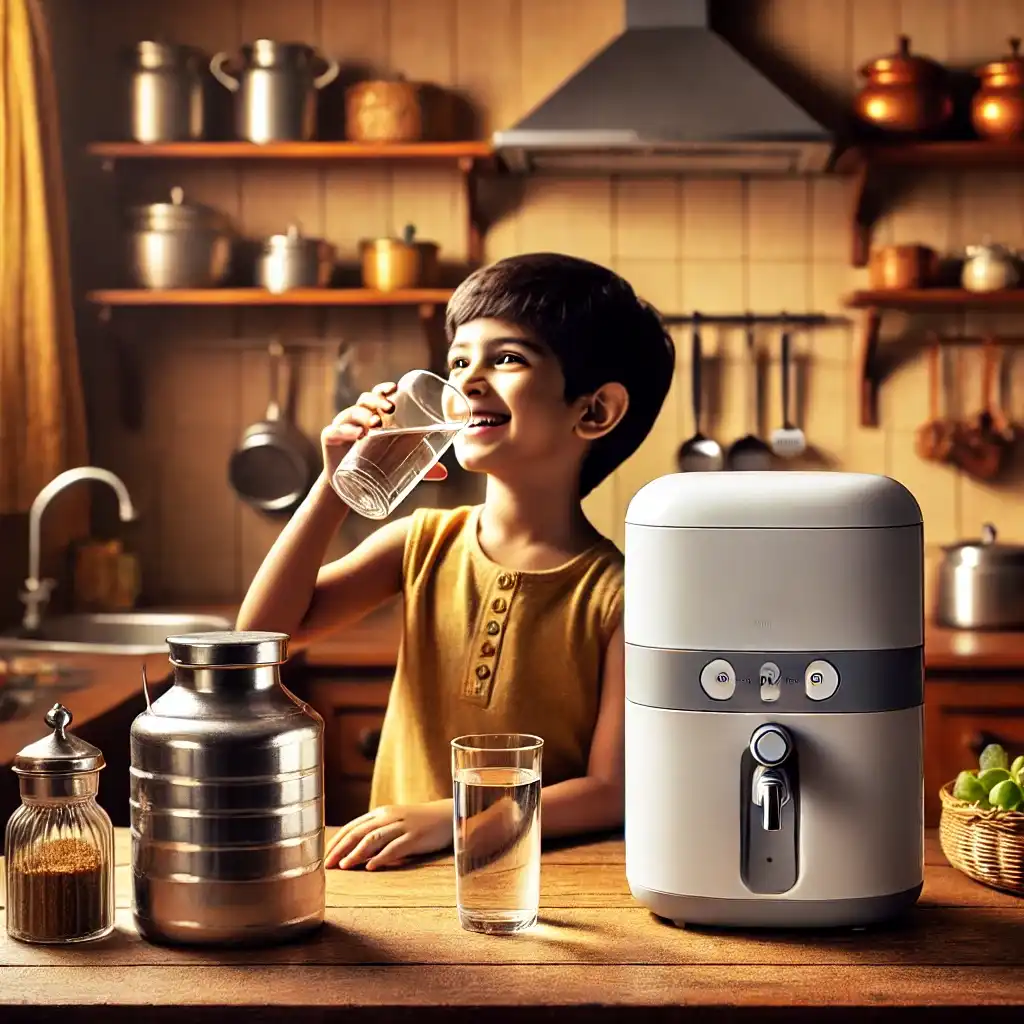
Water quality in India varies significantly across different regions. Some areas rely on borewell water, which contains high TDS (Total Dissolved Solids), heavy metals, and hardness, while others receive municipal water, which may contain bacteria, viruses, and chlorine. Many regions also depend on river water, tanker water, or mixed sources, which may have sediments, microbial contamination, and industrial pollutants.
With rising concerns about waterborne diseases, chemical contaminants, and microplastics, choosing the right water purifier is essential for health and safety.
In this guide, you’ll learn about RO, UV, and UF technologies, their advantages and limitations, maintenance costs, water wastage concerns, and how to choose the best purifier for your home.
Understanding Water Contamination in India
Water sources in India vary, and each type has different contaminants:
| Water Source | Common Contaminants | TDS Level |
|---|---|---|
| Borewell Water | Heavy metals (arsenic, lead, fluoride), high salts, bacteria, viruses | 200+ ppm |
| Municipal Water (Treated) | Chlorine, bacteria, viruses (from old pipelines) | Below 200 ppm |
| Tanker Water | Dirt, sediments, bacteria, viruses | 100-300 ppm |
| River or Lake Water | Mud, organic waste, bacteria, viruses | Below 200 ppm |
Tip: Always test your water before selecting a purifier using a TDS meter or a lab test.
Water Purifier Technical Terms Explained
- TDS (Total Dissolved Solids): Measures the level of salts, metals, and minerals in water. Higher TDS means more impurities.
- TDS Controller/Mineralizer: Restores essential minerals after RO filtration.
- Activated Carbon Filter: Removes chlorine, bad taste, and odors.
- Sediment Filter: Removes dirt, sand, and rust before water enters the RO membrane.
- pH Balancer: Adjusts water pH to ensure it is not too acidic or alkaline.
How RO, UV, and UF Water Purifiers Work
1. Reverse Osmosis (RO) Purification
RO purifiers use a semi-permeable membrane to filter out dissolved impuritie, including salts, heavy metals, pesticides, and harmful chemicals. It works by applying high pressure to push water through the membrane, leaving contaminants behind.
Pros:
- Removes dissolved solids (TDS) like salts, arsenic, fluoride, and heavy metals.
- Eliminates bacteria, viruses, and other harmful microorganisms.
- Improves taste and odor by filtering out chlorine and other impurities.
Cons:
- Wastes a lot of water (For every 1 liter of purified water, 2-3 liters are discarded).
- Removes essential minerals like calcium and magnesium unless a TDS controller or mineralizer is used.
- Requires electricity to function, making it unsuitable for areas with frequent power cuts.
2. Impact of RO on Water Taste & Mineral Content
- RO purifiers can make water taste flat because they remove essential minerals like calcium and magnesium.
- Solution: Choose an RO purifier with a TDS Controller or Mineralizer, which reintroduces essential minerals into the water.
- If your water has naturally low TDS (municipal supply), avoid RO and opt for UV or UF to retain natural minerals.
3. Water Wastage in RO Purifiers & How to Reduce It
- RO purifiers waste 2-3 liters of water for every liter purified. This is a significant concern, especially in water-scarce areas.
- To reduce water wastage, some RO models come with water-saving technology or Zero Water Wastage (ZWW) systems.
Ways to Reuse RO Reject Water:
- Use for mopping floors
- Use in toilets for flushing
- Use for watering plants (after checking TDS levels)
Tip: If your water has low TDS (below 200 ppm), avoid using RO purifiers as they unnecessarily waste water.
2. Ultraviolet (UV) Purification
UV purifiers use ultraviolet light to kill bacteria, viruses, and other microorganisms. A UV lamp emits high-energy rays that destroy the DNA of these microbes, making the water safe to drink.
Pros:
- Effectively kills bacteria, viruses, and other pathogens.
- Does not alter the taste or mineral content of water.
- No water wastage, unlike RO purifiers.
Cons:
- Does not remove dissolved solids, heavy metals, or chemicals.
- Does not improve taste or remove foul odors.
- Requires clear water (free from sediments) to work effectively.
Tip: If water has sediments, use UV+UF purifiers for better filtration.
3. Ultrafiltration (UF) Purification
UF purifiers use a membrane with larger pore size compared to RO but smaller than regular filters. It removes bacteria, cysts, and dirt, making water clearer.
Pros:
- Works without electricity, making it ideal for areas with power cuts.
- Removes bacteria, cysts, and sediments, improving water clarity.
- Does not waste water, unlike RO.
- Long-lasting filters and low maintenance.
Cons:
- Does not remove dissolved salts or heavy metals.
- Not effective against viruses compared to UV or RO.
Best For:
- Low TDS water sources like municipal supply.
- Areas with frequent power outages where electric purifiers may not work reliably.
Tip: Use UF with UV if bacterial contamination is high.
Compare RO vs. UV vs. UF Water Purifiers
| Feature | RO Purifier | UV Purifier | UF Purifier |
|---|---|---|---|
| Removes Dissolved Solids (TDS) | Yes | No | No |
| Removes Bacteria & Viruses | Yes | Yes (Kills but doesn’t remove) | Yes |
| Removes Heavy Metals (Lead, Arsenic, etc.) | Yes | No | No |
| Removes Dirt & Sediments | Yes | No | Yes |
| Requires Electricity | Yes | Yes | No |
| Wastes Water | Yes (2-3 liters per liter of purified water) | No | No |
| Maintains Essential Minerals | No (unless mineralizer is added) | Yes | Yes |
| Best For | High TDS water (Borewell, Groundwater) | Low TDS water (Municipal supply) | Low TDS water without electricity |
Recommended Water Purifier for Different Indian Conditions
| Water Source | TDS Level | Best Purifier |
|---|---|---|
| Borewell Water (High TDS, Heavy Metals, Salts) | 200+ ppm | RO or RO+UV |
| Municipal Water (Low TDS, May Contain Bacteria) | Below 200 ppm | UV or UF |
| River or Tanker Water (Low TDS, Visible Impurities, Microorganisms) | Below 200 ppm | UV+UF |
| Mixed Water (Borewell + Municipal Mix) | Varies | RO+UV+UF |
Tip: If your municipal water follows BIS (Bureau of Indian Standards) IS 10500:2012, RO is not needed.
Storage Tank & Water Holding Capacity of Water Purifier
- Many purifiers have storage tanks (7-12 liters) to provide clean water even during power cuts.
- Some UV and UF purifiers lack storage tanks, meaning you need a continuous water supply for them to work.
- RO + UV purifiers with storage tanks are the best option for areas with irregular water supply or power cuts.
Tip: If your area has frequent power cuts, buy a RO+UV model with a storage tank.
Maintenance Costs & Filter Replacement
- RO purifiers require regular filter replacement, including the RO membrane, sediment filter, and carbon filter.
- UV lamps need periodic replacement (usually every 6-12 months) to ensure effective microbial elimination.
- UF membranes last longer and require less frequent maintenance.
Estimated Annual Maintenance Costs in India:
| Purifier Type | Approximate Annual Cost |
|---|---|
| RO | ₹3,000 – ₹6,000 |
| RO + UV | ₹4,000 – ₹7,000 |
| RO + UV + UF | ₹5,000 – ₹8,000 |
| UV | ₹1,000 – ₹2,000 |
| UF | ₹500 – ₹1,500 |
Tip: Always check the availability and cost of filters before purchasing a purifier.
Government Regulations & BIS Water Quality Standards in India
The Bureau of Indian Standards (BIS) sets quality standards for drinking water. If your municipal supply meets IS 10500:2012 standards, RO is unnecessary.
BIS Guidelines:
- TDS < 500 ppm – Safe for drinking (no RO needed).
- TDS > 500 ppm – Needs purification (RO recommended).
- Bacteria/Virus Presence – UV is essential.
Popular Water Purifier Brands in India (2025)
- Kent – Popular for RO + UV + UF models.
- Aquaguard (Eureka Forbes) – Reliable after-sales service.
- HUL Pureit – Budget-friendly RO + UV models.
- Blue Star – Good water-saving technology.
- AO Smith – Premium models with mineral technology.
- Livpure – Affordable and compact purifiers.
Final Buying Checklist: How to Choose the Right Water Purifier?
- Test your water for TDS & contaminants before purchasing.
- Choose RO only if TDS is above 200 ppm to avoid unnecessary water wastage.
- Opt for a TDS Controller or Mineralizer to retain essential minerals.
- Look for Zero Water Wastage models if water conservation is a priority.
- If you face power cuts, get a purifier with a storage tank or UF model.
- Consider maintenance costs while selecting a brand.
The best water purifier for India depends on your water source and TDS levels. Don’t blindly buy an RO purifier if your water doesn’t need it—UV or UF might be a better and more eco-friendly choice!

