
Charging Your Electric Scooter: Home, Public Stations, and Power Fluctuation Risks
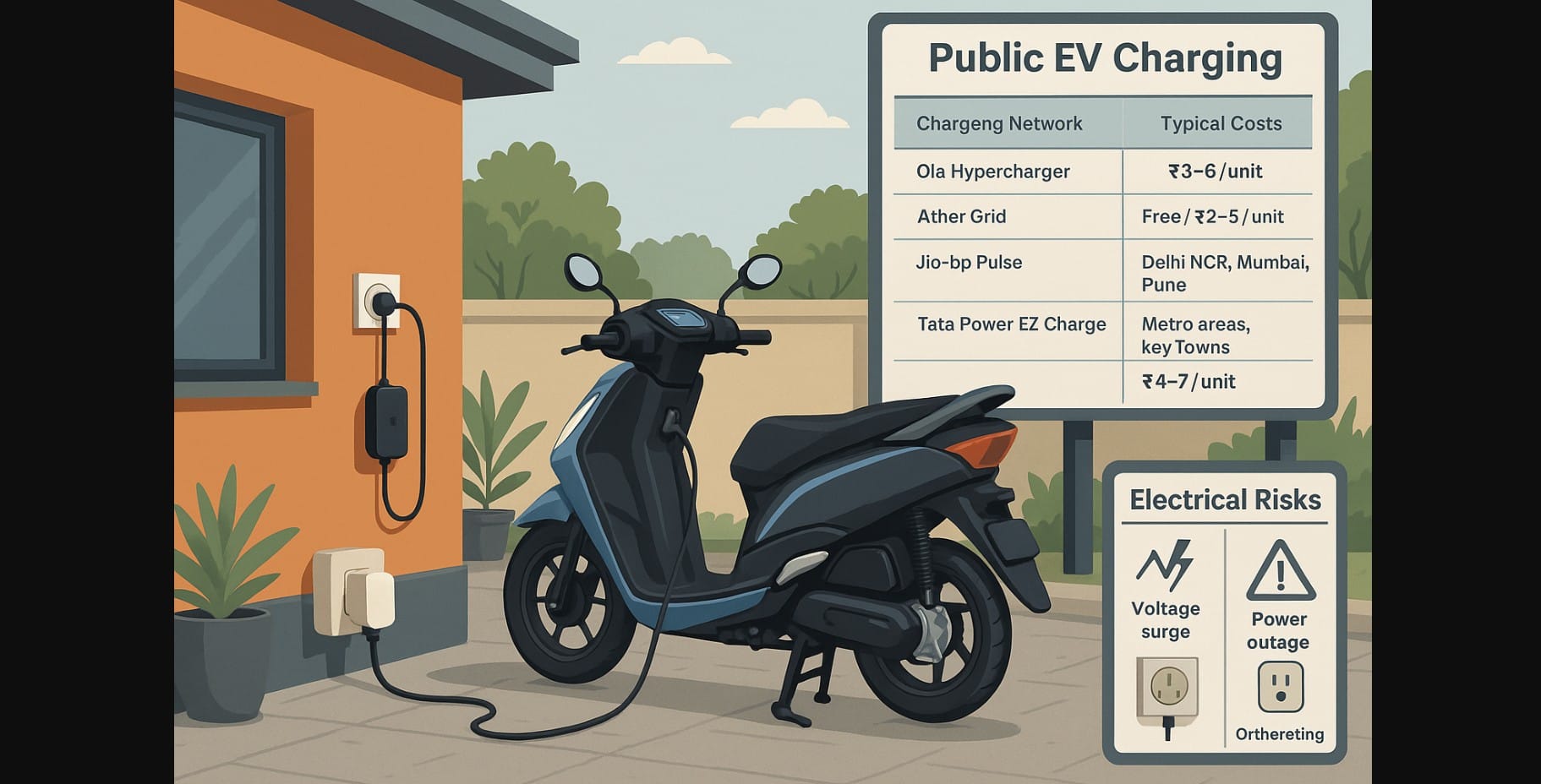
In India, charging an electric scooter isn’t as simple as plugging it in anywhere.
Bad sockets, power cuts, surges, and even poor ventilation during charging can damage your scooter’s battery health over time.
Setting up smart, safe charging practices at home and knowing how to handle public charging helps you protect your investment and enjoy a longer, worry-free EV ownership.
1. How to Set Up Safe Home Charging for Your Electric Scooter
Basic Charging Needs for Most Indian EV Scooters
- Most scooters today charge safely using a standard 5A or 15A socket.
- Bigger battery scooters like Ola S1 Pro or Ather 450X benefit from 15A wiring for stable charging.
- Dedicated wiring with an independent MCB (Miniature Circuit Breaker) is recommended if you charge daily overnight.
Choosing the Right Socket and Cable for Home Charging
- Use a high-quality 15A socket with surge protection if possible.
- Install a good quality cable with thick insulation to handle consistent power.
- Avoid cheap multi-plug boards for daily EV charging.
Best Placement for Charging at Home
- Install the socket in a covered, well-ventilated area (car porch, balcony, garage corner).
- Avoid charging scooters outdoors during heavy rain.
- Keep the socket at waist height to prevent water splashes during Indian monsoons.
A simple ₹2,000-₹3,000 home upgrade ensures much safer and longer battery life.
2. Using Public Charging Stations in India
Types of EV Charging Points Available
- Type 1 Slow Chargers: Standard 5A/15A plug points same as your home plug.
- Type 2 Faster Chargers: Dedicated connectors for electric two-wheelers, mostly brand-tied networks.
For most EV scooters, home-style slow chargers remain the standard at public points.
Major Public EV Scooter Charging Networks in India (2025)
| Provider | Key Locations | Typical Cost |
|---|---|---|
| Ola Hypercharger | Metro cities and growing highways | ₹3-₹6/unit |
| Ather Grid | Expanding across 50+ cities | Free initially, ₹2-₹5/unit later |
| Jio-bp Pulse | Delhi NCR, Mumbai, Pune, Hyderabad | ₹3-₹6/unit |
| Tata Power EZ Charge | Metro areas, key towns | ₹4-₹7/unit |
Expansion is fastest in Tier-1 and select Tier-2 cities, but still slower in rural areas.
What EV Riders Should Know Before Using Public Chargers
- Many networks require downloading their apps for payment and unlocking sessions.
- Popular chargers during evenings can have longer waiting times (especially Ola, Ather hubs).
- Always carry your portable charger for emergencies, particularly if riding in less populated areas.
Public charging is growing, but home charging still remains the backbone for most Indian EV owners.
3. Risks from Power Fluctuations While Charging EV Scooters in India
Common Electrical Problems in Indian Homes
- Voltage surges during thunderstorms or peak hours.
- Load shedding or power cuts, especially in summer and monsoon seasons.
- Loose wiring at old homes causing overheating sockets.
These real-world problems are much more common than scooter manuals assume.
How Fluctuations Affect Battery Health
- Repeated charging during voltage surges stresses the battery management system (BMS).
- Deep discharge combined with unstable charging shortens battery life drastically.
- Even scooters with smart BMS features cannot fully protect against frequent unstable inputs.
Without precautions, expensive battery packs can lose 10-20% capacity in just 2-3 years instead of lasting 5+ years.
4. Practical Ways to Protect Your EV Scooter from Power Problems
- Install a basic surge protection device (SPD) at your charging socket (~₹500-₹1,500).
- Prefer charging during daytime (when voltage is more stable) rather than overnight in load-shedding prone areas.
- Inspect wiring and sockets every 6-12 months through a licensed electrician.
- Use branded portable chargers not cheap aftermarket ones.
Good setup costs a little now but saves lakhs later by avoiding early battery degradation.
5. Smart Electric Scooter Charging Habits
- Let your scooter cool for 20-30 minutes after a long ride before plugging in.
- Unplug once the battery reaches 100% avoid overnight “extra trickle” charging without reason.
- Maintain 20-30% battery before recharging avoid running to 0% regularly.
- Keep a daily routine: charge at similar times each day if possible to stabilize charging cycles.
These simple habits increase your battery’s chances of lasting 5-6 years instead of just 3-4.
6. Charging Safely is the First Step to Long EV Scooter Life
Charging your electric scooter properly is crucial in India. Good wiring, reliable sockets, surge protection, and smart habits are essential for safety against power risks.
Treat your scooter’s battery as the core of your EV. Care for it well, and it will last for years, making your commuting costs low and your rides smooth throughout India.

