
Comparing Samsung, Apple, and Chinese Brands in India’s Smartphone Market
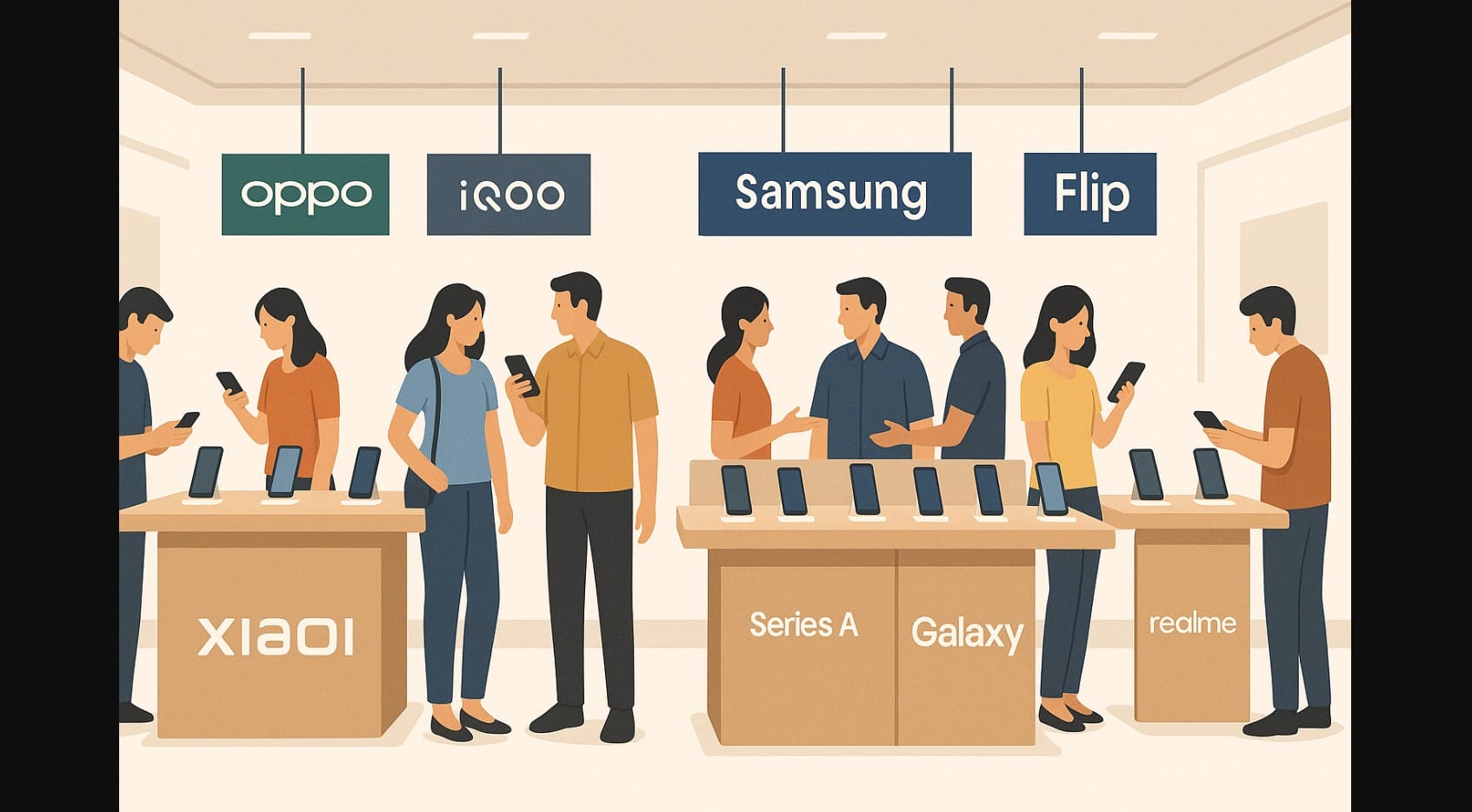
India’s smartphone market shipped over 150 million units in 2025, making it second only to China in size. But behind this large number lies a layered story: Chinese phone brands dominate on shipments, Samsung stretches across both budget and premium, and Apple captures the lion’s share of revenue despite relatively low volumes. The rivalry between these smartphone brands is not just about who sells the most phones but about who controls aspiration, trust, resale value, and service infrastructure.
This head-to-head comparison reveals how differently each mobile brand operates in India, why consumers choose one over another, and what the market might look like by 2028.
1. Phone Shipment Volumes vs Market Value – Two Very Different Battles
Volume Advantage of Chinese Phone Brands
Chinese-origin makers, vivo, OPPO, Xiaomi, realme, and OnePlus/iQOO, command a combined 55-60% of shipments. Their edge comes from the ₹10,000-₹25,000 price band, which accounts for nearly half of India’s smartphone sales. During festive seasons like Diwali, their shipment volumes spike as budget-conscious consumers look for affordable upgrades.
The strength of Chinese phone brands lies in affordability and frequent model launches. They flood the market with multiple sub-brands and variants each year, ensuring constant visibility. This high-volume, low-margin approach ensures dominance in shipment statistics even though profits per unit remain small.
Samsung and Apple’s Value Edge
Samsung holds around 19-20% by shipment volume but earns a much higher value share, around 25%, because of its mix of mid-range Galaxy A devices and premium Galaxy S and Fold models. Apple’s volume is smaller at 12-15%, but its value share is the highest, hovering near 35%. This is because even a smaller number of iPhones generate outsized revenue.
For India, this means Chinese brands lead in numbers, but Samsung and Apple dominate in profits and premium positioning. The divide shows how two parallel markets exist, volume-driven mid-range on one side and value-driven premium on the other.
2. The Smartphone Price Divide: Average Selling Price (ASP) and Profit Gaps
Chinese Brands Rising from Budget to Mid-Premium
In 2018, Chinese brands averaged ₹12,000 per device sold. By 2025, that number rose to nearly ₹19,000. This increase comes from the success of vivo’s X series, OPPO’s flagship, and OnePlus’ premium Pro models. Despite the rise, most of their sales remain clustered in the mid-range, where margins are thinner.
Despite these premium attempts, the bulk of their sales still comes from the ₹10,000-₹25,000 band. This ensures steady shipment growth but limits their profitability. It also highlights their challenge, moving upmarket without losing the budget-conscious base.
Still, the ASP climb is significant. It shows that Indian consumers are gradually moving away from pure budget devices toward slightly higher-priced phones with better cameras, faster processors, and premium designs. Chinese brands are actively chasing this shift.
Samsung and Apple Holding the Line in High-Margin Segments
Samsung’s ASP (Average Selling Price) has climbed to ~₹24,000, supported by its A-series volume in the budget-mid segment and its S and Fold series at the top end. Apple’s ASP is in a different league, standing above ₹80,000. Local iPhone assembly has helped lower prices slightly, but Apple continues to occupy the top of the pyramid.
This positioning means Apple doesn’t need high shipment numbers to dominate value metrics. Samsung benefits from straddling both volume and premium, while Chinese brands still rely heavily on volumes to stay competitive.
3. Phone Retail Channels: Different Distribution Playbooks
How Chinese Phone Brands Flooded Tier-2 and Tier-3 Cities
OPPO and vivo became household names by saturating India’s offline retail landscape. Their branding dominates small-town shops, often replacing shopfronts with green and blue signage. Retailer incentives, including higher profit margins and free in-store branding, keep sellers loyal.
Xiaomi initially focused online with flash sales but shifted offline with Mi Home and partnerships with electronics chains. This dual-channel model allowed Xiaomi to tap both internet-savvy urban youth and walk-in buyers in smaller towns.
Samsung and Apple Betting on Controlled Premium Outlets
Samsung maintains a universal distribution strategy. Its phones are available everywhere: local shops, e-commerce platforms, and premium retail outlets. It has ensured visibility across every consumer type, from first-time buyers to professionals buying flagship models.
Apple has chosen exclusivity. The launch of Apple BKC in Mumbai and Apple Saket in Delhi marked its first exclusive stores in India. Premium resellers cover Tier-2 cities, but Apple prefers to control how its devices are displayed and sold, even if it means slower physical expansion.
4. Phone Brand Service Networks and Repairs – Speed vs Exclusivity
Chinese Brands Building Dense, Low-Cost Service Networks
Chinese brands created dense networks of service centers across metros and Tier-2 towns. Their focus is on affordability and speed, common repairs like screen replacements are often handled within the same day. Spare parts are inexpensive and widely available, giving them a huge edge among mass-market buyers.
This strategy keeps consumers loyal even when resale values are lower. For a customer in Patna or Indore, knowing they can get a fast, low-cost repair is more valuable than brand prestige.
Samsung and Apple’s Premium Care Model
Samsung combines accessibility with premium tiers. It offers standard repair centers across India but also premium services like doorstep pickup for high-end Galaxy S and Fold models.
Apple’s after-sales approach is narrower but highly controlled. Limited service centers ensure quality but often mean longer wait times outside major cities. Replacement costs are also higher, reinforcing Apple’s luxury positioning but creating frustration for mid-tier buyers.
5. Smartphone Resale, Upgrade, and Consumer Psychology
Liquidity of Chinese Phones – Why Chinese Phones Sell Fast but Lose Value Quickly
Chinese devices dominate second-hand platforms like Cashify and OLX. Even though resale prices are modest, their volume ensures quick liquidity. This makes them attractive to frequent upgraders who prefer trading in their old phones every 18-24 months.
This cycle feeds back into sales: people comfortable with quick resale are more likely to return to the same brand for their next purchase, reinforcing market share.
How iPhones and Galaxy Flagships Retain Value for Longer
Apple’s iPhones hold resale values of 50-60% even after two years, far outpacing Chinese phones. This high recovery value makes iPhones effectively cheaper over their lifecycle, especially for EMI buyers.
Samsung sits in the middle: its Galaxy S and foldables retain decent value, but its budget models depreciate quickly. This duality reflects its wide product spread.
6. Mobile Phone Advertising, Branding, and Consumer Trust
Aggressive Visibility of Chinese Phone Brands
Chinese makers dominate cricket sponsorships, TV ads, and roadside hoardings. Their omnipresence builds recall but can also cause fatigue, as sub-brands and frequent launches blur differentiation. Despite this, their high marketing spend continues to ensure first-time smartphone buyers encounter them more often than other brands.
This strategy has helped them build a mass-market identity but risks making premium pushes harder. Consumers often associate these brands with affordability rather than exclusivity.
The Safe Bet: Samsung’s Reliability and Apple’s Aspiration
Samsung markets itself as reliable and versatile, appealing to buyers across generations. Apple sells aspiration: exclusivity, lifestyle, and status. Their messaging is quieter but more consistent.
Both rely less on saturation and more on trust and image-building, a strategy that resonates with long-term buyers.
7. Where the Market Heads by 2028 – Three Possible Futures
If Chinese Makers Succeed in Moving Up the Premium Ladder
vivo and OPPO may expand AI-driven devices, OnePlus may challenge Samsung’s foldables, and deeper localisation could reduce premium device costs. This could help them capture aspirational buyers currently loyal to Samsung and Apple.
If Samsung Consolidates the Mid-Range Battlefield
Samsung’s growth in the ₹15,000-₹25,000 range could squeeze Xiaomi and realme further. Leveraging its strong brand trust, Samsung could convert budget buyers into long-term loyalists.
If Apple Expands Its Local Footprint
Apple’s focus on EMI, trade-in programs, and expanded local manufacturing could help it double market share in value. Wider penetration into Tier-2 cities could make iPhones less exclusive and more accessible to the rising middle class.
8. Closing Perspective: A Three-Way Tug of War
India’s smartphone market is best understood as a three-way contest. Chinese brands dominate in volumes and affordability, Samsung stretches across both budget and premium, and Apple controls the aspirational premium tier. For consumers, the decision is not just about specifications but also resale value, service networks, and financing options.
For consumers, the choice depends on immediate need versus long-term value. For the industry, the contest will be decided by who adapts faster to India’s blend of affordability, aspiration, and regulatory complexity.

