
Why Silver Oxide Batteries Still Matter for Watches and Medical Devices
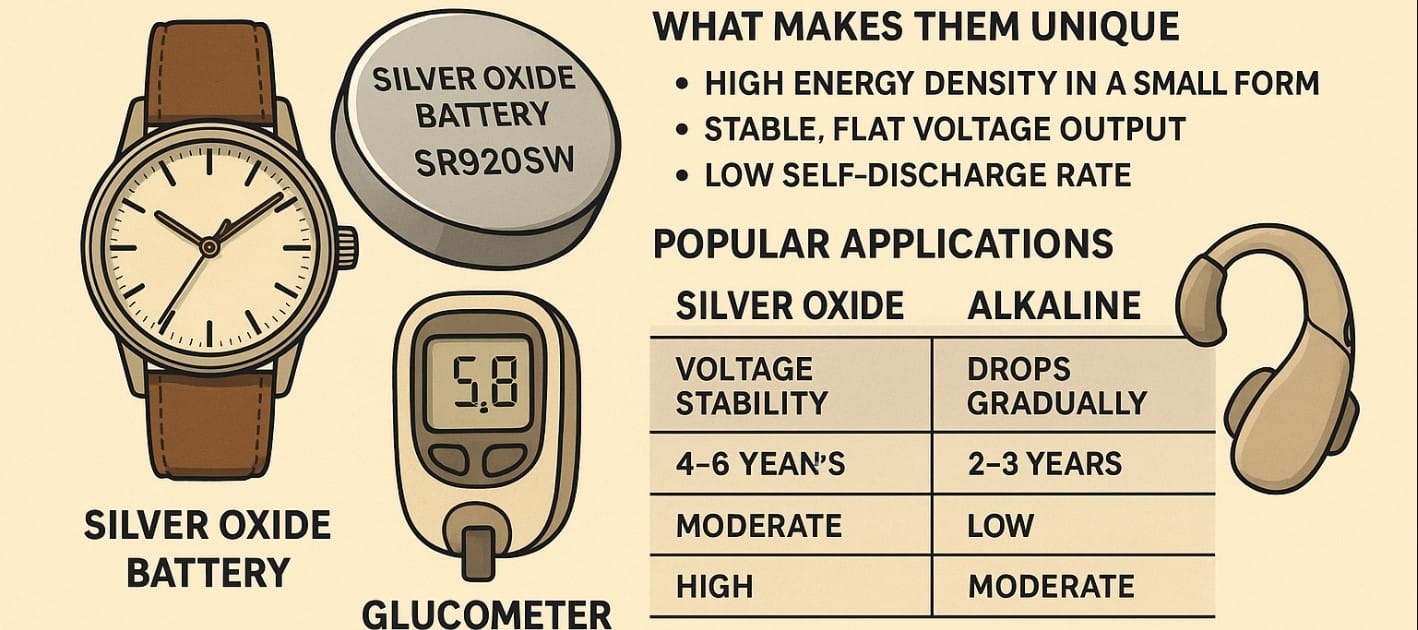
While lithium batteries dominate headlines, silver oxide button cells quietly continue to power some of the most essential compact devices in India from analog watches to glucometers and hearing aids.
These coin-sized batteries are known for three key traits:
- Flat voltage output (stable power until the very end)
- High energy density in a small form
- Low self-discharge rate, making them reliable even in rarely used devices
When devices require accuracy, reliability, and long shelf life, silver oxide batteries still outperform their alkaline and lithium coin cell counterparts in many use cases.
1. Where You’ll Still Find Silver Oxide Batteries in Devices
Analog and Hybrid Watches
India has a huge market for analog watches from budget Titan models to premium Swiss pieces.
Most still use silver oxide batteries (e.g., SR626SW, SR920SW) because:
- They maintain precise voltage, crucial for timekeeping
- Last longer than alkaline alternatives
- Don’t leak and damage the delicate movement
Glucometers and Digital Thermometers
Medical tools like glucose meters and thermometers require precise, consistent voltage to operate correctly.
Silver oxide cells provide:
- Reliable power for accuracy-sensitive readings
- Minimal risk of false data due to voltage drop
Hearing Aids and Medical Sensors
Devices like hearing aids depend on clean, steady power.
Silver oxide cells like SR44 or SR41 are favored for:
- Small size
- Consistent output
- Quiet, maintenance-free operation
Smart Tags, Sensors, and Wearable Patches
In India’s growing wearable health tech and sensor-based logistics sectors, silver oxide batteries are found in:
- Smart ID tags
- Temperature data loggers
- Limited-duration wearables with high accuracy needs
2. Silver Oxide vs Alkaline Button Cells: What’s the Difference?
| Feature | Silver Oxide | Alkaline Button Cell |
|---|---|---|
| Voltage Consistency | Steady output until depletion | Gradual voltage drop |
| Shelf Life | 4-6 years | 2-3 years |
| Leakage Resistance | High | Moderate |
| Accuracy for Devices | Excellent | Poor for precision tools |
| Price | Slightly higher | Lower |
While alkaline button cells (labeled AG3, AG10, etc.) are cheaper, they are best for toys, low-precision gadgets, or short-term use. For medical and watch-grade precision, silver oxide remains unmatched.
3. Silver Oxide Battery Codes and Where to Find Them in India
Common Silver Oxide Codes:
- SR626SW, SR920SW, SR521SW (watches)
- SR44, SR41, SR43 (medical, meters, hearing aids)
Popular Brands in India:
- Maxell, Sony, Renata, Panasonic, Varta, Energizer Silver Oxide
Where to Buy:
- Local watch repair centers
- Medical stores (for hearing aid and glucometer cells)
- Online: Amazon, Flipkart, Tata 1mg, and authorized dealers
4. Why Not Just Use Lithium Coin Cells Instead?
While lithium coin cells like CR2032 are more common in fitness trackers and remotes, they are:
- Too high in voltage (3V vs 1.5V of silver oxide)
- Less precise for timing and metering applications
- Prone to voltage fluctuations that can affect sensitive sensors
Silver oxide batteries are still better suited for slow, constant discharge in compact, precision-critical environments.
5. When Replacing Button Batteries:
- Always replace based on exact battery code (SR626SW ≠ SR626W ≠ AG4)
- Avoid generic alkaline “AG” batteries for watches or glucometers
- Look for “SR” prefix when buying this denotes silver oxide
- Dispose safely though less toxic than other cells, they contain silver and need proper handling
6. Trusted Power Source for Critical Devices
In a fast-moving world, it’s easy to forget the small power sources keeping our essential devices running.
But in India, silver oxide batteries continue to be the best fit for:
- Analog and hybrid watches
- Compact medical devices
- Precision tools used across healthcare, diagnostics, and wearables
Silver oxide is still important in India’s tech scene until a better option provides the same stability, safety, and accuracy.

