
How AI is Powering Smarter Homes in India – Behind the Automation
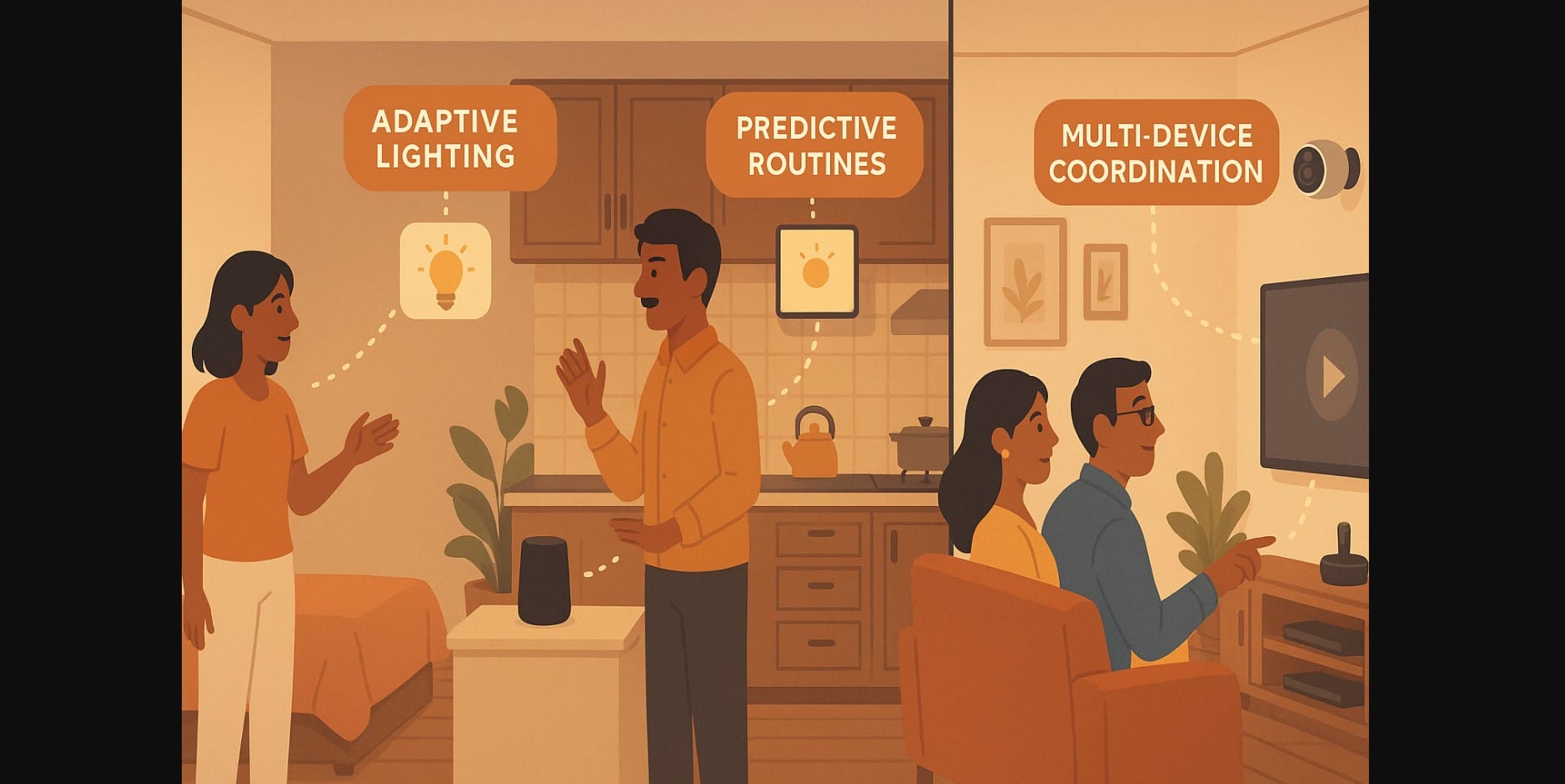
You may have installed a smart plug for your geyser, a voice assistant in your living room, and even automated your lights. But if you’ve ever wondered why some routines feel effortless, or how your devices seem to “know” your timing better each week, the answer is simple:
It’s not just smart tech it’s AI working quietly in the background.
Smart homes in India are no longer just about remote control. They’re about adaptation, learning, and comfort that grows with your routine. This post helps you understand how AI makes it all possible and what it’s already doing in your home.
1. Smart Devices Are Just the Surface – AI Is the Real Engine
It’s easy to think your smart speaker or bulb is doing all the work. But the real transformation happens when:
- Your lights turn on without you asking
- Your AC switches off when no one’s in the room
- Your smart camera alerts you only when it matters
- Your assistant suggests new routines you didn’t set manually
This kind of responsiveness comes from machine learning, pattern recognition, and cloud intelligence all core parts of AI.
2. What Role Does AI Play in Your Smart Home?
AI enables your devices to go beyond basic instructions and:
- Understand natural language (even if you speak in Hinglish)
- Recognize usage patterns and adjust automation suggestions
- Distinguish between normal activity and unusual events
- Prioritize useful alerts and ignore background noise
- Combine data from multiple devices for smarter decisions
You may not see the AI but if your home feels more intuitive over time, that’s why.
3. You Might Already Be Using AI Without Realizing It
Here are examples where AI is active in many Indian homes:
| AI Feature | Example in Use |
|---|---|
| Smart voice routines | “Good morning” triggers lights, geyser, news automatically |
| Human detection via cameras | Camera alerts you only for people, not passing vehicles |
| Predictive appliance suggestions | App recommends scheduling geyser based on 7 AM usage |
| Adaptive brightness | Light gradually dims in your bedroom every evening |
| Context-aware commands | “Play something chill” Assistant knows what you prefer |
These aren’t fixed features they get smarter the more you use them.
4. How AI “Learns” Your Habits
AI systems use:
- Repetition: The more often you turn something on/off, the more it learns your pattern
- Sensor input: It tracks presence, movement, sound, and ambient light
- Time/location awareness: It knows when you usually perform certain actions
- Multi-device input: It combines data from plugs, bulbs, speakers, and cameras
Example: If you turn off the fan and switch on a table lamp every night at 10:45 PM, your system might suggest an automated routine or even activate it for you if you opt in.
5. Why AI Fits Indian Homes So Well
Indian homes are dynamic:
- Multi-user: parents, children, elders, helpers
- Variable power supply: inverters, power cuts
- Mixed languages and commands: Hindi + English, regional words
- Flexible routines: guests, festivals, holidays, custom habits
AI thrives in these conditions by learning your unique flow rather than forcing a standard routine.
6. Where You’re Likely Seeing AI in India Already
| Device Type | What the AI Is Doing |
|---|---|
| Google Assistant | Learning speech patterns, handling follow-up questions |
| Alexa Routines | Suggesting new automations based on repeated actions |
| Smart TVs | Recommending regional OTT content based on viewing |
| Security Cameras | Filtering motion events, recognizing familiar faces |
| AC/lighting systems | Adjusting settings based on past climate or time cues |
You’ll find AI built into devices from Amazon, Google, Xiaomi, Wipro, OnePlus, Realme, TP-Link, and even Mi or Realme ecosystem apps.
7. What’s Coming Next – Smarter AI That Stays Local
As smart homes evolve in India, expect to see:
- Edge AI: Data processed within the device faster and more private
- Language upgrades: Assistants will better understand Indian accents and mixed speech
- Matter + AI hubs: Devices will talk to each other natively without needing multiple apps
- Smarter scheduling: AI that adapts based on weather, holidays, or usage drop-offs
- Personalized home profiles: One home, many users each gets their own automation pattern
8. Behind Every Smart Routine, There’s AI Doing the Thinking
A smart home isn’t just about turning on lights with your voice. It’s about a home that understands, adjusts, and improves with you.
You don’t need to be tech-savvy to benefit:
- Let AI suggest smarter routines
- Use devices that learn over time
- Enjoy a setup that quietly gets better at serving you
Real comfort isn’t just about pressing a button; it comes from a home that anticipates your needs.

