
Why Smartphone Prices Aren’t Falling in India Despite Import Duty Cuts
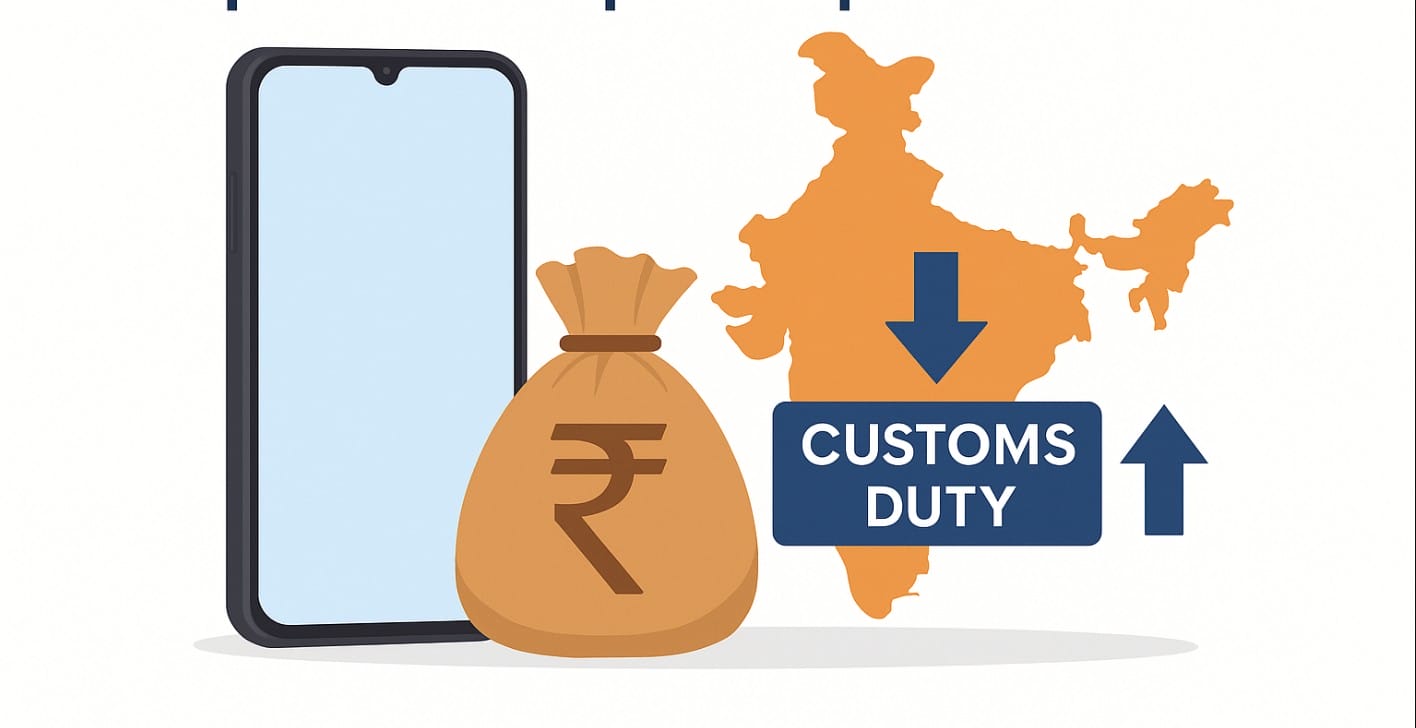
India’s smartphone market has seen major policy changes in the last two Union Budgets. In 2024, the government reduced the Basic Customs Duty (BCD) on fully built smartphones and chargers from 20% to 15%. In 2025, it went further, exempting import duties on key smartphone components like batteries, camera modules, and printed circuit boards.
So, are smartphones getting cheaper?
That’s the question we explore here. This article explains what duty cuts were made, how they were expected to impact pricing, and what buyers are actually seeing in phone stores, and what to expect in 2026.
1. What the Government Actually Changed: Two Years of Custom Duty Reform
To understand the effect of duty reductions, first know the key terms:
- BCD (Basic Customs Duty): A tax on imported goods, including fully assembled phones or chargers.
- PCBA (Printed Circuit Board Assembly): The core internal board that holds the processor and essential electronics.
What Changed in Budget 2024:
- BCD on fully built smartphones and chargers was reduced from 20% to 15%.
What Changed in Budget 2025:
- No further BCD cut.
- But several essential parts, PCBA, camera modules, batteries, USB cables, were made duty-free (0%).
- Capital goods (factory machinery used to assemble phones) were also exempted.
2. Why Import Duty Cuts Don’t Add Up to Lower Smartphone Prices
In theory, these changes should reduce the cost of making or importing a smartphone. In practice, the effect is marginal, especially for budget and mid-range devices.
Most duty reductions apply to components, not fully built phones. Brands assembling phones locally save a bit on parts, but not enough to create room for lower MRPs, especially when other factors like global part prices and currency rates remain high.
3. How Much Do Brands Really Save? The ₹150-₹200 Question
Let’s look at what the new duty exemptions save per phone.
- A ₹6,000 component bundle for a budget phone used to attract 2.5% duty: ~₹150 in tax.
- That duty is now gone.
- But a ₹150 saving is usually not enough to move the phone into a lower price bracket (like ₹11,499 to ₹9,999).
Brands instead use that ₹150 to:
- Slightly improve RAM, charging, or display quality
- Offset INR fluctuation
- Maintain profit margins
4. Not Just Import Tax: What Still Keeps Phone Prices High
Even with the customs duty relief, other cost factors remain unchanged:
- 12% GST on smartphones
- Retailer and distribution margins (often 5-10%)
- Packaging, shipping, and warranty costs
- Global component pricing, which remains volatile
- Rupee depreciation, which increases effective import costs even when duties fall
All of these prevent brands from passing savings directly to buyers.
5. Why You’re Getting Better Mobile Phones, But Not Cheaper Ones
Instead of cutting prices, most brands are upgrading specs while holding price points steady. For example:
| Price Range | 2023 Specs | 2025 Specs |
|---|---|---|
| ₹10K-₹12K | 4GB RAM, 720p LCD, 13MP camera | 6GB RAM, FHD+ 90Hz LCD, 50MP camera |
| ₹14K-₹15K | 720p 60Hz, plastic build | 120Hz display, IP rating, fast charging |
The MRPs haven’t changed, but the phones are far more capable than they were two years ago.
6. Will 2026 Be Any Different? Don’t Count on a Price Cut
BCD on finished phones is already down to 15%, and component-level duties are now near zero. That leaves very little room for further price relief through taxation.
Unless:
- Phone Brands find cheaper sourcing for displays or SoCs
- The rupee gains strength
- Or government directly subsidizes final pricing (unlikely)
Retail prices will likely stay at the same levels in 2026, with brands continuing to compete on features, not price tags.
7. How to Shop Smart in a Market That’s Not Getting Cheaper
If you’re buying a phone under ₹20K, don’t wait for prices to fall, look for maximum value at the same price.
Focus on:
- UFS 3.0 or better storage
- Full-band 5G support
- At least 90Hz refresh rate
- Battery capacity and fast charging support
- OS and security update timeline
Also check if the phone is assembled in India, these are more likely to benefit from the recent tax changes, even if you don’t see a price drop.
Summary: Why the Savings Stay with Brands, Not Buyers
Yes, the Indian government’s duty cuts in 2024 and 2025 made it cheaper to assemble phones locally. But brands have used those savings to improve specifications, not lower MRPs.
So while phones in 2025 and beyond aren’t cheaper, they’re objectively better, with longer battery life, better displays, cleaner software, and more capable cameras at the same ₹10K-₹15K price points.
Source:
- https://telecom.economictimes.indiatimes.com/news/policy/budget-2024-25-sitharaman-proposes-bcd-reduction-to-15-on-phones-mobile-pcba-chargers/111951000
- https://www.indiabudget.gov.in/
- https://www.livemint.com/technology/tech-news/budget-2025-fm-nirmala-sitharaman-exempts-custom-duty-on-lithium-ion-battery-manufacturing-of-mobile-phones-evs-11738391206757.html

