
Identical Smartwatches in India? Understanding Clone Models and Rebranding
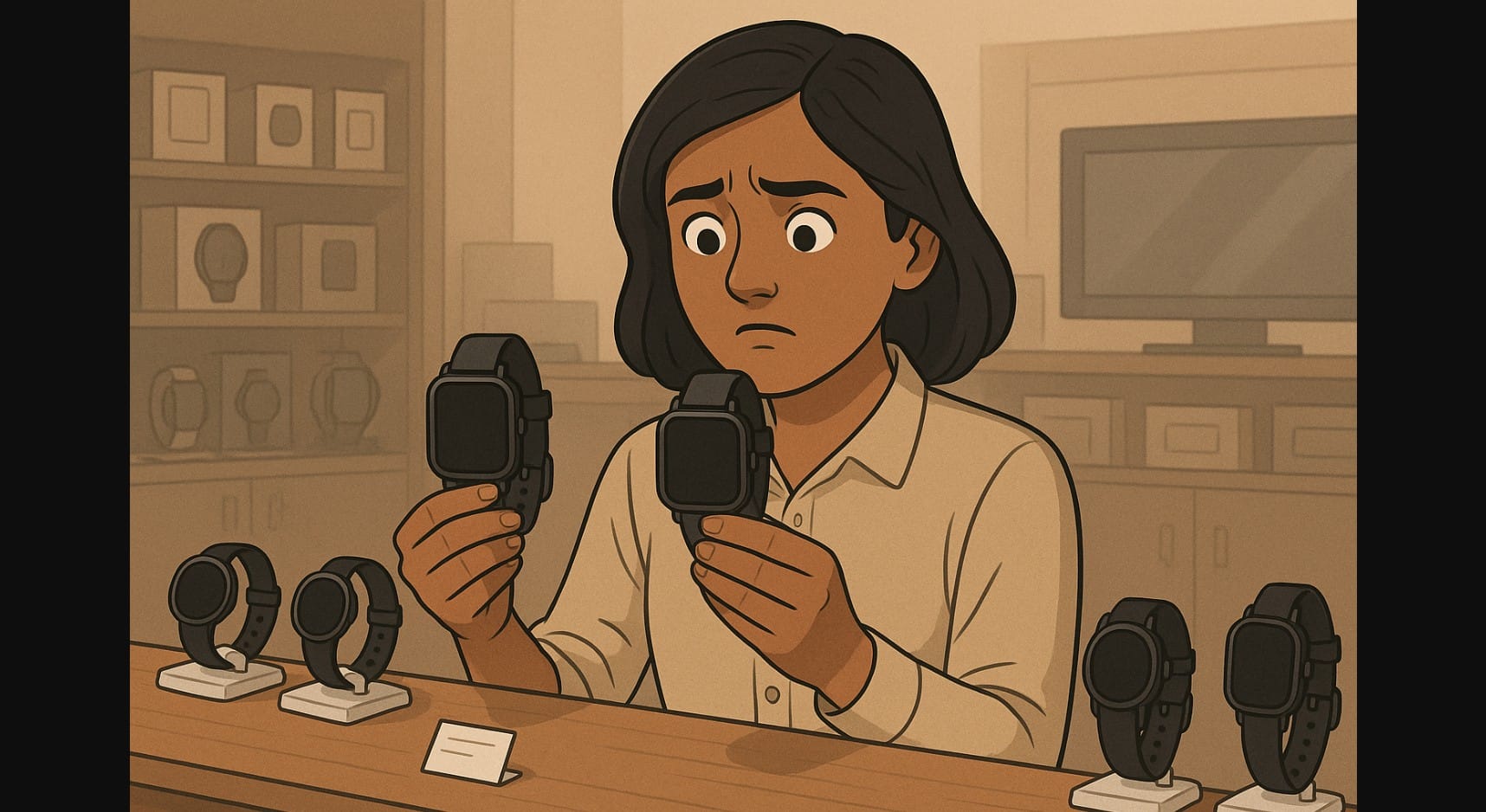
Walk into any electronics store or browse smartwatch listings online in India, and you’ll notice a pattern. Dozens of models, across different sellers, seem to have the same rectangular body, same dial, same watch faces, and identical features. The only difference? A slightly different name, strap color, or logo.
If you’ve wondered why these smartwatches look and behave so similarly despite coming from different companies you’re not imagining it. There’s a clear reason behind this trend, and it directly affects how reliable these devices are after purchase.
1. Most Budget Smartwatches in India Are Rebranded from the Same Sources
In the ₹1,000 to ₹3,500 price range, many smartwatches sold across Indian platforms are not built in-house by the brand selling them. Instead, they’re sourced from external manufacturing partners often from large-scale factories that produce pre-designed watch hardware and software.
These manufacturers sell a “base model” to multiple companies. Each brand then:
- Adds their logo or box design
- Customizes a few watch faces
- Sometimes tweaks the companion app interface
- Repackages and markets the product under their own name
So the same core watch same screen, same sensors, same chip may appear under five different names.
2. Why This Clone Model Works in India’s Fast-Growth Smartwatch Market
- Low-cost wearables are in high demand, especially as first-time buyers look for affordable tech under ₹2,000
- Brands don’t need to invest in R&D or manufacturing just order and rebrand
- Time to market is fast new models can be launched every 2-3 months
- Retailers can fill shelves quickly for festive sales or bundle offers
This approach supports rapid growth, but it also creates a flood of nearly identical watches that compete on looks and checklists not on real performance.
3. Same UI, Same Features But Smartwatch Reliability Often Varies
While these watches look the same, they don’t always function equally well. Here’s why:
- Some sellers install updated firmware, others don’t
- Battery quality may differ depending on supplier choice
- One version might sync well with phones, while another crashes repeatedly
- Support for updates is often unavailable or stopped after launch
In many cases, a ₹1,999 watch and a ₹2,899 watch might look identical, but have differences in charging stability, sensor accuracy, or companion app reliability.
4. Health Features Often Appear the Same But Aren’t Always Real
These rebranded smartwatches often claim:
- Real-time heart rate
- SpO₂ monitoring
- Stress tracking
- Sleep data
- 100+ sports modes
- Bluetooth calling
- Voice assistants
In reality:
- Many sensors provide estimated or fixed values, not real-time monitoring
- SpO₂ and stress tracking are often cosmetic, not medical-grade
- Sleep tracking counts stillness, not sleep stages
- Sports modes only change the icon or label, not the data tracked
- Voice assistants are often preset commands, not actual integrations
5. Smartwatch Apps Used Are Shared Across Dozens of Devices
The companion apps connected to these watches often have generic names and support multiple unrelated devices.
- Apps may appear on app stores with thousands of identical 5-star reviews
- Some apps don’t show the brand name of the watch you bought
- Interface quality may be inconsistent or crash-prone
- Health reports and sync histories may not save correctly over time
This creates confusion for users: which app to use, how to connect, or how to get help when the watch fails to sync.
6. How to Identify If a Smart Watch Is Part of This Clone Cycle
Here are a few signs:
- The watch name includes trendy words like “Max,” “Ultra,” “Call,” “Pro,” or “Series 8”
- The UI has a 9-tile layout with large icons and swipe-based menus
- Watch specs claim 100+ watch faces and multiple health features in a ₹1,500-₹2,500 range
- Multiple online listings feature nearly identical photos with slightly different branding
- The box shows a QR code for a third-party app, not one tied to the brand itself
7. When These Rebranded Smartwatches Still Make Sense to Buy
Despite the drawbacks, these smartwatches can still offer value if you:
- Want an entry-level wearable for steps and time
- Prefer a stylish look over deep functionality
- Need a gift or backup device
- Don’t rely on detailed health metrics or long-term durability
- Use it for call alerts, music control, and notifications only
As long as expectations are clear, these devices can still serve lightweight daily use.
8. When to Consider Moving Beyond These Clones
If you:
- Want consistent app sync and data reports
- Need reliable health tracking over months
- Prefer watches that receive firmware and app updates
- Use sleep and fitness logs to improve habits
- Care about battery health, strap replacements, or long-term app access
…it’s worth exploring brands that develop their own OS, apps, and hardware, even if the price is higher.
9. Don’t Just Buy For Looks
In India’s crowded smartwatch market, many devices look interchangeable. But underneath, how they’re made, supported, and updated can vary widely. Just because two models share design or features doesn’t mean they’ll work the same way in real life.
Understanding the branding helps you make better decisions, whether you’re spending ₹1,500 or ₹15,000. The appearance may be similar, but the experience will differ.

