
Can Budget Smartwatches Actually Track Stress? Don’t Be Fooled
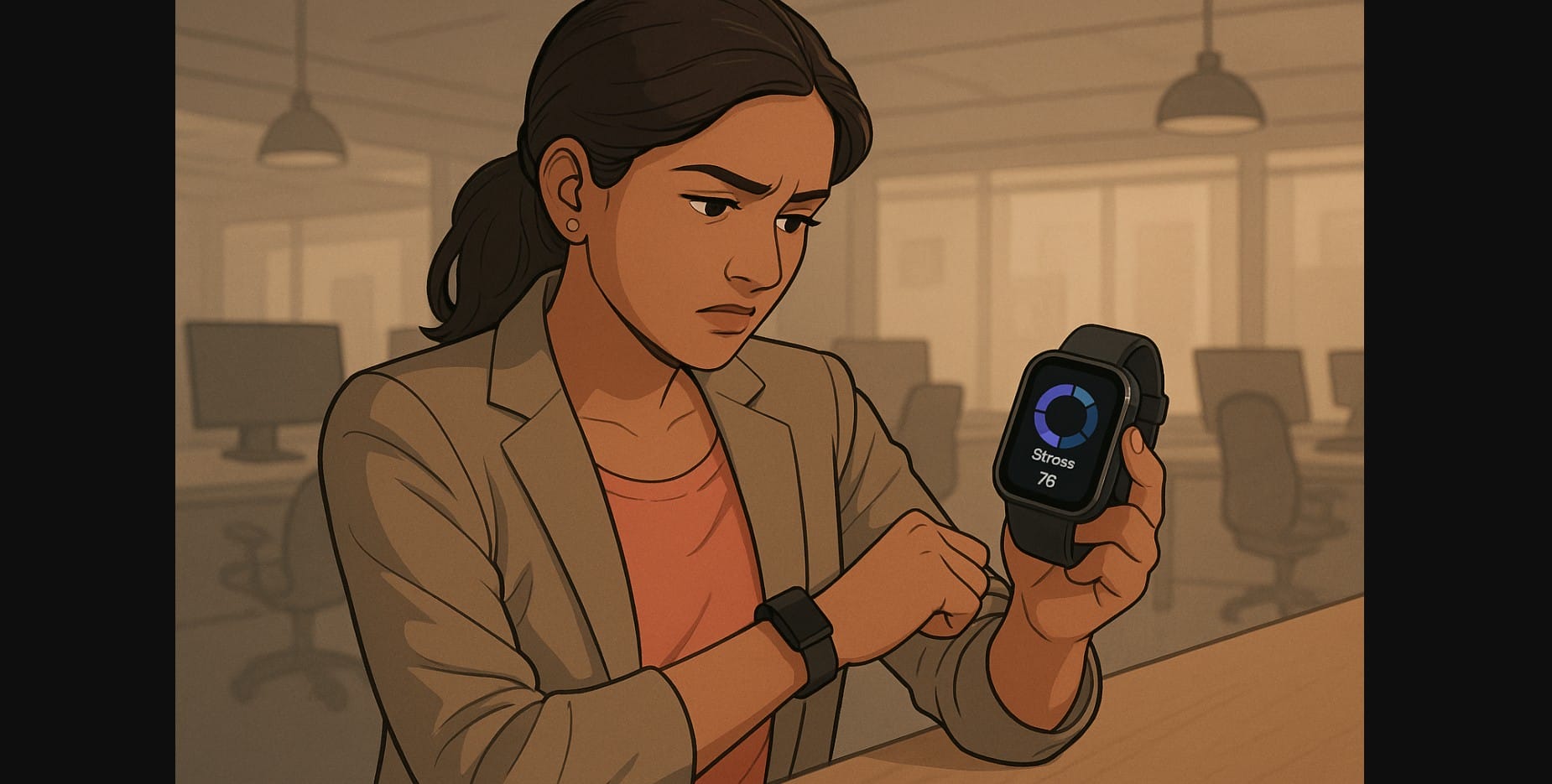
Smartwatches in India today often promise “stress tracking” alongside heart rate, steps, and sleep data. You’ll see stress bars, recovery graphs, and “relaxation” reminders in apps even on watches under ₹2,000. But what’s actually being tracked? Can your watch really tell when you’re stressed?
This post breaks down what stress features on smartwatches really mean, how they work (or don’t), and what Indian users should take seriously and what they should ignore.
1. Why Everyone Is Selling “Stress Tracking” Now
With rising work pressure, screen fatigue, and urban routines, smartwatch brands know that “wellness” sells. So many now highlight features like:
- 24/7 stress monitoring
- Real-time calm scores
- Daily body energy levels
- Built-in breathing sessions
But the term “stress” is often used loosely and the results you see on screen aren’t always what they seem.
2. What Your Smart Watch Actually Measures When It Says “Stress”
Stress on a smartwatch is almost always based on heart rate variability (HRV). This is the tiny variation in time between each heartbeat not the heart rate itself, but how flexible your system is.
A high HRV (lots of variation) usually indicates better rest and recovery. A low HRV (tight, steady beat) may suggest tension, overwork, or poor recovery. Smartwatches translate this into stress zones or scores.
Other data that may influence this score:
- Resting heart rate
- Activity or movement
- Sleep recovery
- Breathing rate (in some premium models)
3. What Budget Smartwatches in India Actually Show
Watches under ₹3,000 or ₹4,000 usually:
- Do not measure HRV they estimate stress using heart rate only
- Show “Low,” “Moderate,” or “High” stress based on short readings
- Use preloaded visuals or smooth graphs with no real-time adjustment
- Offer a breathing timer that vibrates at fixed intervals not based on your state
- Show results that don’t explain how they’re calculated
In many cases, the stress feature is just a visual add-on, not a measured or meaningful metric.
4. Stress Score on the Watch Screen and What It Means
| Display | What It Usually Represents |
|---|---|
| “Stress Score: 76/100” | A simple scale based on HRV or heart rate estimate |
| Color bars (blue, yellow, red) | General zones mapped to high/medium/low stress |
| “Relax Mode” or “Mindfulness” | A 1-3 minute guided breathing timer with no feedback |
| “Body Battery: 50%” or “Energy” | A combined estimate of sleep, stress, and movement data |
Unless your watch offers a breakdown or explains how it’s measuring HRV, assume the score is just a guess based on limited inputs.
5. What Premium Smartwatches Actually Do Differently
Watches from brands that use platforms like Apple Health, Samsung Health, Fitbit Premium, Garmin Connect, or Zepp OS offer:
- Real HRV sampling at rest and sleep
- Day-wise and week-wise stress trend graphs
- Adaptive breathing feedback (like slowing haptics or guided sessions)
- Correlation with sleep, movement, and even skin temperature (in advanced models)
- Secure data storage, export, and insights (e.g., “Your stress was highest at 3 PM”)
Still, these tools are not diagnostic they provide personal awareness, not medical-grade advice.
6. Common Misunderstandings About Stress Tracking
| Myth | Reality |
|---|---|
| “My watch knows exactly when I’m stressed” | Not unless it has real-time HRV + context-aware tracking |
| “High stress means I’m unwell” | Can be influenced by caffeine, poor sleep, or even traffic |
| “Relax mode reduces my stress score immediately” | It may feel calming but won’t always change the number right away |
| “Stress readings are the same across all brands” | Every brand calculates differently and may use different sensors |
| “Low-cost watches give the same insights as premium” | Budget watches mostly simulate visuals, not run true bio-data analysis |
7. When the Stress Feature Is Still Helpful Even If Basic
Even if your smartwatch doesn’t track HRV properly:
- Using a breathing timer for 1-3 minutes can lower physical tension
- Seeing a “high stress” alert may prompt a break, drink, or short walk
- Weekly patterns can highlight days where you sleep poorly and feel off
- Combining stress with sleep data helps identify recovery gaps
- Vibration-based breathing helps in crowded or quiet settings
These benefits don’t need high-end tech they just require self-awareness.
8. When to Ignore Stress Readings
Skip the daily stress scores when:
- You’ve just eaten, walked, or had coffee
- Your Bluetooth sync failed or sensor didn’t fit tightly
- Your device is new and still calibrating
- You’re using a low-cost watch that doesn’t mention HRV at all
- The app offers no explanation for how the number was generated
Rely more on how you feel, not just the number blinking on your screen.
9. Think Your Smartwatch Knows You’re Stressed? It Might Just Be Guessing
Yes, some smartwatches can measure real trends using HRV and activity data but many only pretend to. Especially in India’s entry-level and mid-tier smartwatch market, “stress tracking” is often more design than data.
That doesn’t mean it’s useless. If it helps you breathe for a minute, take a break, or sleep better it’s still doing something valuable. Just don’t confuse pretty graphs for medical insight.

