
All Scooter and Bike Types in India Explained for First-Time Buyers
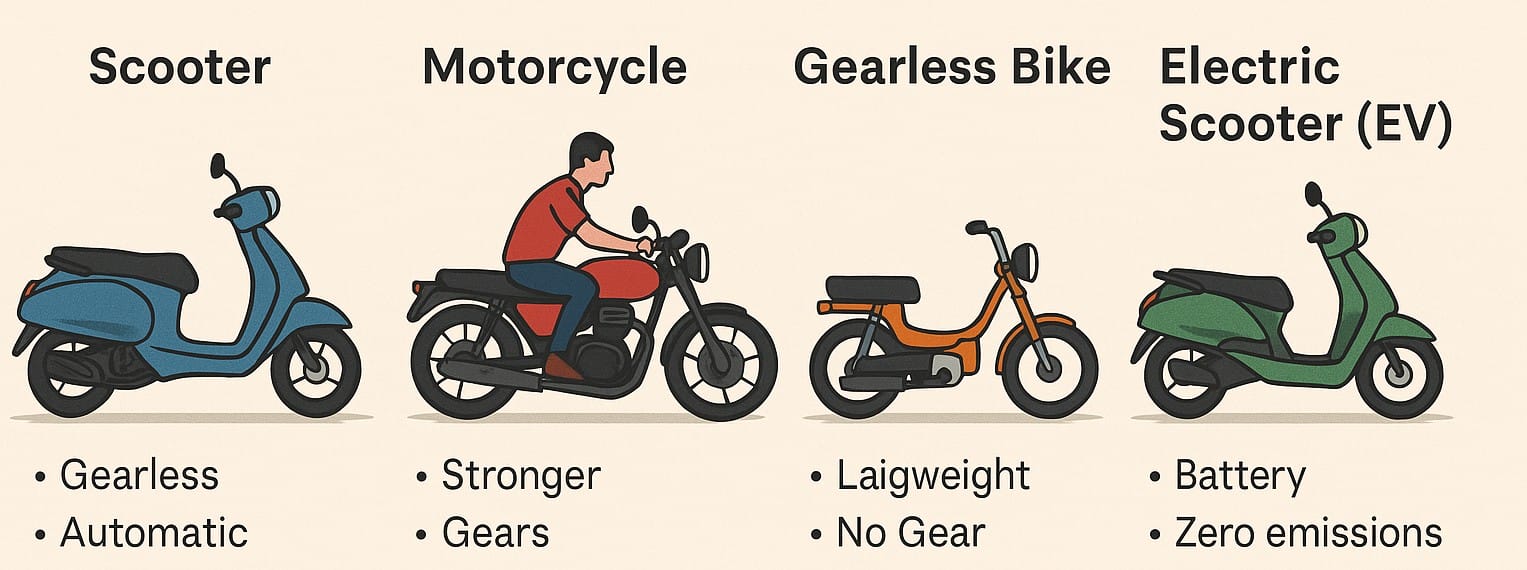
If you’re planning to buy a two-wheeler in India, you’re likely facing one big question: what type should you choose? There are plenty of choices scooters, motorcycles, electric bikes, gearless options and each one serves a different kind of rider.
In this guide, you’ll understand the four main types of two-wheelers you’ll find on Indian roads along with who they suit, what they cost, and how they actually perform in Indian conditions.
1. Types of Two Wheelers in India
| Type | Gears | Best For | Avg Mileage/Range | Ideal Use | Price Range (₹) |
|---|---|---|---|---|---|
| Scooter | No | City riders, families | 40–55 km/l | Urban commute | 75,000–1,10,000 |
| Motorcycle | Yes | Long-distance, rural riders | 50–70 km/l | Mixed terrains | 80,000–2,00,000+ |
| Gearless Bike | No | Budget, utility riders | 60–80 km/l | Short errands | 50,000–80,000 |
| EV | No | Urban, eco-conscious riders | 60–120 km/charge | City usage | 85,000–1,50,000+ |
1. Scooters (Gearless, Family-Friendly, Storage-Ready)
Common engine capacity: 100cc to 125cc
Scooters have become the most popular personal vehicle in Indian cities. They offer a no-gear riding experience, which means you can just throttle and go. Combined with under-seat storage and upright seating, they’re incredibly convenient for everyday tasks.
- Office and college commutes
- Carrying groceries or school bags
- Shared use by multiple family members
- Short rides in heavy traffic
Popular models:
- Honda Activa 6G – reliable and resale-friendly
- TVS Jupiter – good comfort and mileage
- Suzuki Access – strong pickup and smooth engine
Pros:
- Easy to ride and learn (especially for beginners)
- Great for narrow roads and short stops
- Can be used comfortably by all genders and age groups
Limitations:
- Less power for highway rides or steep terrain
- Small wheels aren’t ideal for potholes or rural roads
- Fuel tank and ground clearance are limited
2. Motorcycles (Geared, Powerful, Long-Distance Friendly)
Common engine capacity: 100cc to 1000cc+
Motorcycles are geared, meaning you manually shift using clutch and foot controls. They offer a wider engine range and are built for varied road conditions — from Indian highways to rough village paths.
- Rural transport with long daily distances
- Office rides with rougher roads or bypass highways
- Food and parcel delivery bikes
- Weekend rides and longer road trips
Popular models:
- Hero Splendor Plus – simple, rugged, high mileage
- Bajaj Pulsar – sporty, reliable, and popular among youth
- Royal Enfield Classic 350 – iconic for touring and cruising
Pros:
- High fuel efficiency and better engine durability
- Handles heavy loads and longer rides well
- Better suspension and braking on tough roads
Limitations:
- Requires gear shifting, not beginner-friendly for all
- Can be harder for short riders or senior citizens
- Not as practical for stop-and-go traffic
3. Gearless Utility Bikes (Mopeds or Light-Weight Models)
Common engine capacity: 70cc to 100cc
This category includes mopeds and basic gearless utility bikes like the TVS XL100. They’re meant for function over form giving you just enough to travel short distances affordably.
- Milk vendors, small-town shopkeepers
- Senior citizens in Tier 2/3 towns
- Simple errands and deliveries
- Carrying LPG cylinders, groceries, crates
Popular models:
- TVS XL100 – low-cost, strong load capacity
- Hero HF Deluxe – budget commuter with gears
- Bajaj CT 110X – semi-urban rugged use
Pros:
- Very affordable and fuel-efficient
- Easy to repair, spare parts are widely available
- Great for functional, short-distance needs
Limitations:
- Poor speed and comfort
- Basic safety and stability features
- Not ideal for city commuting or resale
4. Electric Two-Wheelers (EV Scooters and Bikes)
Typical battery range: 60–120 km per charge
Charging time: 4–6 hours on average
Electric vehicles (EVs) are rising in Indian cities due to petrol prices and urban pollution concerns. They’re ideal for short trips and offer very low running costs, although they come with some trade-offs.
Typical usage in India:
- Urban rides under 20 km/day
- Office-to-home commuters
- Second vehicle for families
- Tech-savvy buyers and first-time users
Popular models:
- Ola S1 Air/S1 Pro – strong features, connected app
- Ather 450X – performance EV scooter
- TVS iQube – practical, brand-backed EV option
- Bajaj Chetak EV – heritage name with modern tech
Pros:
- Very low cost per km (₹0.25–₹0.50)
- No gear, no vibration, silent ride
- Government subsidies in many Indian states
- Environment-friendly and futuristic
Limitations:
- Higher initial cost
- Limited charging infrastructure in small towns
- Battery degradation and replacement cost over time
Summary: Find the right type of two-wheeler for your needs
If you’re buying your first two-wheeler or replacing an old one, here’s how to decide:
- Choose a scooter if convenience, shared family use, and easy traffic riding matter most.
- Choose a motorcycle if your route involves longer distances, highways, or rural roads.
- Go for gearless utility bikes only if you’re on a strict budget and need simple travel.
- Try an EV if you’re an urban rider, travel under 30 km/day, and want to cut fuel costs.
Choosing the right type is your first and most important step the rest of your buying journey depends on this foundation.

