
Choosing Between USB and XLR Mics in India – Clear, Practical Advice
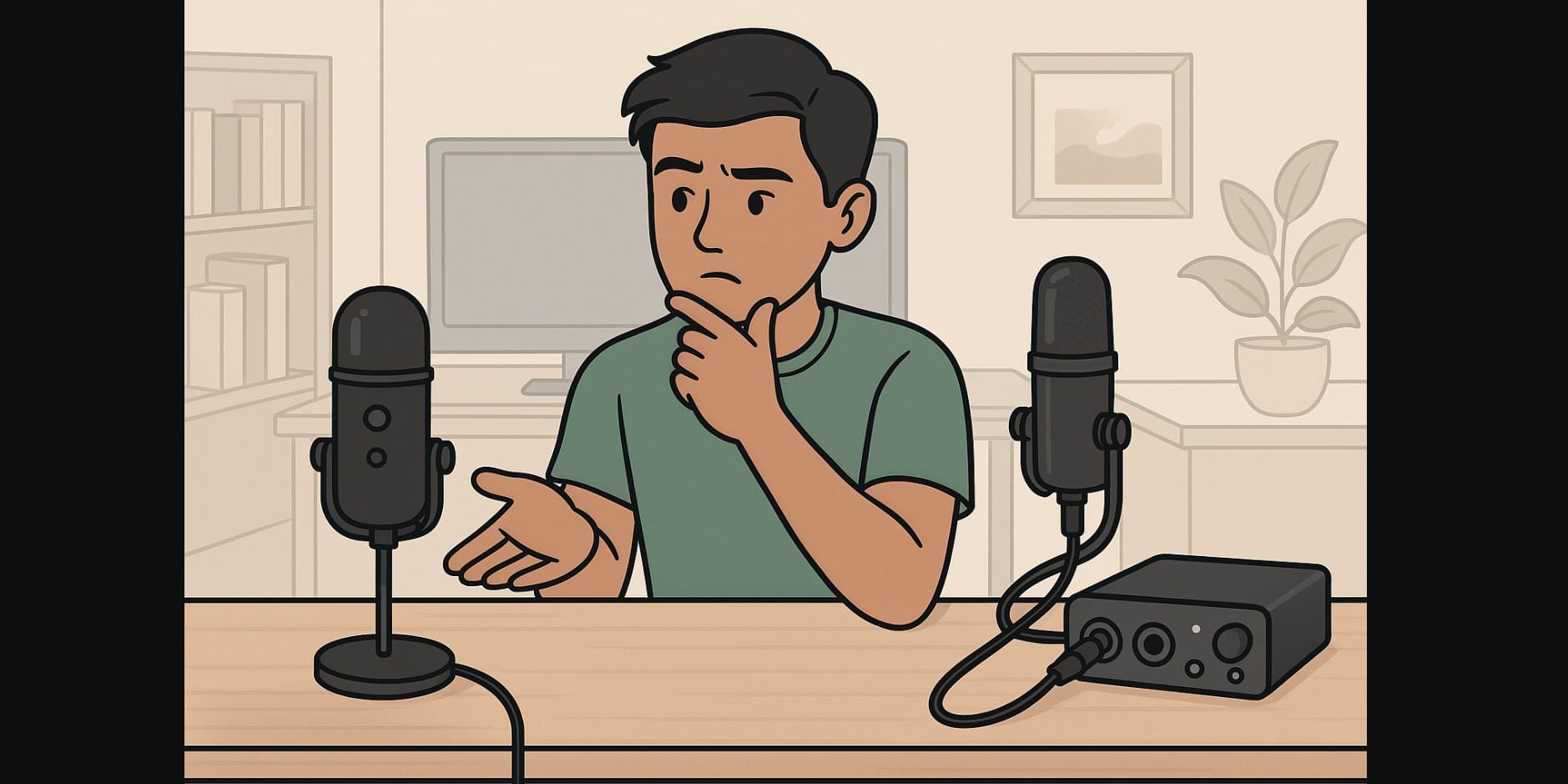
Whether you’re a podcaster in Pune, a YouTuber in Jaipur, or a voice artist recording reels from home, the quality of your mic shapes how people hear you and take you seriously. You’ll mostly see two types on the market: USB and XLR microphones.
Which one’s right for you depends on what you’re creating, how much control you want, and how far you plan to go.
1. The Core Difference: Direct USB vs. Expandable XLR Microphone
Here’s how they’re built differently:
- USB microphones plug straight into your laptop or desktop. They have built-in audio conversion, so you don’t need extra gear.
- XLR microphones connect via a 3-pin cable to an audio interface or mixer giving you more control and better future upgrades.
One is simple and ready to go. The other opens the door to pro setups if you’re ready.
2. Are You Ready for XLR? Or Is USB Still Perfect for You?
| Purpose | USB Mic | XLR Mic |
|---|---|---|
| Online meetings, Zoom | Plug-and-play clarity | Overkill unless you’re doing voice-overs |
| YouTube voiceovers | Clean, fast, and beginner-friendly | Better depth, ideal for scripted narrations |
| Gaming or streaming | Works well for OBS and Discord | Great for those chasing studio-level sound |
| Solo podcasting | Excellent for one-person setups | Needed if you’ll record guests or co-hosts |
| Singing or music | Limited frequency detail | Captures tone and subtle vocal textures |
| Voice-over work (paid) | Acceptable for samples or reels | Preferred in commercial/pro studio work |
If you’re unsure, USB gets you started. If you’re serious, XLR grows with you.
3. Why USB Is the Go-To for Getting Started
You don’t need any setup skills. Just plug it in, open Audacity, and start recording.
Perfect for:
- Students, first-time creators, and remote workers
- People recording from laptops or mobile setups
- Creators in small rooms with minimal background noise
It lets you focus on your voice, not cables and dials.
4. Why XLR Makes Sense If You Want More Control
With XLR, the mic and interface are separate. That means:
- You can upgrade each piece later
- You get cleaner audio with better noise handling
- You can connect multiple mics for interviews or music sessions
- You can tweak tone and gain more precisely
But XLR comes with a learning curve:
- You’ll need to understand phantom power, mic gain, and audio routing
- You’ll need an interface or mixer like Focusrite, Behringer, or Yamaha
- It’s not ideal for quick plug-and-play use
If you’re aiming for professional-level recordings it’s worth it.
5. Microphone Sound Differences You’ll Actually Notice
| Aspect | USB Mic | XLR Mic |
|---|---|---|
| Tone depth | Flat but clear | Fuller, more natural tone |
| Background noise | Acceptable for quiet rooms | Easier to control with gain and filters |
| Voice texture | Processed slightly by internal preamp | Captures more raw tone and detail |
| Multi-mic setup | Hard to sync with 2 USBs | Easy with 2+ XLR ports on one interface |
You won’t always hear the difference in a raw YouTube vlog, but you will in voice-overs, songs, and detailed dialogue.
6. USB & XLR Mics Price Range in India
| Price Range | What Works Well Here |
|---|---|
| Under ₹4,000 | USB mics (Maono AU, Fifine, Zebronics) – good for voice clarity |
| ₹4,000-₹8,000 | Higher-quality USB (Blue Snowball, Razer Seiren Mini) or basic XLR kits |
| ₹8,000-₹15,000 | USB options with better build and controls OR XLR mic + entry interface |
| ₹15,000-₹25,000 | XLR setups with studio-level clarity (AT2020, Rode NT1 + Focusrite Solo) |
| ₹25,000+ | For serious creators Shure SM7B, Rode Procaster, and multi-input gear |
The ₹5,000-₹8,000 range is the best starting zone for most solo creators in India.
7. USB vs XLR – Ask These Questions First
- Will I ever need to connect more than one mic?
- Is my room treated or noisy?
- Do I want plug-and-play, or control over every detail?
- Do I plan to monetize my recordings (voice-overs, music, content)?
- Will I be recording on the move or from a fixed setup?
If your answers lean toward simplicity and flexibility USB wins.
If you’re thinking long-term and building a dedicated space go XLR.
8. Practical Mics Recommendation for Creators
- For podcasts from your bedroom, a decent USB mic and pop filter is enough
- For vocals or paid voice gigs, XLR with an interface and proper headphones gives you control
- If you plan to record guests in-person, don’t try 2 USBs get one interface with 2 XLR ports
- Don’t ignore service and warranty especially if you’re buying imported XLR gear
9. USB Mic Gets You Started, the XLR Helps You Level Up
USB mics are the perfect first step less wiring, fewer decisions, and good results out of the box.
XLR mics are the path to building a custom audio setup that grows with your skills.
In India, most content creators start with USB. Some stay there for years. Others shift to XLR when they’re ready to fine-tune every breath and syllable. Both paths are valid but only one is right for you right now.

