
Choosing the Best Wireless Charger in India – A Complete Buying Guide
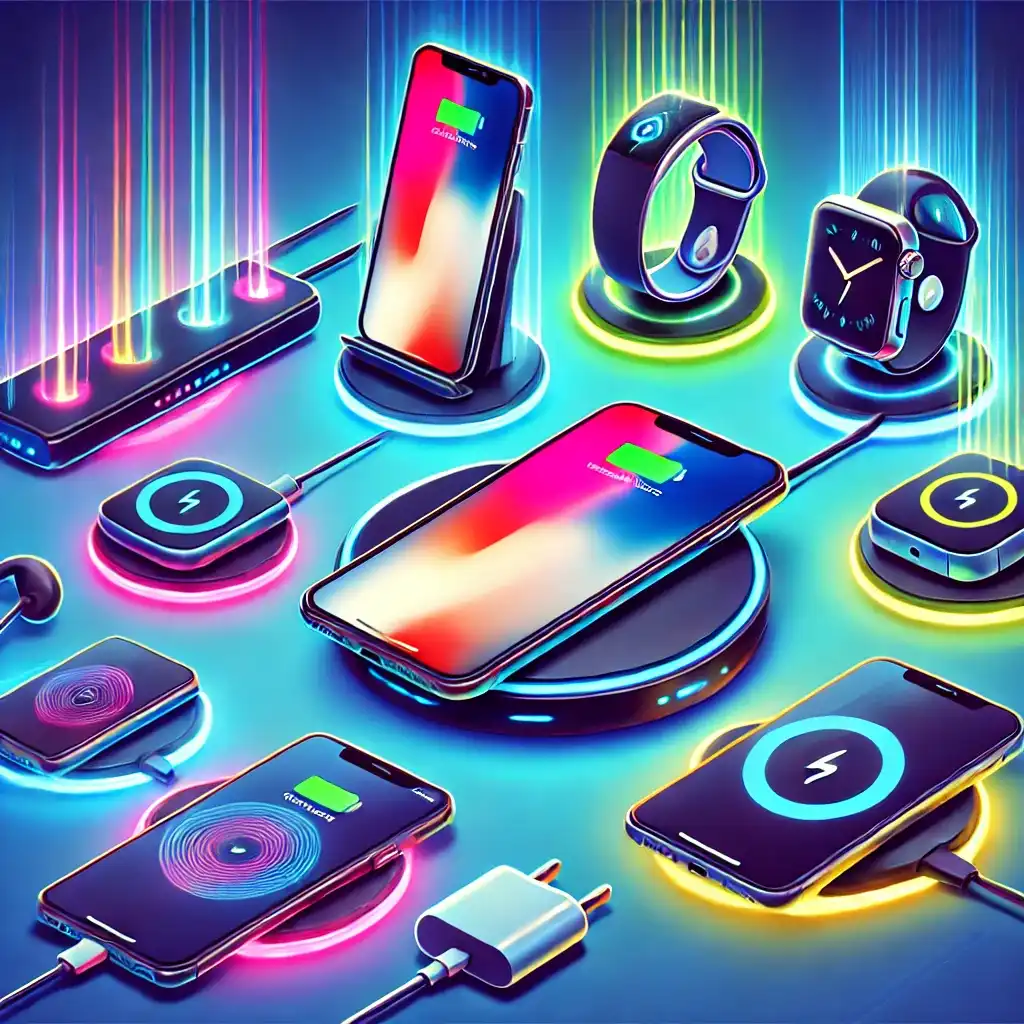
Wireless chargers offer a convenient, cable-free way to charge smartphones, smartwatches, and even some laptops. With an increasing number of Qi-compatible devices, many Indian consumers are wondering: Is a wireless charger worth it? Which one should I buy?
This guide covers everything you need to know before purchasing a wireless charger in India—its pros and cons, types, key features, comparison with wired chargers, and the best wireless chargers available in India.
1. What is a Wireless Charger & How Does it Work?
A wireless charger uses inductive charging (Qi standard) to transfer power from the charging pad to your device without cables. It creates a magnetic field that your device absorbs to convert into battery power.
Understanding Wireless Charging Technology
Wireless charging operates on the principle of inductive charging, where an electromagnetic field transfers energy between two coils—one in the charger and one in the device. The Qi (pronounced “chee”) standard, developed by the Wireless Power Consortium, is the most widely adopted protocol, ensuring compatibility across a range of devices.
2. Types of Wireless Chargers
There are different types of wireless chargers available in India:
| Type | Description | Best For |
|---|---|---|
| Flat Charging Pad | A simple flat surface where you place your device to charge | Home/Office use |
| Wireless Charging Stand | Holds the device upright for easy use while charging | Work desks, Video calls |
| Wireless Charging Power Bank | Portable charger with built-in wireless charging | Travel, On-the-go users |
| Multi-Device Charger | Charges multiple devices (phone, watch, earbuds) at once | Apple/Samsung ecosystem users |
| MagSafe Charger | Magnetically attaches to iPhones (12 & later) for better efficiency | iPhone users |
3. Pros & Cons of Wireless Charging
Advantages of Wireless Chargers
- No cable clutter – No need to plug/unplug cables.
- Longer device lifespan – Reduces wear on charging ports.
- Safer charging – No risk of sparks or short circuits.
- Multi-device support – Some pads charge phones, smartwatches, and earbuds together.
- Convenience – Just place your device and pick it up anytime.
Disadvantages of Wireless Chargers
- Slower than wired charging – Even fast wireless chargers (15W-20W) are slower than wired fast charging (65W+).
- Not all devices support it – Only Qi-compatible devices can be charged wirelessly.
- Less efficient – Power loss is higher (15-30%) compared to wired chargers.
- Limited positioning – The device must be properly aligned for charging.
- Expensive – Wireless chargers cost more than regular chargers.
4. Wireless Charging vs. Wired Charging: A Comparison
| Feature | Wireless Charger | Wired Charger |
|---|---|---|
| Speed | Slower (5W-20W) | Faster (18W-120W) |
| Convenience | Just place the phone | Requires plugging in |
| Efficiency | 70-85% power transfer | 95%+ power transfer |
| Device Wear & Tear | Less (no cable strain) | More (wear on charging port) |
| Multi-Device Charging | Yes (with 2-in-1, 3-in-1 pads) | No (1 device per cable) |
| Portability | Bulkier than wired chargers | Compact & easy to carry |
| Cost | More expensive | More affordable |
Verdict: Wired chargers are faster, more efficient, and cost-effective, while wireless chargers offer convenience and less wear on devices.
5. What to Look for When Buying a Wireless Charger
Before buying a wireless charger, check these key factors:
a. Charging Speed (Wattage)
- Standard (5W-10W) – Good for overnight charging.
- Fast Wireless Charging (15W-20W) – Faster but still slower than wired fast charging.
- MagSafe (15W-20W for iPhones) – Optimized for iPhone 12 and later.
b. Compatibility
- Qi-certified chargers work with iPhones, Samsung, OnePlus, Xiaomi, Google Pixel, etc.
- Check MagSafe compatibility if you use an iPhone 12 or newer.
c. Number of Devices It Can Charge
- Single-device chargers → Charge only 1 phone.
- Multi-device chargers → Charge phone + smartwatch + earbuds.
d. Build Quality & Safety Features
- Overheat & short-circuit protection
- Anti-slip design for better grip
- Compact & travel-friendly design
e. Brand Reputation and Warranty
- Warranty: Look for products with a warranty period to safeguard your purchase.
- Established Brands: Often provide better quality and customer support.
f. Regulatory Standards and Certifications in India
In India, wireless chargers must comply with standards set by the Bureau of Indian Standards (BIS). Ensuring that the charger is BIS-certified guarantees adherence to safety and performance benchmarks. Look for the BIS mark on the product or its packaging.
6. Best Wireless Chargers in India (2025)
| Model | Wattage | Best For | Price Range (₹) |
|---|---|---|---|
| Belkin BoostCharge 15W | 15W | Samsung & Pixel Phones | ~ ₹2500 |
| Apple MagSafe Charger | 15W | iPhones (12 & later) | ₹4,500 |
| Samsung Wireless Charger Duo | 15W | Phone + Galaxy Watch | ₹4,500 |
| 313 Anker Wireless Charger | 10W | Budget Qi Charger | ₹1,250 |
7. Is a Wireless Charger Worth It?
Buy a Wireless Charger If:
- You hate dealing with cables.
- You have multiple devices and want an all-in-one charger.
- You prefer MagSafe for iPhones.
- You charge your phone overnight and don’t mind slower charging speeds.
Stick to Wired Charging If:
- You need ultra-fast charging (30W-100W).
- You want a cheaper and more efficient charging method.
- You travel a lot and need a compact charger.
8. FAQs on Wireless Charging in India
Q1: Can all smartphones support wireless charging?
No, only Qi-enabled smartphones support wireless charging. Popular models include:
- iPhones: iPhone 8 and newer (including iPhone 15 series).
- Samsung: Galaxy S series (S10, S20, S21, S22, S23, S24), Note series, and Z Fold/Flip series.
- Google: Pixel 3 and later.
- OnePlus & Xiaomi: Select flagship models with Qi support.
Check your device specifications before purchasing a wireless charger.
Q2: How fast is wireless charging compared to wired charging?
Wireless charging is slower than wired charging.
- Wired fast charging: Can go up to 100W+, charging a phone in 30-45 minutes.
- Wireless fast charging: Typically 15W-20W, taking 1.5-3 hours for a full charge.
Q3: Can I use a wireless charger with a phone case?
Yes, but thick cases (above 3mm) or cases with metal/magnetic components can interfere with charging. If you use a MagSafe-compatible charger, a MagSafe case is recommended for better alignment.
Q4: Does wireless charging damage my phone’s battery?
No, modern wireless chargers have safety features like overheat protection and intelligent power management. However, wireless charging generates more heat than wired charging, which may affect battery lifespan over time.
Q5: Is wireless charging safe?
Yes, wireless chargers are BIS-certified in India, ensuring they meet safety standards. Features like short-circuit protection, overheat protection, and foreign object detection enhance safety.
Q6: Can I travel with a wireless charger?
Yes, wireless chargers are safe for travel, but ensure:
- If it’s a wireless power bank, its battery must be under 27,000mAh (100Wh) to comply with airline regulations.
- You carry a Type-C wired charger as a backup in case wireless charging isn’t available.
Q7: Can a wireless charger charge multiple devices at once?
Yes! 2-in-1 and 3-in-1 wireless chargers can charge:
- Smartphone + Smartwatch (Apple Watch, Galaxy Watch)
- Smartphone + Earbuds (AirPods, Galaxy Buds, Pixel Buds)
- Smartphone + Watch + Earbuds (Full ecosystem charging)
Q8: Why is my phone charging slowly on a wireless charger?
Possible reasons:
- You’re using a thick phone case – Remove or switch to a thinner/MagSafe case.
- Your charger is low wattage (5W-10W). Upgrade to a 15W-20W charger for faster speeds.
- Your phone is misaligned on the pad – Adjust positioning.
Final Verdict: Should You Buy a Wireless Charger?
- Yes, if you prioritize convenience over speed.
- No, if you need fast, efficient charging.
If you don’t mind slower charging speeds and love a clutter-free setup, go for a 15W+ wireless charger. Otherwise, a wired fast charger (30W-100W) is a better option.

