
Android vs. iPhone – Explained Simply for Indian Buyers
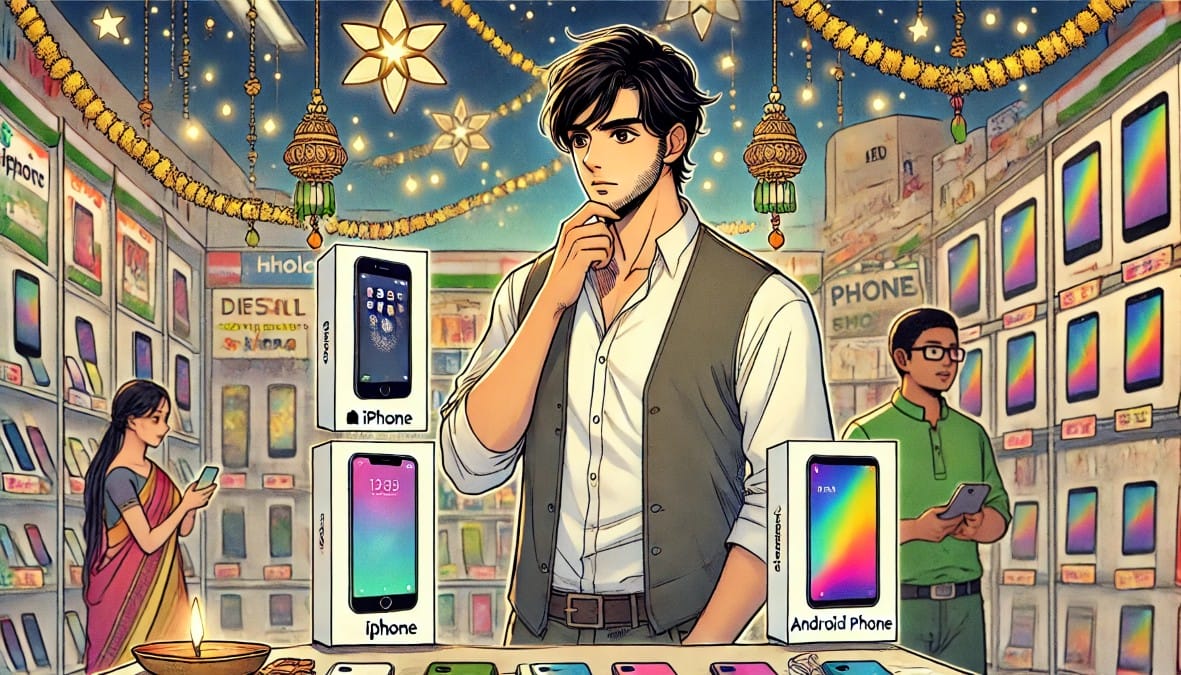
In India, buying a smartphone is rarely just about specs. It’s about what works for your budget, how easily your parents can use it, how fast UPI payments go through, or whether the repair shop in your town can fix it.
The iPhone might feel like a dream. Android often feels like the smart choice.
This isn’t a comparison of features or fan clubs. It’s a real-life look at:
- What actually matters when you use the phone every day
- What fits your lifestyle, your region, and your comfort
- And how to avoid regrets after spending ₹10,000 or ₹1 lakh
Let’s break it down – simply, honestly, and with you in mind.
1. Price & Value: Where Most Decisions Begin
Let’s be honest – in India, price is often the first filter.
- The most affordable Old gen iPhone costs ₹40,000+.
- Android phones start below ₹8,000 and go all the way up to ₹1.5 lakh.
But price isn’t just the phone:
- iPhones don’t come with a charger
- Cases and screen repairs cost more
- Service centers are fewer in smaller towns
If you’re shopping under ₹25,000, you don’t really have a choice – Android wins by default.
But even above that, value for money depends on what you actually need.
If you want a phone for UPI, YouTube, and WhatsApp – Android offers much more at a lower price. If you care about finish, brand, and resale – the iPhone may feel worth it despite the cost.
2. Ease of Use: What Feels More Comfortable?
iPhone:
- Feels smooth, consistent, and simple
- No ads or unwanted apps
- Updates come regularly for years
Android:
- Varies by brand — some are very clean (Motorola, Samsung), others show pop-ups or recommendations
- Lets you customize how your phone looks and works
If you’re setting up a phone for a parent, Android with a simple UI is easier to teach. But if they want zero confusion or risk, iPhones are more locked down – in a good way.
3. Indian Phone Apps: What Works Better for Everyday Use?
Indian users rely on UPI, IRCTC, local banks, school apps, and DigiLocker.
Android:
- Supports almost everything
- Faster updates for government and financial apps
- You can install regional keyboards, sideload apps, or even run two WhatsApp accounts
iPhone:
- Clean app experience – but some local apps get updates slower
- Dual apps not supported
- Doesn’t allow sideloading or APKs
If your daily use includes UPI, PDFs, scanning homework, or bank apps – Android just works better out of the box.
4. Repairs & Service: Can You Get It Fixed Easily?
iPhone:
- Repairs cost more
- Service centers mostly in cities
- Battery or screen issues can be costly
Android:
- Easier to find parts and local service even in smaller towns
- Screens and batteries are cheaper
- More flexibility to fix or replace without breaking the bank
If you’re gifting a phone to someone outside metro cities – Android is safer to manage long term.
5. Resale Value: Will You Get Good Money Back?
iPhone:
- Holds resale value longer – especially for newer models
- Still has strong second-hand demand
Android:
- Resale value depends on brand – Samsung and OnePlus hold better than budget brands
- Lower upfront cost also means less loss on resale
If you change phones often, Android lets you do that without losing much. If you keep phones 4–5 years, iPhone might still fetch a decent amount.
6. Privacy & Control: What Feels Safer?
iPhone:
- Strong privacy settings
- Apps can’t track you without permission
- Simple interface with fewer distractions
Android:
- More control, but you need to manage it
- Some brands show ads or “recommendations”
- You can uninstall or tweak almost anything
If you don’t want to touch settings and just want it to “be safe,” iPhone wins. If you enjoy customizing, blocking trackers, and trying new launchers – Android gives freedom.
So, Which One Fits You? Android Vs Apple iPhone
| If You… | Consider… |
|---|---|
| Need a phone under ₹20K | Android – more options, more features |
| Use IRCTC, UPI, PDFs, and regional apps | Android – works better with Indian needs |
| Want a simple, clean interface with fewer settings | iPhone – locked down and smooth |
| Care about resale and premium finish | iPhone – retains value and looks classy |
| Use dual SIM, SD cards, or customization | Android – more flexible for daily life |
| Live in a smaller town or rural area | Android – easier to repair and maintain |
| Already use a Mac, iPad, or AirPods | iPhone – better ecosystem experience |
| Want freedom to change launchers, try beta apps | Android – full control over your device |
Final Thought: Choose What Fits Your Life, Not Someone Else’s Opinion
Choosing a smartphone in India isn’t about choosing a winner – it’s about choosing what makes your life easier. The difference is in what feels easier, more affordable, and less stressful for you.
- If you need value, flexibility, and freedom to do more – Android gives you options that work across budgets, languages, apps, and everyday habits.
- If you want polish, simplicity, and a consistent long-term experience – iPhone delivers that, as long as you’re okay paying for it.

