
Free vs Paid, Minor vs Major Service – What It Means for Your Two Wheeler
If you’ve ever booked a service for your scooter or bike in India, you’ve probably heard terms like free, paid, minor, major, or general service without a clear explanation of what each one means.
Here’s the truth: not all services are the same, and not every dealer uses these terms in the same way. The actual meaning and frequency depend on your brand, vehicle type, and even how you ride.
This guide will help you understand what to expect, what you might need to pay for, and how to avoid confusion or extra charges.
1. What Is a Free Service?
Every major two-wheeler brand in India offers a set of free services during the first year or two of ownership. These are meant to catch early issues, tune the vehicle, and help you get used to regular servicing.
What “free” Service actually means:
- You don’t pay labor charges
- You still pay for engine oil, consumables, and parts (if replaced)
Typical free service count:
- Hero, Honda, TVS – 3 to 5 services within 12-18 months
- Yamaha, Suzuki, Bajaj – 3 to 4 services
- EV brands (Ola, Ather) – 2 to 3 scheduled checkups (app-based)
Always check your owner’s manual or brand app for exact schedule and service window.
2. What Is a Paid Service?
Once you’ve used all your free services, the next visit becomes paid this means you pay for both:
- Labor
- Parts and consumables (oil, brake pads, etc.)
How often do you need it?
- Some brands recommend every 3-6 months
- Others go by usage: every 2,000-5,000 km
- Premium models or low-usage bikes may follow 6-12 month intervals
EVs typically have annual service or app-scheduled health checks.
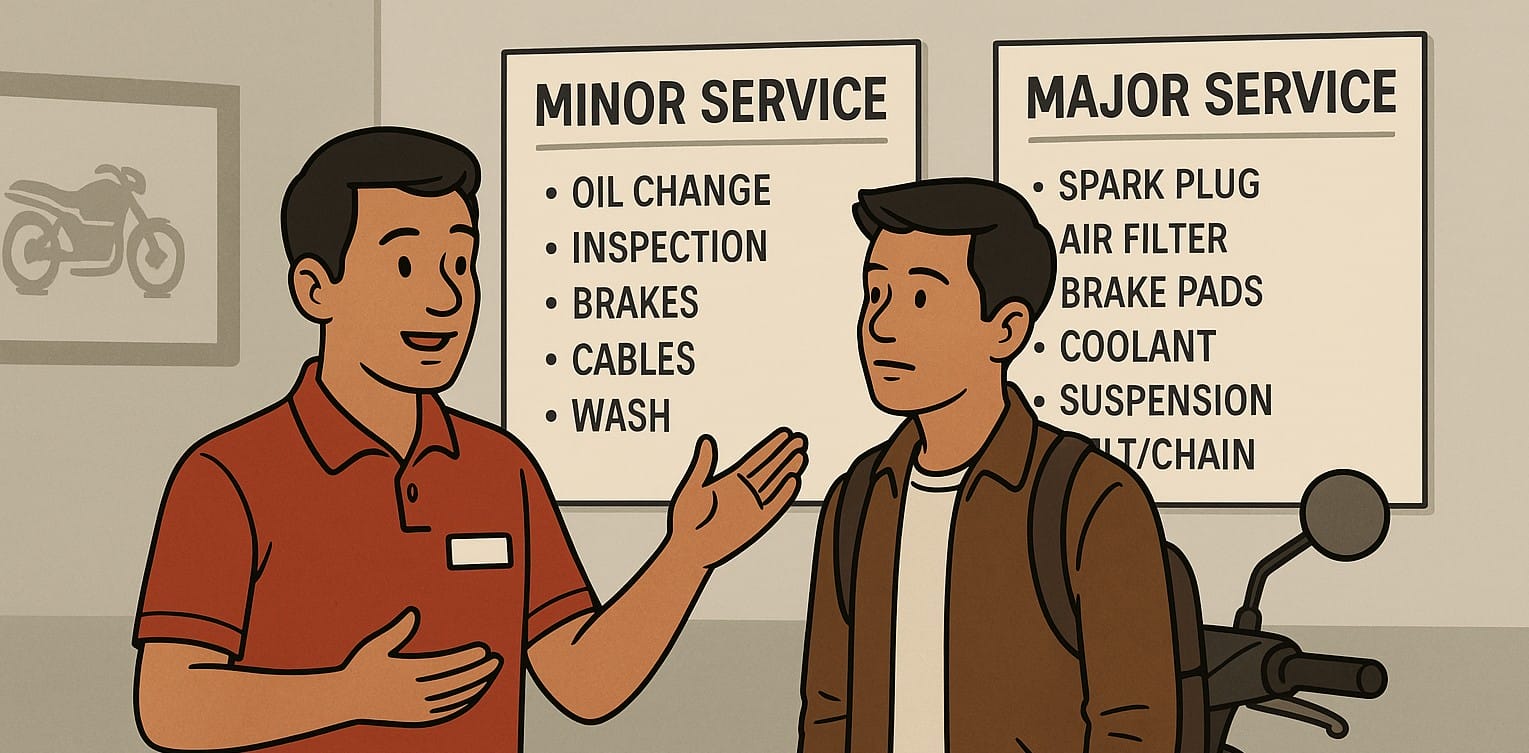
3. What’s a Minor vs Major Service?
These aren’t official terms in most service booklets, but dealers commonly use them to describe the scope and cost of a service.
3.1 Minor Service:
- Typically done every 3-6 months or after 2,000-4,000 km
- Includes:
- Engine oil change
- Brake adjustment
- Tyre pressure, chain lubrication
- General inspection
- Water wash
Cost: Low to moderate, depending on oil and any add-ons
3.2 Major Service:
- Usually once a year or after 10,000+ km
- Includes:
- All minor service items
- Spark plug and air filter replacement
- Brake pads, drive belt, suspension inspection
- Coolant or gearbox oil change (for some bikes)
- Battery, electrical, and fuel system check
Cost: Higher due to part replacements and more labor
Not all bikes will need every item your riding condition matters.
4. What Do Dealers Mean by “General Service”?
It’s a vague term that usually refers to basic cleaning and tuning, which may or may not include oil change.
Ask for clarification:
- Does it include engine oil?
- Is anything being replaced?
- Is it part of the free or paid schedule?
Never assume “general” means “minor” always confirm what’s included.
5. What’s Different for Electric Vehicles?
EV servicing skips anything engine-related, but still requires:
- Brake check and pad replacement
- Tyre condition and wheel alignment
- Battery health report
- Charger and connector inspection
- Software updates (for connected EVs)
- Firmware or app sync check
Ather, Ola, and similar brands offer app-based service reminders. Skipping these may affect your warranty.
6. What Affects Your Service Schedule and Cost
Don’t blindly go by distance alone. Also consider:
- Riding time (months since last visit)
- City vs highway usage
- Heavy load or poor roads
- Your brand’s engine size and cooling system
- Missed services which can lead to a bigger next service
Always ask your service advisor which service you’re due for and why.
7. How to Avoid Confusion or Unnecessary Charges
- Ask clearly: “Is this a free, paid, minor, or major service?”
- Request a job card before work begins
- Don’t approve part replacements without a reason
- Keep a copy of every invoice (digital or printed)
- Use your brand’s app to track service logs and future dates
Summary: Know When It’s Minor, Major, Free or Paid
You don’t need to be technical. You just need to stay alert. When you know the difference between service types, you:
- Keep your scooter or bike in better shape
- Avoid wasting money on things you don’t need
- Protect your warranty
- Avoid disputes with service centers

