
Online vs Offline TV Buying in India: Safe, Smart, and Budget-Friendly
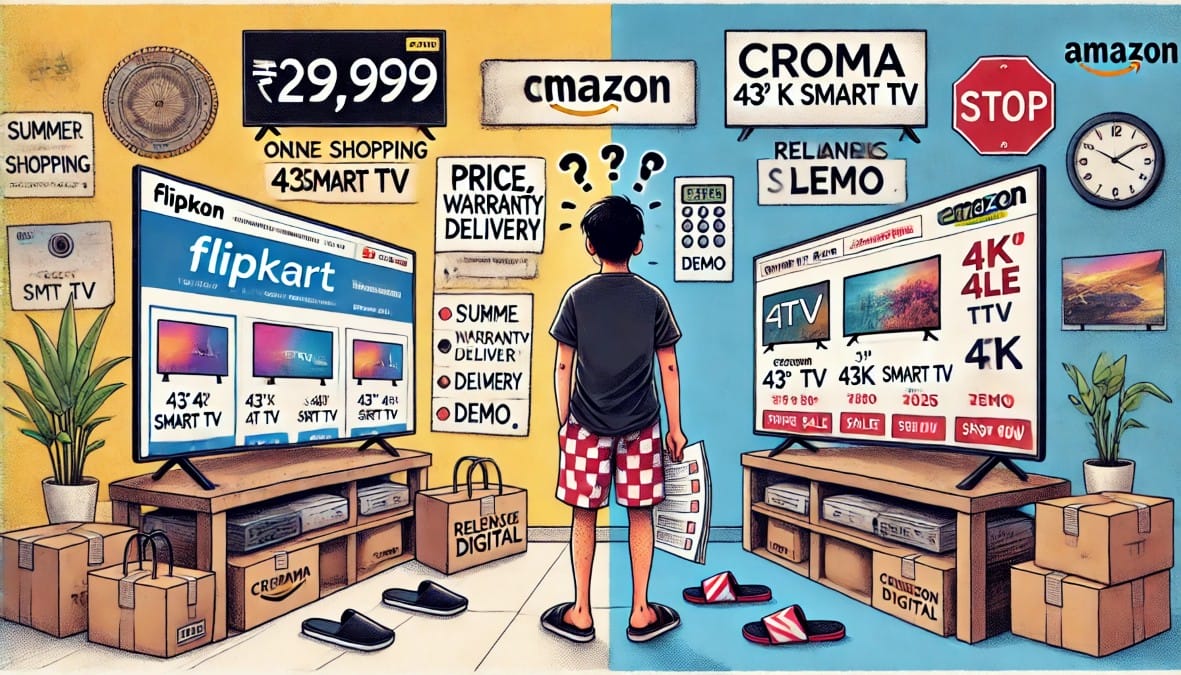
Buying a TV in India? Don’t Just Look at Features, Look at Where You’re Buying It.
You’ve picked the size. You’ve compared the specs. You’ve even chosen the brand. Now comes the part most people overlook, but often regret later – Where should you actually buy your TV online or from a store? And how do you know if you’re getting a real deal or just a flashy discount?
In 2025, buying a TV in India is faster, cheaper, and more flexible than ever. Flipkart, Amazon, Croma, Reliance Digital, and brand stores are all competing for your attention. But each buying option comes with its own pros and cons, especially when it comes to warranty, installation, service, and hidden costs.
1. Online vs Offline: What Works Better ?
A. Buying a TV Online (Amazon, Flipkart, brand sites)
Pros:
- Better discounts, especially during sales
- Wider model selection with real buyer reviews
- Easy comparison of prices, specs, and offers
- Contactless delivery, no need to visit a store
Cons:
- Delivery or installation delays in smaller cities
- Panel damage risk during transit (though rare)
- Customer service handled through third-party providers
Best For:
Confident buyers in metro cities who value convenience and savings
B. Buying a TV Offline (Croma, Reliance Digital, local dealers)
Pros:
- See the display and audio in person before buying
- Immediate delivery and installation in most cases
- Ability to negotiate price, freebies, or exchange deals
- Local assistance for warranty or support
Cons:
- Smaller selection; older models may be pushed
- Price often higher than online by ₹2,000–₹5,000
- In-store staff may upsell high-margin brands
Best For:
First-time buyers, senior citizens, or those in areas with limited delivery support
2. Smart Ways to Combine Both Options – Online + Offline
- Demo in-store, buy online: Use the offline showroom to test performance, but buy the exact model online if it’s cheaper.
- Ask for price matching: Big retailers (like Croma) may match online prices if you show proof.
- Compare model numbers carefully: Don’t assume a “Samsung 43” 4K TV” is the same everywhere—brands often release store-only variants with trimmed specs.
3. How to Tell if You’re Getting a Real Deal
- Ignore the MRP: It’s often inflated and meaningless. Check the actual selling price over time.
- Watch out for “exclusive” models: Some online-only models remove ports or reduce brightness to cut cost.
- Beware misleading specs: “120Hz MEMC” doesn’t mean true 120Hz refresh rate. Look for real panel details, not marketing terms.
4. When to Buy a TV in India: Best Times for Deals
| Season/Event | Why It’s Worth Waiting For |
|---|---|
| Republic Day (Jan) | Early-year clearance on older stock |
| Summer Sales (Apr–May) | Combo offers (AC + TV), 55″+ deals |
| Independence Day (Aug) | Mid-season stock rotation |
| Diwali (Oct–Nov) | Deep discounts, cashback, EMI offers |
| Big Billion Days / GIF | Online lowest prices + card bonuses |
| March/September Launches | Older models drop after new releases |
5. Buying Safe: Avoid These Common Mistakes
- Never accept an open box unless it’s from an authorized open-box program
- Record the unboxing—use your phone in case the panel is cracked
- Always register the TV on the brand’s website after installation
- Avoid unknown third-party sellers on online marketplaces—stick to Amazon/Flipkart-assured or brand-direct listings
6. Follow These Steps for a Smooth TV Purchase
| Step | What to Do |
|---|---|
| Shortlist the model | Use your buying guide, specs checklist, brand comparison |
| Compare pricing | Check both online & offline (model numbers must match) |
| Time your purchase | Wait for major sales unless the price already looks right |
| Check warranty terms | Know who installs it and who handles post-sale service |
| Buy with protection | Use a credit card, and document delivery and unboxing |
Final Thoughts: Price Matters, But So Does Peace of Mind
You don’t buy a TV every year. That’s why choosing the right place, time, and process matters just as much as the brand or screen size.
A lower price doesn’t always mean a better deal—especially if you end up with delays, missing accessories, or poor support. At the same time, paying extra for the same model just for an in-store demo may not always be worth it.
The smart way forward? Use this guide to:
- Compare options clearly
- Time your purchase strategically
- Buy from a trusted source
- And always prioritize a safe, transparent, and support-backed experience
Whether you buy online or offline, you’re not just buying a screen—you’re investing in something you’ll use daily, for years. Make it count.

