
Camera Lenses That Actually Improve Your Photos – For DSLR Beginners
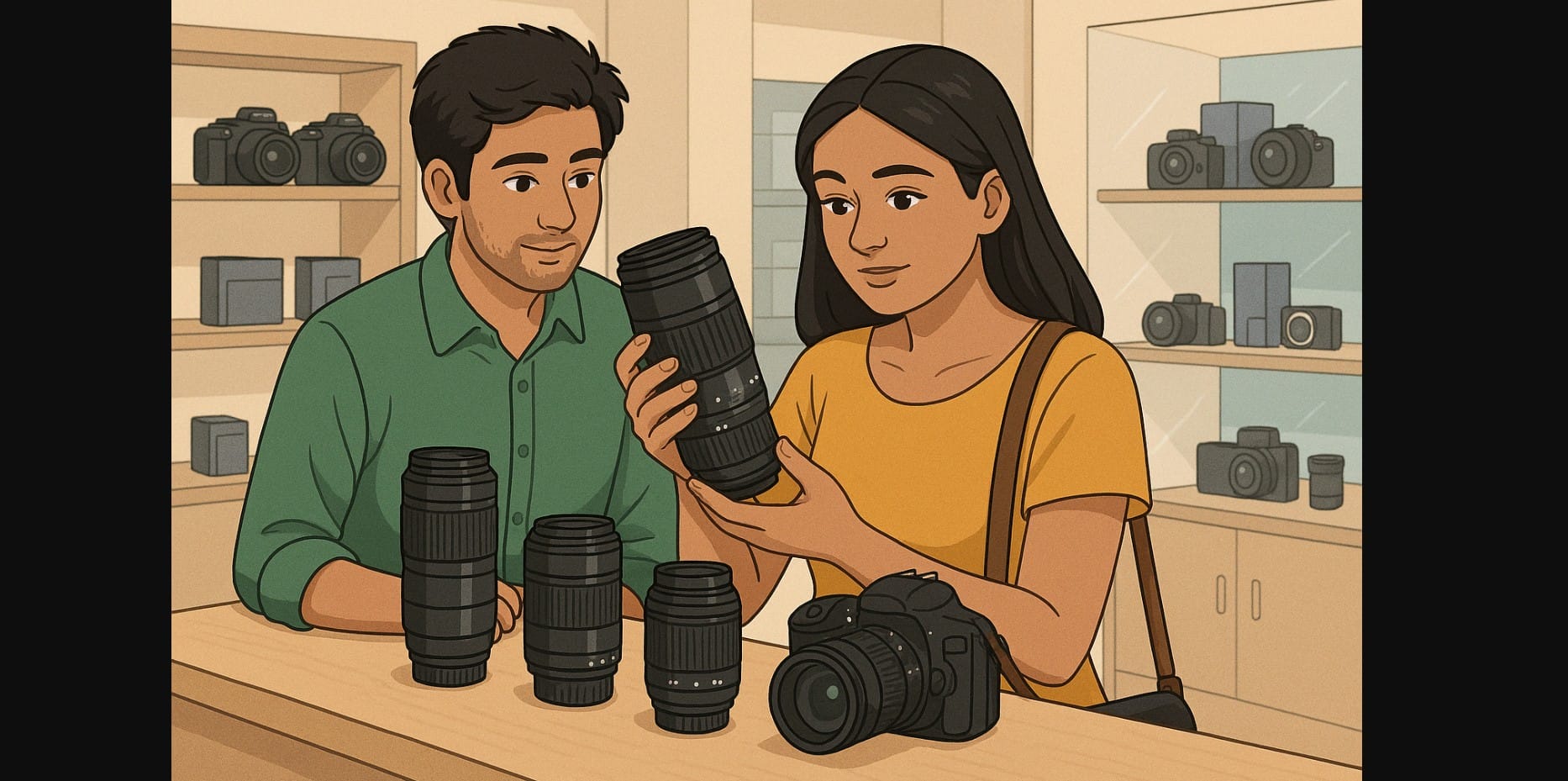
Most people in India start with a DSLR bundled with an 18-55mm kit lens. It works, but once you’re hooked, you’ll quickly realise its limits blurry backgrounds are hard to achieve, low-light shots feel noisy, and distant subjects just don’t get close enough. That’s where your lens selection changes everything.
This isn’t about upgrading your camera body. It’s about unlocking the full potential of the one you already own.
1. Start Simple with the 50mm Lens
If you only add one lens beyond your kit, make it a 50mm f/1.8. It’s affordable (₹7K-₹10K), compact, and transforms how you shoot indoors, portraits, and low-light scenes. It’s called the “nifty fifty” for a reason it gives sharp images with real background blur, even on a crop-sensor DSLR.
In Indian homes with limited space or low lighting, this lens does better than most zooms.
2. 35mm Lens Works Well Indoors and on the Street
Many Indian users shoot in tight rooms, small shops, or markets. A 35mm f/1.8 lens offers a wider view than the 50mm while still delivering great depth of field. It’s useful for food photography, street scenes, and indoor functions where you don’t have room to step back.
For everyday creators, it’s a sharper, brighter, and faster upgrade over the kit lens.
3. Zooming Beyond the Kit What to Get Next
If your interest moves toward wildlife, stage events, or temple ceremonies, you’ll need reach. Lenses like 55-250mm or 70-300mm give you that distance. You can frame from across the room or capture birds without moving too close. These are commonly used on Indian safaris or school event stages.
They’re also handy for relatives who ask you to “zoom in from far” during family functions.
4. Wide Lenses Make a Difference When Travelling
Places like Ladakh, Hampi, or Jaipur’s forts deserve wide framing. Kit lenses struggle here. A 10-18mm (Canon) or 10-20mm (Nikon) lens covers landscapes, cityscapes, and interiors. It also helps you shoot full temple structures or group shots without asking everyone to squeeze in.
These lenses are light and perfect for travel vlogging or social content around India.
5. Portraits Look Better with 85mm Lens
If you shoot people weddings, family sessions, or professional portraits an 85mm f/1.8 lens creates smooth background separation and flattering facial tones. It gives you that “cinematic” wedding photo look even on an entry-level DSLR.
In Indian weddings, it helps isolate the bride or groom from the background crowd.
6. Make Sure It Works with Your Camera
Canon users should check if the lens says EF or EF-S both work on crop-sensor DSLRs, but not all lenses suit full-frame bodies. Nikon users should confirm if the lens has autofocus motor support on some lower-end bodies, the lens won’t autofocus unless it’s AF-S or newer.
Many users in India buy lenses from OLX or used camera markets without checking mount compatibility this causes frustration later.
8. Third-Party Lenses Are Worth Considering
Lenses from Sigma and Tamron are widely available across Indian retailers. A Sigma 17-50mm f/2.8, for example, is a solid upgrade over your kit lens, perfect for events or video. Tokina lenses offer affordable wide-angle options. These brands are safe to buy if you check compatibility.
Before buying, ask the seller if autofocus is supported on your specific model (Canon 1500D, Nikon D5600, etc.).
9. Lens Prices That Make Sense for Indian Buyers
Here’s what to expect when you shop:
- 50mm f/1.8: ₹7,000-₹12,000
- 35mm f/1.8: ₹10,000-₹18,000
- 85mm f/1.8: ₹20,000-₹32,000
- 10-18mm wide zoom: ₹18,000-₹28,000
- 70-300mm zoom: ₹16,000-₹30,000
You can also rent these lenses in major cities like Delhi, Mumbai, or Bangalore before buying.
10. Try Lens Before You Buy
It’s easy to get lost in focal lengths and f-stops. If you’re unsure, visit a shop and mount the lens on your camera. See how it feels. Check how close it focuses. Look through the viewfinder.
Many Indian buyers also explore lens rental apps and try a lens for a weekend before deciding. This saves money and avoids regret especially when moving from kit lens to a more expensive prime or zoom.
Upgrading your lens is how you take the next step not in theory, but in actual results.

