
DSLR vs Mirrorless Camera in India: Price Gaps and Long-Term Costs Explained
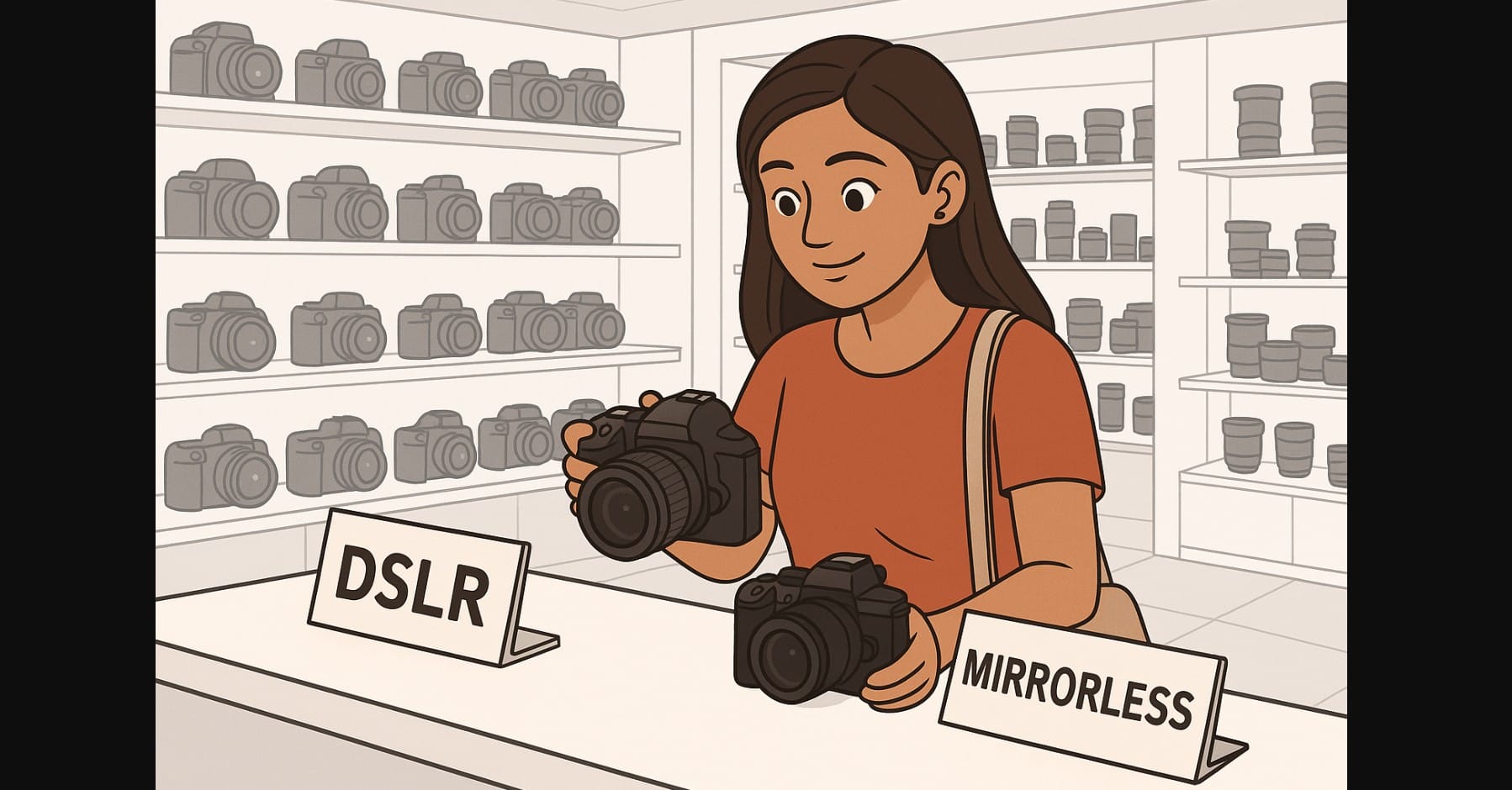
In India’s camera market, the real difference between DSLR and mirrorless prices isn’t just about technology, it’s about where brands are investing today. Canon, Nikon, and Sony have all shifted their primary R&D budgets to mirrorless systems. New DSLRs are rare, and even when they appear, they’re incremental refreshes rather than full innovations.
This change shapes prices in two key ways:
- DSLR bodies are often discounted to move aging stock, especially around festive seasons.
- Mirrorless bodies maintain stronger pricing discipline at launch, with gradual discounts over 6-12 months.
That shift also affects camera firmware updates. DSLRs rarely get new features through software, while mirrorless models receive autofocus, codec, and stabilization upgrades that can improve their value without extra spending.
1. New Camera Cost Structure Differences in India
The way these systems reach buyers also plays a role in pricing:
- DSLRs benefit from mature production lines, some localized assembly, and a well-established dealer network. This reduces per-unit cost and makes entry kits cheaper.
- Mirrorless models often ship complete from overseas, with higher shipping, insurance, and full import duty exposure. Until more are assembled locally, the initial sticker price will reflect those extra costs.
Currency fluctuations matter too. A weak rupee can push up the price of new mirrorless imports faster than DSLRs already in the channel.
2. Camera Lens Ecosystem: The Hidden Price Driver
Lenses are often the bigger investment than the camera body itself over a 3-4 year period.
For most Indian buyers, the bigger financial commitment isn’t the camera body, it’s the lens system you build over time. The mount you choose today determines both what you’ll pay now and what you’ll be able to afford later.
DSLR Lenses (EF, F-mount)
- These mounts have been around for decades, so the Indian used market is rich with affordable glass.
- Popular beginner lenses like the Canon EF 50mm f/1.8 STM or Nikon 35mm f/1.8G often sell used for ₹6,000-₹10,000 in good condition.
- Third-party makers like Sigma and Tamron still sell new DSLR lenses here, but at reduced prices as demand shifts to mirrorless.
Mirrorless Lenses (RF, Z, E-mount)
- As a newer ecosystem, there’s less second-hand stock and limited entry-level primes available under ₹15,000 new.
- Native lenses often cost 20-40% more than their DSLR equivalents due to smaller production runs and ongoing R&D recovery.
- For example, a Canon RF 50mm f/1.8 STM retails near ₹18,000, compared to around ₹9,000 for the EF version.
Adapters and Transition Costs
- OEM adapters bridge DSLR lenses to mirrorless bodies, but they add ₹8,000-₹25,000 to your setup.
- While adapters preserve compatibility, autofocus speed and stabilization performance may still be slightly reduced, especially with older third-party lenses.
System Longevity and Resale
- DSLR lens prices in India are likely to hold steady in the used market for the next few years because of student and hobbyist demand.
- Mirrorless lenses will depreciate faster in the first year but retain better long-term value as the ecosystem becomes standard.
In short, choosing between DSLR and mirrorless isn’t just about the body price, it’s about committing to a lens roadmap that will either save or cost you tens of thousands over a 3-4 year period.
3. Segment-Wise Camera Price Realities and Total Cost Outlook
Entry-Level (Under ₹50,000)
- DSLR: Cheapest entry into interchangeable-lens photography. Bundled accessories and a healthy used lens market keep costs low. No future updates or new models expected.
- Mirrorless: Limited in this price range, often with smaller sensors. Kits are basic, and you’ll need extra budget for a second battery and faster memory card.
| Item | DSLR Kit | Mirrorless Kit |
|---|---|---|
| Body + Kit Lens | ₹40,000 | ₹45,000 |
| Extra Battery | ₹2,000 | ₹4,000 |
| Memory Card | ₹1,500 | ₹3,500 |
| Second Lens | ₹8,000 (used) | ₹14,000 (new) |
| Services + Repairs | ₹3,000 | ₹4,500 |
| Total Spend | ₹54,500 | ₹71,000 |
| Resale (Year 4) | ₹15,000 | ₹22,000 |
| Net Cost | ₹39,500 | ₹49,000 |
Mid-Range (₹50,000-₹1,00,000)
- DSLR: Strong discounts on older models, reliable for stills. Great for buyers who already own DSLR lenses.
- Mirrorless: Popular with hybrid shooters who need good autofocus and video performance. More expensive initially but gains from expanding lens choices.
| Item | DSLR Kit | Mirrorless Kit |
|---|---|---|
| Body + Kit Lens | ₹95,000 | ₹1,05,000 |
| Extra Battery | ₹2,500 | ₹5,000 |
| Memory Cards | ₹3,000 | ₹8,000 |
| Second Lens | ₹18,000 (used) | ₹28,000 (new) |
| Services + Repairs | ₹8,000 | ₹10,500 |
| Total Spend | ₹1,26,500 | ₹1,56,500 |
| Resale (Year 4) | ₹30,000 | ₹45,000 |
| Net Cost | ₹96,500 | ₹1,11,500 |
Professional (Above ₹1,00,000)
- DSLR: Now a specialist’s choice, mostly for photographers with existing lens investments.
- Mirrorless: Dominates the pro market with high burst rates, advanced tracking, and superior video. Better long-term value retention.
| Item | DSLR Kit | Mirrorless Kit |
|---|---|---|
| Body + Pro Zoom | ₹2,00,000 | ₹2,20,000 |
| Extra Battery | ₹3,000 | ₹6,000 |
| Memory Cards | ₹4,000 | ₹12,000 |
| Second Lens | ₹40,000 (used) | ₹60,000 (new) |
| Services + Repairs | ₹12,000 | ₹15,000 |
| Total Spend | ₹2,59,000 | ₹3,13,000 |
| Resale (Year 4) | ₹75,000 | ₹1,05,000 |
| Net Cost | ₹1,84,000 | ₹2,08,000 |
4. Service and Repair Cost Differences
- DSLR: Lower bench rates and more independent repair options, especially for entry-level models.
- Mirrorless: Higher service charges, but parts availability is better for newer systems.
For out-of-warranty work, DSLRs can be cheaper to maintain, but mirrorless users benefit from faster part turnaround in metro service centers.
5. Best Timing to Buy Your Favorite Camera & Price Strategies
In India, timing your purchase can save you anywhere from ₹5,000 to ₹30,000 depending on the segment and your negotiation skill. Indian camera prices don’t fluctuate randomly, they follow predictable cycles tied to import batches, sales seasons, and stock clearances.
Major Discount Seasons
- Independence Day Sales (August) – Online platforms like Amazon and Flipkart run camera-specific offers, sometimes with bundled accessories. Best for entry-level DSLR and mirrorless kits where freebies (bags, memory cards) add real value.
- Diwali & Festive Period (October-November) – The most aggressive discounts of the year, particularly for mid-range and outgoing DSLR models. Brands clear older batches before introducing refreshed kits post-Diwali.
- Year-End / New Year Clearance (December-January) – Retailers push to move unsold stock before new import cycles. Excellent for professional mirrorless where straight price cuts, not freebies, are more common.
Model Lifecycle Timing
- DSLRs – Since no new major launches are expected, price drops are mostly tied to stock clearance or dealer sales targets. Watch for sudden 5-15% cuts on older kits when inventory is low.
- Mirrorless – Prices hold steady for the first 6-9 months after launch. Best buying windows are either right before a successor is announced or during the second major festive season after launch.
Channel Choice
- Authorised Retail Chains (Croma, Reliance Digital) – More flexible on bundle negotiations in-store. You can often get an extra lens, tripod, or bag without paying full retail.
- Online Marketplaces (Amazon, Flipkart) – Best for transparent price drops and bank card cashbacks during big sales.
- Local Dealers – Especially in metro cities, they can match online prices and throw in extras if you’re buying lenses alongside the body.
Grey Market vs. Authorised Brand Camera Seller
- Grey Imports – Can be 15-25% cheaper, but no GST invoice means no warranty and weaker resale. Better avoided for high-end purchases unless you’re willing to take the service risk.
- Authorised Stock – Costs more upfront but comes with warranty support and easier resale. Particularly important for mirrorless where firmware updates and service centre compatibility matter.
6. DSLR vs Mirrorless Camera Choice
- DSLR advantage: Lower upfront and net ownership costs, particularly for entry-level and mid-range buyers, thanks to the mature used lens market and frequent discounts.
- Mirrorless advantage: Better long-term value retention, continuous feature growth, and an expanding lens ecosystem, especially in mid-range and professional categories.
- Upgrade path: DSLR buyers risk higher transition costs later if moving to mirrorless, while mirrorless buyers start higher but can build a system without switching mounts.
2025-2028 Camera Price Outlook
- DSLR: New prices may rise slightly as imports slow, but the used market will remain active and affordable.
- Mirrorless: More India-specific kits and possible local assembly will gradually reduce effective street prices while expanding lens choices.

