
Risks and Benefits of Buying Phones on EMI for Students in India
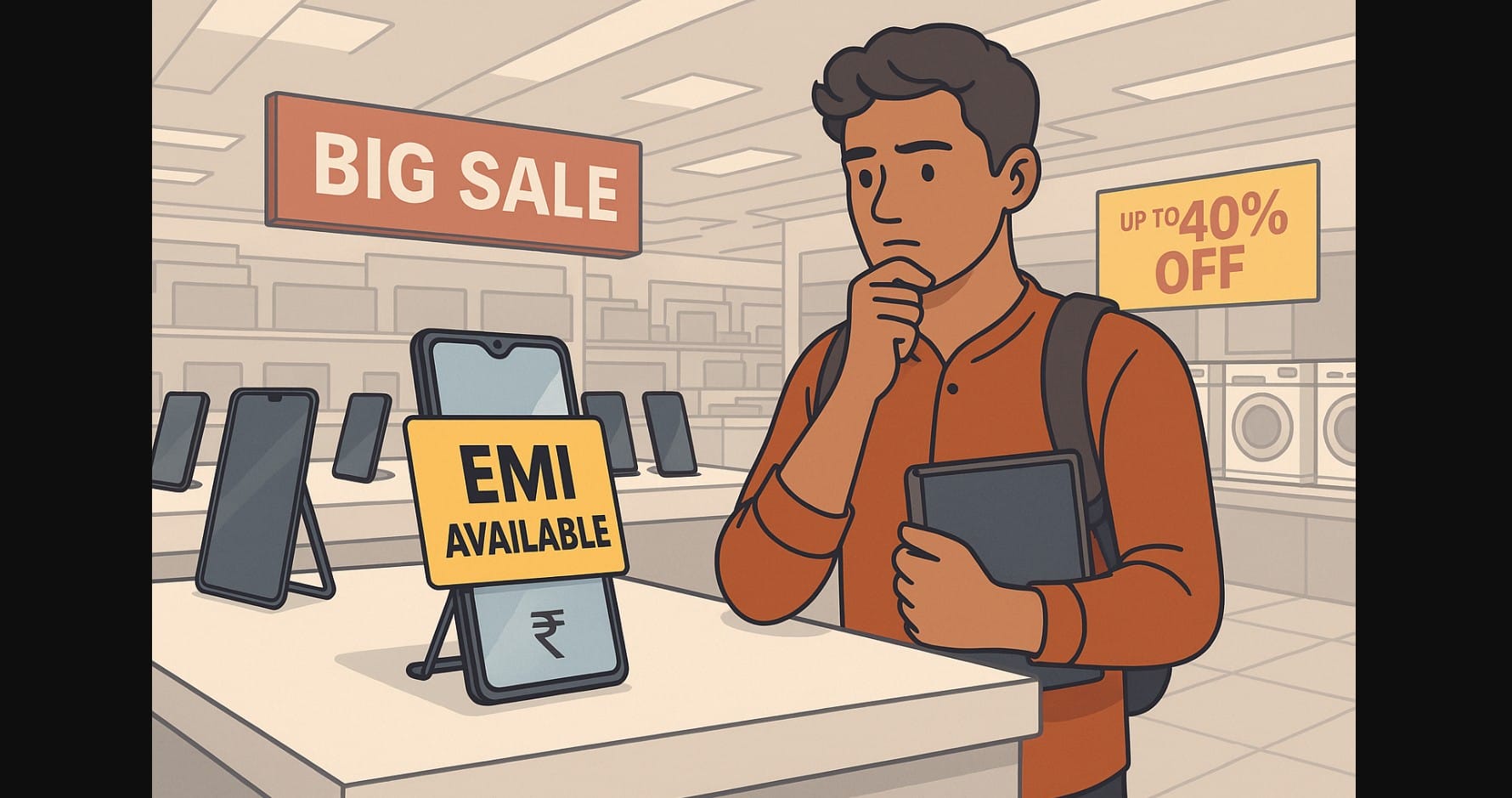
For students in India, a smartphone isn’t just for social media, it’s often the primary device for attending online classes, scanning notes, coding assignments, or even running side hustles. But when the latest phone costs two or three times your monthly allowance, the “easy” option of an EMI can feel like the perfect fix.
Retailers and banks know this. From Croma to Amazon, the “No Cost EMI” boards are designed to make you think, “It’s just ₹1,200 a month, I can manage that.” And for many students, it works, they walk out with a better phone than they thought they could afford.
The catch? That small monthly payment comes with long-term strings attached, interest, hidden fees, locked-in commitments, and the risk of starting your working life already in debt. Over the last five years, easy EMI schemes from banks, fintech companies, and offline retailers have made high-spec smartphones seem more accessible than ever, but the reality is not always as smooth as the marketing suggests.
In this guide, you’ll see how EMIs really work for students in India, when they can be a smart move, and when they’re a financial trap in disguise.
1. How Students Manage to Get EMI Without Owning a Credit Card
Many students don’t own credit cards, but EMI options in India have expanded beyond traditional banking:
- Parent/Guardian Credit Card EMI: The purchase is made on a parent’s card, and the student repays them monthly.
- Debit Card EMI: Offered by SBI, HDFC, ICICI, Axis, Kotak, and others on eligible accounts.
- No-Credit-History Fintech EMI: Platforms like ZestMoney, Bajaj Finserv, and Home Credit approve based on Aadhaar, PAN, and bank statement.
- Retailer Finance Counters: Inside Croma, Reliance Digital, or Vijay Sales, sometimes requiring a co-signer.
2. When an EMI Can Actually Help You Study Better
Stretching a Limited Budget Without Sacrificing Essentials – If your monthly allowance is ₹6,000 and you spend ₹3,500 on rent, ₹1,500 on food, and ₹500 on travel, a ₹1,200 EMI can fit without forcing you to cut essentials. Anything higher risks dipping into savings or borrowing from friends.
Getting a Phone That Won’t Need Replacing Next Year – A ₹10,000 budget might get you a phone that struggles with online classes and multi-tasking after a year. An EMI on a ₹17,000-₹20,000 phone can give you better RAM, battery life, and software support for 2-3 years, which is cheaper in the long run than upgrading every 12 months.
Matching Repayment With the Academic Calendar – If you start EMI payments in July or August, you can finish by April or May before internship season. This avoids carrying debt into relocation or job expenses after graduation.
Building a Financial Track Record Early – If you’re over 18 and take an EMI through an NBFC or as an add-on cardholder, timely repayments can create your first credit profile. That history can help when you apply for an education loan, a scooter loan, or even a postpaid SIM after graduation.
3. The Traps That Can Turn a Simple Phone EMI Into a Long-Term Burden
Underestimating How Fast Your Budget Can Collapse – If your monthly allowance is ₹6,000 and your EMI is ₹1,500, it may feel manageable, until a ₹2,000 hostel repair fee or a sudden ₹1,800 medical bill hits. Without an emergency buffer, you may end up delaying the EMI or borrowing from friends, which creates more stress and possible late fees.
Dragging EMI Debt Into Your First Job – A ₹2,000 EMI from your final year might not sound like much, but in your first job, it’s still ₹2,000 that could go toward relocation costs, a new laptop, or repaying an education loan. Many fresh graduates spend their first salary month catching up on college debts instead of starting fresh.
Being Stuck With a Phone You Can’t Sell Yet – If you want to upgrade for better performance but still owe ₹8,000 on your current EMI, you’ll need to pay off the loan before selling, and foreclosure charges can add ₹500-₹1,000. This often makes mid-term upgrades financially pointless.
Paying More Than You Realise in “Small” Charges – That ₹15,000 phone on a 9-month EMI might quietly turn into ₹16,200 after adding a ₹500 processing fee, ₹500 insurance, and GST on the interest. Because these costs are spread out, students rarely notice how much extra they’re actually paying.
4. Three Cases That Show the Bad Side of Phone EMI
- Case 1: Buying a ₹20,000 phone on “zero-cost EMI”, later finding it’s ₹1,000 cheaper for one-time payment during a festival sale.
- Case 2: Taking a 9-month fintech EMI, realising after GST on interest that the effective price is ₹1,500 higher than sticker price.
- Case 3: Upgrading to a flagship in the final year, paying ₹4,000/month into the first job, delaying laptop purchase for work.
5. A Quick-Check Table to Decide if an Smartphone EMI Is Right for You
| Question | If YES | If NO |
|---|---|---|
| Do you have a steady source of funds for the full tenure? | You can plan EMI safely. | Wait until income/allowance is reliable. |
| Is the phone required for academic or professional use? | EMI could be justified. | Rethink, avoid debt for non-essential upgrades. |
| Have you checked total cost including fees and GST on interest? | Proceed if cost is reasonable. | Recalculate, “zero cost” may not be zero. |
| Is the tenure shorter than the phone’s practical usage period? | Good match for repayment and usage. | Avoid, don’t repay a phone you’ve stopped using. |
| Can you close the loan early without heavy charges? | Offers flexibility if finances improve. | Risk of being locked in, check T&Cs. |
6. Situations Where an Phone EMI Can Work in Your Favour, and Where It Can Backfire
Works in Your Favour
- Your coursework or side income depends on the phone: For example, if you’re a design student using the phone for mobile editing, or an app developer testing software, having a reliable device directly supports your grades or earnings. The EMI becomes an investment rather than a luxury.
- You’ve done the maths and it’s cheaper long-term: If an EMI lets you buy a ₹19,000 phone that will last 3 years, instead of a ₹10,000 phone that you’d replace twice in the same time, you’re saving overall.
- You’ve matched the tenure with your academic calendar: Choosing a 6-9 month EMI that ends before your final exams or internship start means you’re debt-free when bigger expenses arrive.
Likely to Backfire
- It’s just for “campus show-off” value: Taking a 12-month EMI for a ₹50,000 flagship when a ₹20,000 model meets your academic and social needs will only shrink your budget for other essentials.
- Your repayment depends on an income that hasn’t started yet: Counting on a part-time job you haven’t landed or an internship that’s not confirmed is risky. Missed payments can hurt your credit profile before you even graduate.
- The tenure is longer than the phone’s relevance: If the phone will start lagging in 15 months but your EMI runs for 18 months, you’re literally paying for an outdated device while budgeting for the next one.
7. What Taking an EMI in College Teaches You About Handling Money Later
EMI can be a smart way for students in India to get the right phone without straining their finances, but it’s not a shortcut to “affordable” if you ignore the total cost or repayment discipline.
Think of it as financial training for bigger commitments later in life: a tool that can help you, or trap you, depending on how you use it.

