
Planning a Long Drive? Here’s How to Travel Across India with Your Electric Car
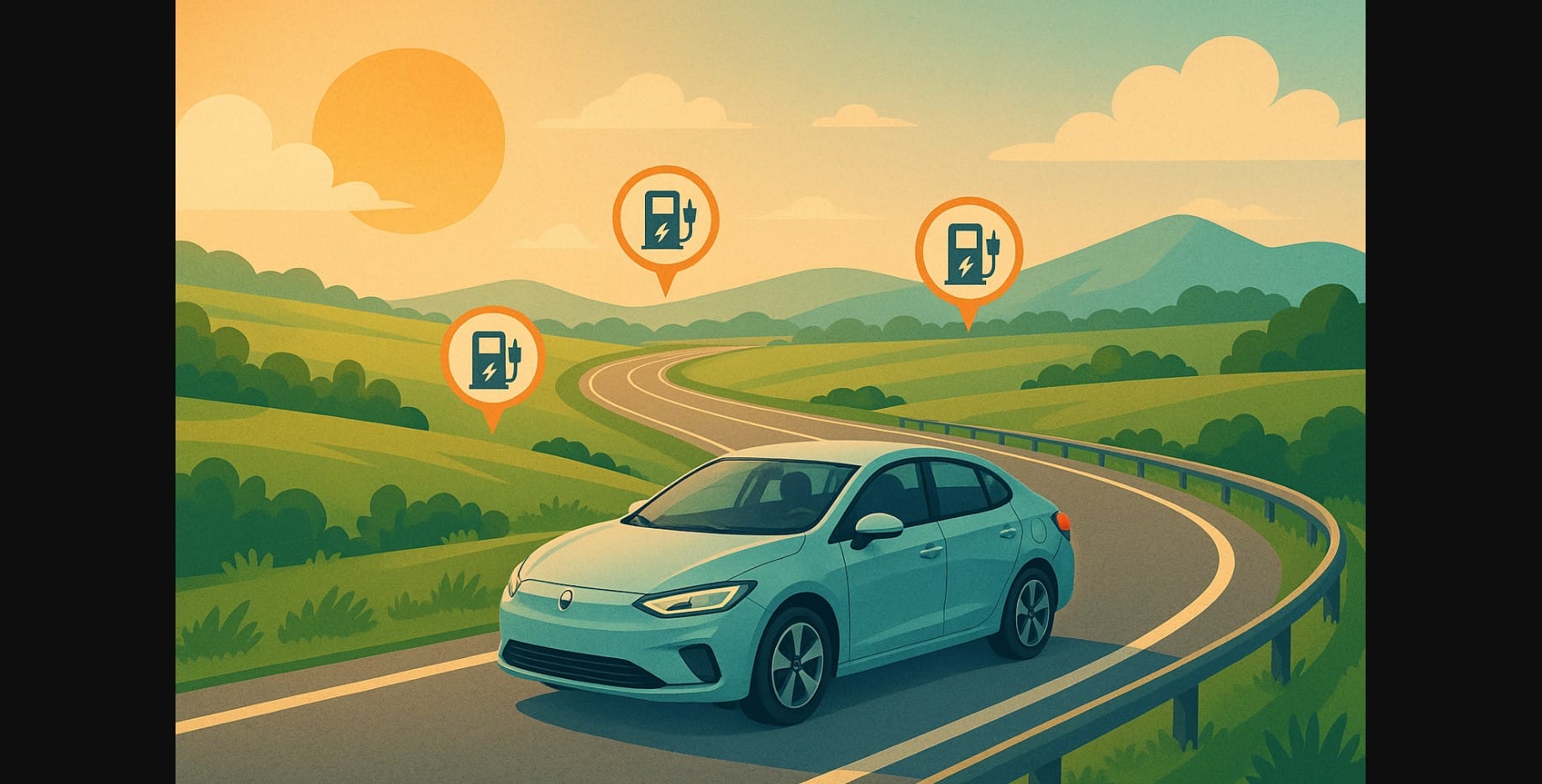
It’s normal to wonder if your electric car can go beyond your office commute. Long-distance travel in EVs is already happening across India just not in the same way you’d use a petrol car. Brands like Tata, MG, BYD, Hyundai, and Mahindra now offer models that can comfortably cover 250-400 km per charge.
With fast-growing charger networks, the real question isn’t can you, but how to plan it right.
1. Your Highway EV Range Won’t Match City Driving
If you’ve driven your EV around town and seen great efficiency, don’t expect the same numbers on highways.
- In cities: Stop-start movement + regenerative braking = high efficiency
- On highways: Constant speeds = no regen, more aerodynamic drag
Expect 15-25% lower range on highways
For example, a car that gives 400 km in city may give around 300-340 km on highways at 80-100 km/h.
2. Charging EV on Highways Isn’t a Gamble Anymore
Use Indian EV charging apps like:
- Tata EZ Charge
- Statiq
- ChargeZone
- PlugShare
- Ather Grid (for compatible EVs)
Plan to stop every 200-250 km, even if your car can go farther this keeps your buffer safe
Always pick stations with:
- Verified user reviews
- Attached restaurants or hotels
- Operational status updates
3. Yes, Electric Car Charging Takes Time But You’ll Be Resting While Your EV Refuels
A typical 50 kW DC fast charger takes:
- 40-60 minutes to charge from 10% to 80%
- Ultra-fast chargers (60-120 kW) can do this in 30-40 minutes, but they’re rare outside metros
Instead of wasting time:
- Eat a meal
- Use the washroom
- Check messages or nap while parked
Think of charging stops as planned rest breaks, not delays
4. EV Car Owners Are Already Taking Long Trips Without Trouble
Real EV users in India are already travelling confidently on these popular routes:
- Delhi – Chandigarh
- Mumbai – Pune – Satara
- Bengaluru – Mysuru – Coorg
- Ahmedabad – Rajkot
- Kochi – Kozhikode
These routes have reliable charger coverage and regular usage updates on apps. Stick to these corridors for early highway trips until you gain confidence
5. What to Carry Inside Your EV Car for Worry-Free Highway Driving
Here’s what experienced EV travellers recommend:
- Tyre inflator + puncture kit
- Brand-certified 15A portable slow charger (if included)
- Charging cables (AC Type 2 and DC CCS2, if removable)
- Power bank + phone charger
- Charging app pre-logged in
- Optional: Route printout in case of signal loss
It’s not about tools it’s about removing anxiety
6. What If a EV Charger Fails Mid-Trip? Your Backup Options Aren’t as Scary as You Think
This is the number one fear but here’s what real EV owners do:
- Retry after 10-15 seconds (handshake may have failed)
- Restart from app many sessions time out
- Check next nearest charger plan always includes fallback
- If stuck near a hotel: use your 15A charger overnight (6-8 hours = 100+ km)
Breakdown is rare but being ready gives you full control
7. Stretch Electric Car Range on Indian Roads
EV highway driving rewards calm behavior. These simple changes can gain you 20-40 km more:
- Maintain 60-75 km/h on open roads
- Avoid sudden acceleration or braking
- Use Eco Mode when terrain allows
- Turn off max AC when not needed
- Pre-cool cabin while car is plugged in (before departure)
- Avoid fast charging right after a long drive in summer heat
8. From Range Anxiety to Road Trip Joy
An EV road trip is possible but not for everyone immediately. Hold off if:
- Your car’s real range is under 200 km
- You have no access to home charging yet
- You live in an area with poor charging coverage or poor roads
- You’re not comfortable using maps and apps to manage your stops
Otherwise, even a first-time EV owner can confidently handle intercity trips with basic prep.
In an EV, you drive smoother, plan better, and build patience and in return, your trip costs almost nothing in fuel. Electric cars reward thoughtful, calm, smarter driving And with every trip, your confidence grows.

