
Electric Scooter Motors in India Explained: BLDC, Hub, Mid-Drive, and Performance
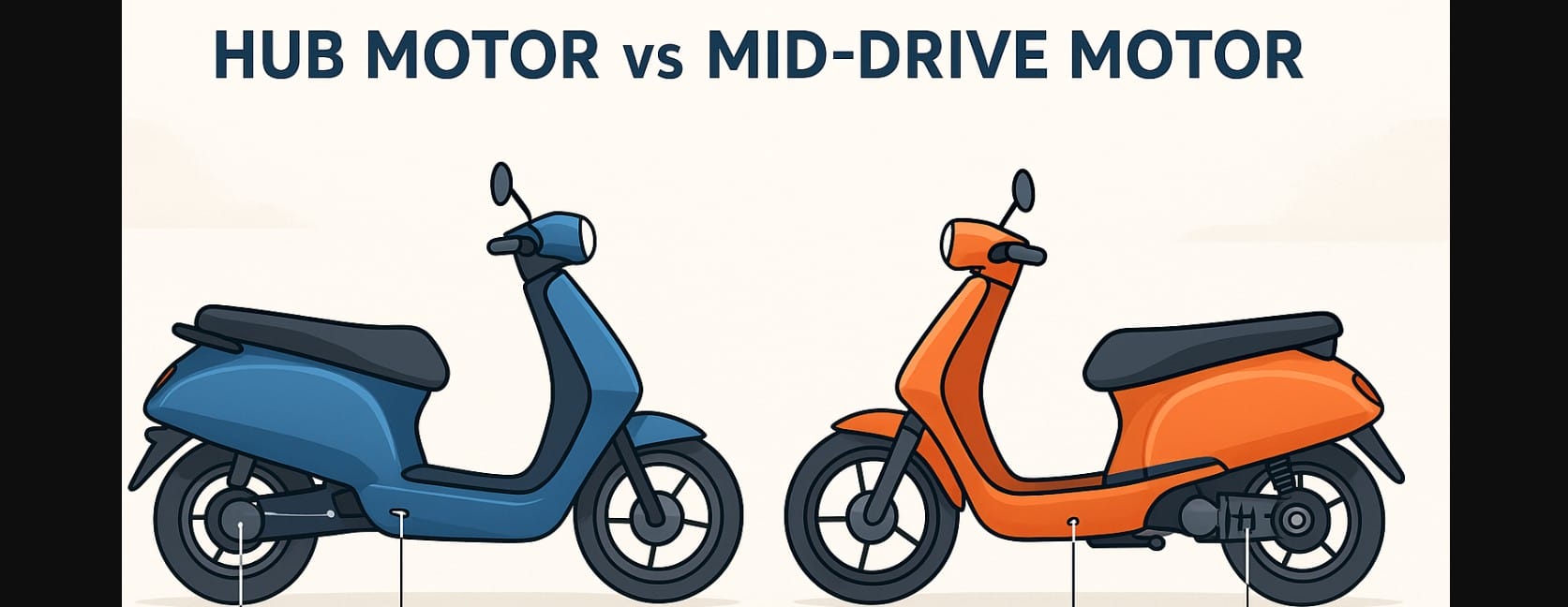
When you choose an electric scooter, you usually check things like price, range, and features. But the motor type hidden inside plays a much bigger role than you might think.
From surviving Indian summers to climbing flyovers in heavy traffic, the motor directly affects how your scooter performs day after day. Understanding the differences will help you pick the right model for your city, lifestyle, and daily usage.
1. The Basics: What Does a Motor Do in an Electric Scooter?
The motor is what turns the energy stored in the battery into actual movement. Every time you twist the throttle, the motor decides how fast you move, how quickly you pick up speed, and how much load your scooter can carry whether you’re riding solo or carrying groceries or a pillion.
Good motor performance makes rides feel smooth and predictable, while weak or poorly tuned motors can leave you struggling on inclines or feeling sluggish in busy traffic.
2. BLDC Motors: The Standard in Indian Electric Scooters
BLDC stands for Brushless DC Motor. Unlike older motors that had physical brushes rubbing against internal parts, BLDC motors are designed to work electronically without any physical friction inside.
This design makes BLDC motors:
- More energy-efficient (longer range per charge)
- Longer-lasting (fewer moving parts to wear out)
- Better for stop-start traffic (smooth low-speed operation)
Today, almost every new electric scooter launched in India from Ola to Ather to Hero uses BLDC technology.
Advantages of BLDC Motors for Indian Conditions
- Better efficiency: You get more kilometers out of every charge, crucial when public chargers are not everywhere.
- Lower maintenance: No brushes mean no frequent part replacements inside the motor.
- Smooth stop-start performance: Perfect for Indian city traffic where you accelerate and brake dozens of times on each trip.
Limitations of BLDC Motors
- Heat buildup: During long rides in hot summer conditions, cheaper BLDC motors can overheat slightly.
Premium scooters now use thermal management systems to minimize this.
3. Hub Motor vs Mid-Drive Motor: What’s the Difference?
Hub Motor Setup
In a hub motor design, the motor is directly integrated into the wheel itself usually the rear wheel.
When you give throttle input, the wheel rotates directly.
Pros of Hub Motors:
- Simple design, fewer parts
- Lightweight
- Cheaper manufacturing cost
- Easier to replace the motor if needed
Cons of Hub Motors:
- Less natural weight distribution (all weight at the back)
- Slightly weaker hill climbing ability compared to mid-drives
Mid-Drive Motor Setup
In a mid-drive motor setup, the motor sits in the center of the scooter frame and connects to the rear wheel via a belt or chain.
Pros of Mid-Drive Motors:
- Central weight distribution = better balance
- Higher torque for hill climbing and heavy loads
- Stronger acceleration on inclines
Cons of Mid-Drive Motors:
- More complex design
- Higher manufacturing cost
- Chain or belt maintenance needed occasionally
4. Comparing Hub Motors and Mid-Drive Motors for EV Scooter
| Feature | Hub Motor | Mid-Drive Motor |
|---|---|---|
| Placement | Inside rear wheel | Center of scooter |
| Ride Feel | Lighter at front, agile | Balanced and stable |
| Hill Climbing | Moderate | Strong |
| Maintenance | Lower (sealed unit) | Slightly higher (belt/chain needs care) |
| Cost | More affordable | More expensive |
| Best For | Flat city rides, solo commutes | Hilly areas, load carrying, sporty rides |
5. Which Electric Scooter Motor Setup Works Best for Indian Cities?
- If you mostly ride in flat cities like Delhi, Hyderabad, Kolkata, Chennai a hub motor scooter is cost-effective and perfectly adequate.
- If you live in hilly or semi-hilly cities like Bengaluru outskirts, Pune, Dehradun, or carry heavy loads regularly a mid-drive motor scooter will give you better pickup, stability, and reliability.
6. Before Choosing EV Scooter Based on Motor Type – Check These
When you shortlist a scooter, check these specs carefully:
- Power Rating: 250W-750W is normal for light commuting. 1500W-5000W is premium or performance segment.
- Peak Torque: Higher torque = better quick starts and climbing ability.
- Thermal Management: Good brands mention motor cooling systems, important for Indian heatwaves.
- Waterproofing Rating: Check for IP ratings like IP67 for the motor critical for surviving monsoon season riding.
7. Don’t Just Trust EV Scooter Marketing – Test Ride for Real Feel
Motor specs on paper don’t tell the full story. Always take a test ride to feel:
- Smoothness of acceleration
- Hill start ability (even a small ramp is a good test)
- Handling at low speeds in traffic
- Noise and vibration levels at different speeds
Real-world experience matters every day.

