
Electric vs Petrol vs Diesel Car: Real Ownership, Running, and Resale Facts
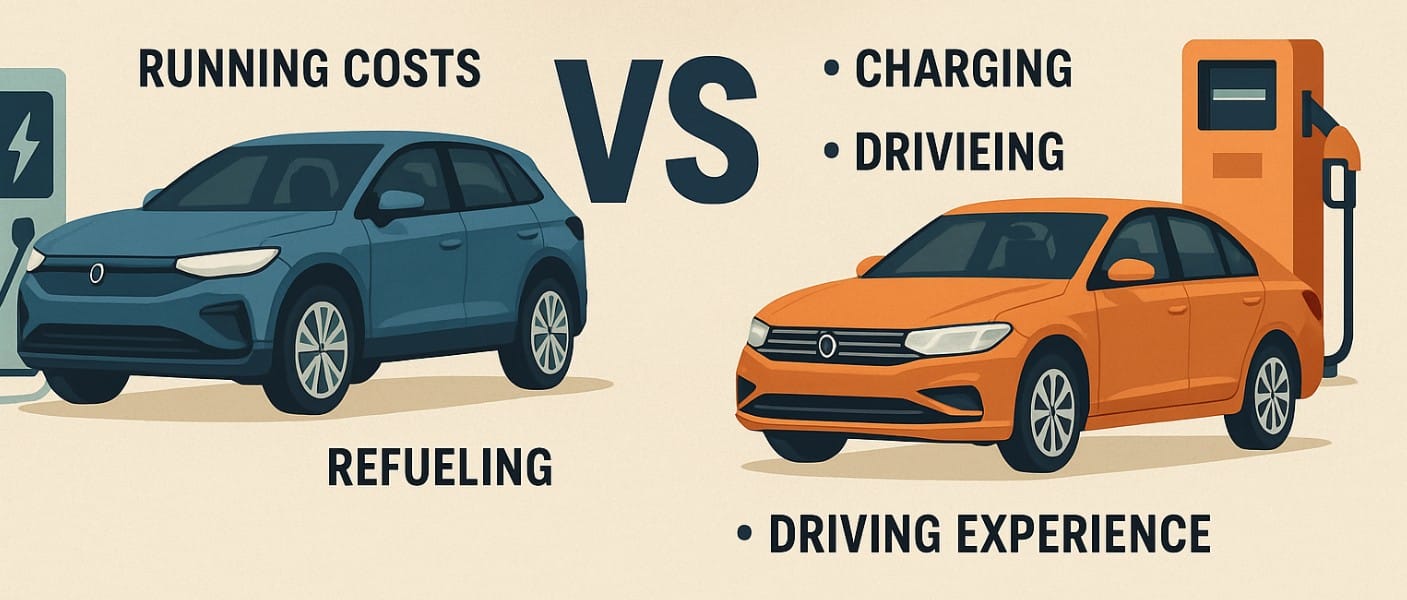
If you’re buying a car in India, you face a real decision: stick with petrol or diesel, or shift to an electric car. With fuel costs rising, EV networks expanding, and ownership costs shifting, there’s no one-size-fits-all answer anymore.
Understanding your daily life how you drive, park, and maintain your vehicle matters more than ever before.
1. Monthly Driving Cost Calculation
In India, the running cost gap between petrol/diesel and electric cars is wide.
- Petrol costs ₹100-₹110 per litre in many cities.
- Diesel slightly cheaper, but savings are shrinking.
- Electricity for EV charging costs ₹7-₹9 per unit (home) or ₹18-₹25 per unit (public fast charging).
Example:
For a daily 50 km commute:
- Petrol car: ₹6,000-₹7,500 per month
- Diesel car: ₹4,500-₹5,500 per month
- Electric car: ₹1,200-₹2,000 per month (home charging)
EV Car buyers start saving money every month but only if they can charge cheaply at home.
2. What Car Ownership Costs Over 5 years
Petrol and diesel vehicles demand regular oil changes, filter replacements, engine tune-ups, and system maintenance.
Electric cars skip most of that:
- No engine oil
- Fewer moving parts
- Minimal routine service (brakes, tires, software updates)
Over 5 years, maintenance costs are:
- Petrol: ₹80,000-₹1 lakh+
- Diesel: ₹1 lakh-₹1.5 lakh+
- Electric: ₹30,000-₹50,000
Hidden service costs often tip long-term ownership economics in favor of electric cars.
3. Car Range, Refueling, and Charging Comparison
Long Highway Drives: Still a Petrol and Diesel Strength
If you love highway road trips, petrol and diesel still win.
- Refueling takes 5 minutes.
- Petrol pumps are everywhere.
- No planning anxiety needed.
EVs have improved with highway chargers between cities like Delhi-Jaipur and Mumbai-Pune but fast chargers are still fewer and long trips require planning.
Daily Urban Drives: Where Electric Cars Save You Time and Stress
In Indian cities, electric cars are hard to beat:
- Home charging = no weekly petrol pump queues
- Daily 30-100 km range easily handled with overnight top-ups
- Less running around in traffic hunting for fuel
If your life is city-bound, EVs save you both time and money every week.
4. How Car Driving Itself Feels
Electric Car Drive Feel: Quiet Power and Instant Response
- Instant acceleration from zero makes traffic gaps easy to exploit.
- No engine vibrations mean less driver fatigue.
- Silent drives change how your daily commute feels calmer and smoother.
Petrol and Diesel Drive Feel: Predictable Strength on Long Roads
- Engine power builds gradually, good for long-distance cruising.
- Some drivers prefer the vibration and “feel” of an engine on open highways.
- Familiarity with gear shifting or automatic response still matters psychologically.
5. What Your Parking Spot Decides About Your Freedom
- If you have a private parking spot with electric access, EV ownership is smooth.
- In apartments and societies, lack of chargers remains a hurdle unless your RWA is proactive.
- No fixed parking? Petrol or diesel still offer easier refueling flexibility.
Parking remains a crucial, often overlooked part of deciding.
6. How Selling Your Car Might Look 5 Years from Now
Petrol and Diesel Resale: Solid Today, Uncertain Tomorrow
Petrol vehicles still sell reliably. Diesel resale is starting to slip in some states, especially with talk of 10-year diesel bans in NCR and Tier 1 cities.
Electric Car Resale: Slowly Catching Up with Stronger Confidence
As buyers understand battery health better (thanks to warranty coverage of 6-8 years), EV resale is strengthening. Battery certifications and verified reports will soon become common in India’s second-hand car market.
7. How Green Choices Actually Play Out Over Time
- EVs reduce urban air pollution immediately (zero tailpipe emissions).
- Manufacturing EV batteries has environmental costs, but newer recycling programs in India (Attero, Lohum) are reducing long-term harm.
- Over a 10-12 year life cycle, EVs still beat petrol and diesel in overall carbon footprint.
For eco-conscious buyers, EVs are no longer a compromise they’re genuinely better.
8. How Govt. Policy Nudges Are Quietly Changing Car Buying
- GST for EVs is just 5% (vs 28% for petrol/diesel cars).
- FAME-II and state-level EV incentives can cut ₹1.5 lakh or more from on-road prices.
- Future emission rules will likely make petrol/diesel more expensive to own and maintain.
Policy is slowly but steadily pushing India toward more EV adoption even if buyers aren’t noticing it day-to-day.
9. Which Car Fits Your Daily Driving Routine Better?
| Factor | Petrol/Diesel Car | Electric Car |
|---|---|---|
| Daily Commute (City Use) | Good | Excellent |
| Long-Distance Highway Trips | Excellent | Improving, but needs planning |
| Running Costs | High | Low |
| Maintenance Costs | Moderate to High | Low |
| Environmental Impact | High emissions | Lower emissions |
| Resale Value (2025-2030) | Stable now, uncertain future | Rising with battery warranty improvements |
You should lean toward an electric car if:
- You drive under 120 km/day
- You have private parking or easy access to charging
- Most of your travel is within the city
You should still prefer petrol or diesel if:
- You do frequent 400+ km highway trips
- You lack parking for home charging
- You live in areas with sparse public charging

