
Busting India’s Top Electric Car Myths: Charging, Range, & Cost Explained
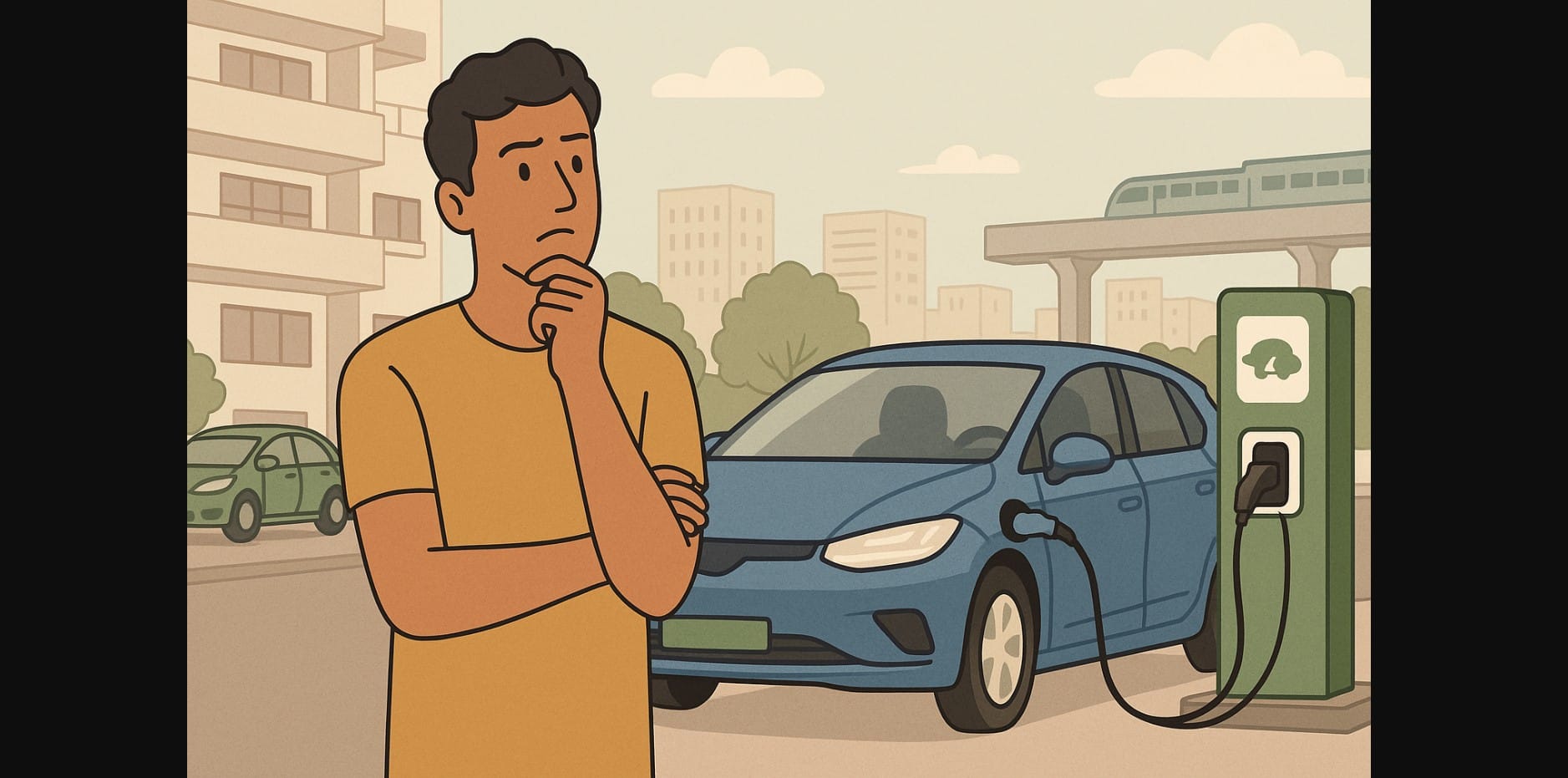
Despite major progress in EV technology, many people in India still hesitate to buy electric cars. Old fears about battery life, range anxiety, and costs continue because technology moved faster than public understanding.
While the early EV Car models suffered from real problems, including limited range and lengthy charging times, the advancements made in recent years have significantly improved these aspects.
The 2025 landscape is very different, with many manufacturers now offering EVs with long battery life, quick charging, and cheaper options, making them easier for more people to access. Government incentives and more charging stations are also making electric vehicles more practical. However, despite these improvements, many consumers still doubt them due to a lack of information and awareness.
Educating people and raising awareness is crucial to help more people accept electric cars in India.
1. Can Electric Cars Really Survive Indian Roads and Weather?
Modern electric cars are designed with Indian conditions in mind:
- Waterproof battery packs (IP67 or better ratings)
- Ground clearance of 170-190 mm to handle speed breakers and potholes
- Advanced thermal management to protect batteries during extreme heatwaves and monsoons
Real owners in cities like Mumbai and Chennai are already using EVs daily without issues.
2. Are You Likely to Get Stranded Without Charge?
One of the biggest fears being stuck with a dead battery is now highly unlikely for most users.
- Home charging covers 90% of daily needs for urban drivers.
- Public charging points are growing rapidly in metro cities and along major highways.
Many Indian EVs today offer 250-450 km per full charge, easily covering daily commutes with a safe buffer.
3. Is an Electric Car Still Out of Reach for Middle-Class Families?
While EVs still cost more upfront than basic petrol cars, the total ownership cost has come down sharply.
Thanks to subsidies, low running costs, and minimal maintenance, a ₹15 lakh EV can cost less to own over 5 years than a ₹10 lakh petrol car.
Government support like:
- FAME II subsidies
- Reduced GST (5% for EVs)
- State-level incentives (Delhi, Maharashtra, Gujarat)
Are making electric cars affordable for a wider group of Indian buyers.
4. Will You Have to Replace the EV Car Battery in Just a Few Years?
Battery fear is often exaggerated.
- Today’s EVs typically come with 6-8 years or 1.2 lakh km battery warranties.
- Many EVs retain 85-90% capacity even after 5 years under normal use.
Even if a battery issue occurs, Indian companies like Attero and Lohum now offer battery refurbishment, lowering the need for costly replacements.
5. Does EV Car Charging Really Take Too Long for Everyday Use?
Daily users almost never face long waits.
- Home chargers (slow AC chargers) fill your battery overnight plug in before bed, unplug in the morning.
- Public fast chargers can top up 100 km range in just 20-30 minutes enough for most urgent needs.
Planning charging is becoming a routine habit, not a stressful event.
6. Are Electric Cars Slower Than Petrol or Diesel Vehicles?
Electric cars deliver instant torque, meaning immediate acceleration from a standstill.
In fact, many Indian EVs outperform petrol models in city driving:
- Tata Nexon EV Prime 0-60 km/h in about 4.5 seconds
- MG ZS EV 0-100 km/h in about 8.5 seconds
Most drivers find EVs more responsive and fun at urban speeds.
7. Is EV Car Ownership Only Practical in Big Metro Cities?
That used to be true not anymore. Charging stations and EV-friendly infrastructure are now growing fast in Tier 2 cities like:
- Jaipur
- Lucknow
- Coimbatore
- Kochi
Private garages, gated communities, and public chargers are making EV ownership practical outside traditional metros.
8. Can Families and Long-Distance Travelers Depend on EVs Now?
Options like Tata Nexon EV Max, BYD Atto, and MG ZS EV offer 350+ km ranges, enough for weekend trips. Government programs are developing EV corridors with charging stations every 50-80 km on popular routes like:
- Delhi to Jaipur
- Mumbai to Pune
- Bengaluru to Chennai
Family buyers also now have choices among larger SUVs and crossovers.
9. Are EV Car Batteries Bad for the Environment After Use?
Battery disposal is a real concern, but India is actively building recycling solutions:
- Companies like Attero, Lohum, and Tata are recycling lithium-ion batteries at industrial scale.
- Used EV batteries are also being repurposed for solar energy storage and other backup applications.
While work is ongoing, EVs still offer a lower lifetime carbon footprint compared to petrol/diesel cars.
10. Is Electric Car Maintenance Actually More Complicated and Expensive?
The truth is the opposite. Electric cars have far fewer moving parts no engine oil, no exhaust system, no clutch leading to much lower routine maintenance.
Typical service tasks:
- Brake check (brakes wear slower due to regenerative braking)
- Tire rotation
- Software updates (often done remotely)
Service costs for EVs are typically 30-50% lower compared to regular petrol or diesel cars.
11. Quick Electric Car Reality Check
If you drive primarily within the city, have a private parking spot, and are ready for a minor shift in habits (charging planning), electric cars in India are now practical, economical, and rewarding.
- Charging is faster and more convenient than ever
- Resale values are improving
- Range anxiety is reducing every year
- Service and support are catching up steadily

