
How EV Scooters Help Indian Cities and Where Work Remains
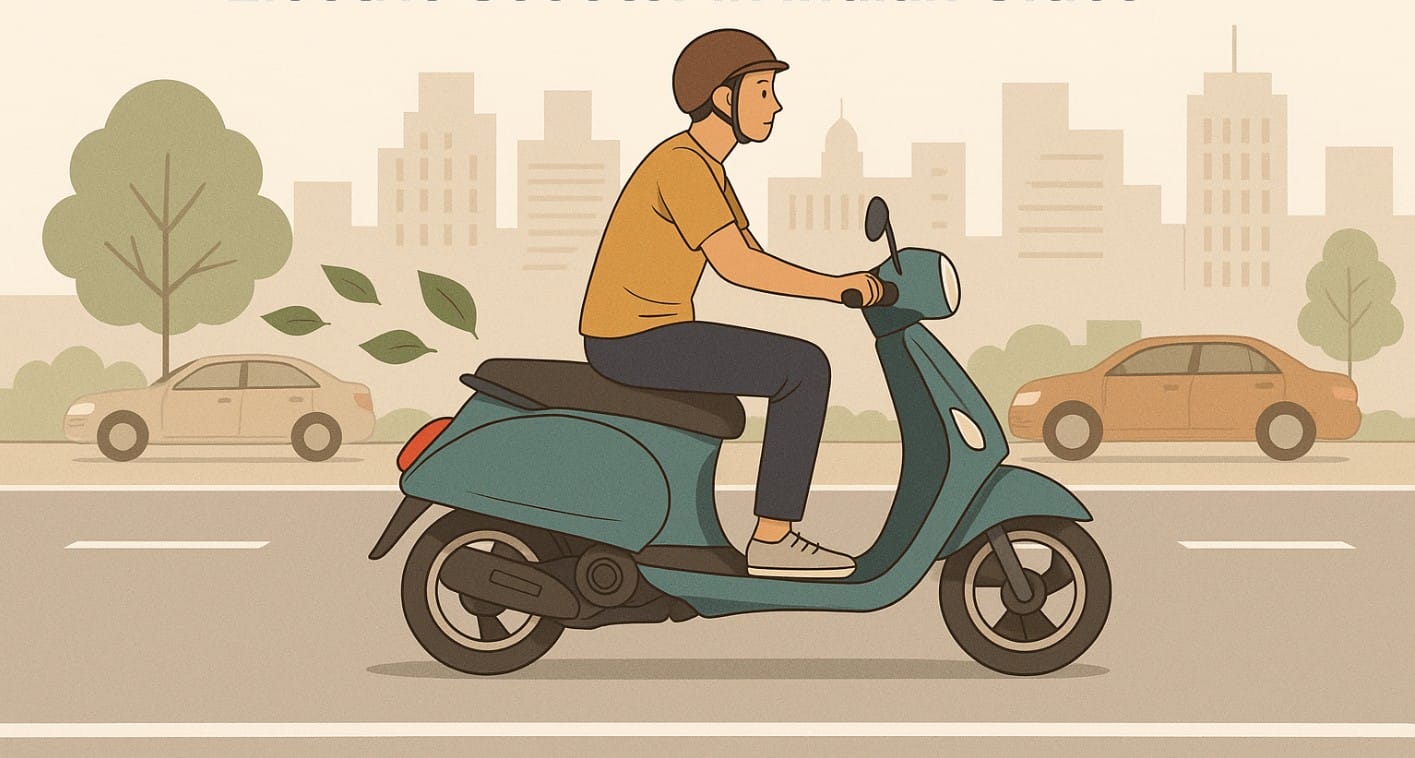
When most people think about buying an electric scooter, they first think about saving fuel and maintenance costs. But there’s a deeper reason EV scooters matter, they quietly reshape India’s air, noise, and city health, one ride at a time.
Your decision to ride electric isn’t just about your wallet, it’s a small vote for cleaner streets, healthier neighborhoods, and smarter cities.
1. How Electric Scooters Quietly Make Indian Cities Cleaner and Healthier
Lowering Daily Air Pollution Without Making a Sound
- Petrol scooters release CO₂, NOx, and particulate matter every day at traffic signals and jams.
- EV scooters release zero local emissions, keeping daily commuting areas markets, schools, hospitals cleaner.
Cutting Down the Noise That Wears Cities Down
- Petrol two-wheelers add a constant hum and rev to India’s background noise.
- EV scooters run 60-70% quieter,
helping residential colonies, educational zones, and hospital areas breathe easier literally and mentally.
Slashing Commute Carbon Footprints Without Extra Effort
- Daily Indian commutes (8-20 km) create hundreds of kilos of carbon emissions each year.
- Switching to an EV scooter cuts your commuting carbon load by up to 40-60%, depending on how clean your local electricity is.
2. Why EV Scooters Are Not a Complete Environmental Solution Yet
India’s Power Still Comes Largely From Coal
- Many states (UP, Jharkhand, Chhattisgarh) still draw power mostly from coal plants.
- Charging your scooter indirectly causes emissions at the power source though still much lower than running petrol engines directly.
Battery Manufacturing Leaves an Invisible Footprint
- Mining lithium, cobalt, and nickel needed for batteries creates emissions and land impact elsewhere before your scooter even hits Indian roads.
Weak Recycling Systems Create Future Waste Risks
- India’s EV battery recycling infrastructure is still young.
- Without rapid scaling, old EV batteries could become a future pollution problem if dumped improperly.
Growing EV Use Could Stress Fragile Urban Grids
- Without better load management, mass EV charging during peak hours could cause grid stress, ironically making backup diesel use more common in some buildings.
3. What Cities Must Do to Unlock the Full Environmental Power of EVs
Make Electricity Cleaner as EVs Grow
- Investing more in solar parks, rooftop panels, and hydroelectric projects amplifies the real-world environmental benefits of each new EV scooter sold.
Build Strong Battery Recycling Systems Early
- Setting up affordable, easy recycling programs prevents battery waste buildup later.
- Recovered lithium and metals can feed new battery production sustainably.
Teach Riders About Smart Charging Habits
- Public education campaigns about charging at night, avoiding peak-hour loads, and proper battery maintenance would improve EV longevity and environmental savings.
Expand Light Electric Vehicle Sharing
- EV scooter fleets for delivery companies, rental apps, and shared mobility services multiply the environmental impact of each electric two-wheeler.
4. The Real Difference One EV Scooter Rider Makes Each Year
| Area | Approximate Annual Impact |
|---|---|
| CO₂ emissions avoided | 500-700 kg less carbon released |
| Air toxins reduced | 10-15% lower personal exposure to NOx and PM2.5 |
| Noise pollution cut | 50-70% less street noise per rider |
| Energy footprint improved | Depends on local grid; improves sharply with renewable growth |
Every new EV scooter may seem like one small change
but thousands riding daily across cities reshape the health of entire neighborhoods over time.
5. Choosing an EV Scooter Means Choosing a Healthier India’s Future
Buying an electric scooter won’t solve all problems right away. It doesn’t eliminate coal power, urban dust, garbage, or traffic issues.
But it’s a beginning.
- A cleaner ride.
- A quieter street.
- A smaller footprint today that demands cleaner energy tomorrow.

