
How to Safely Wash Your Electric Scooter Without Damaging It
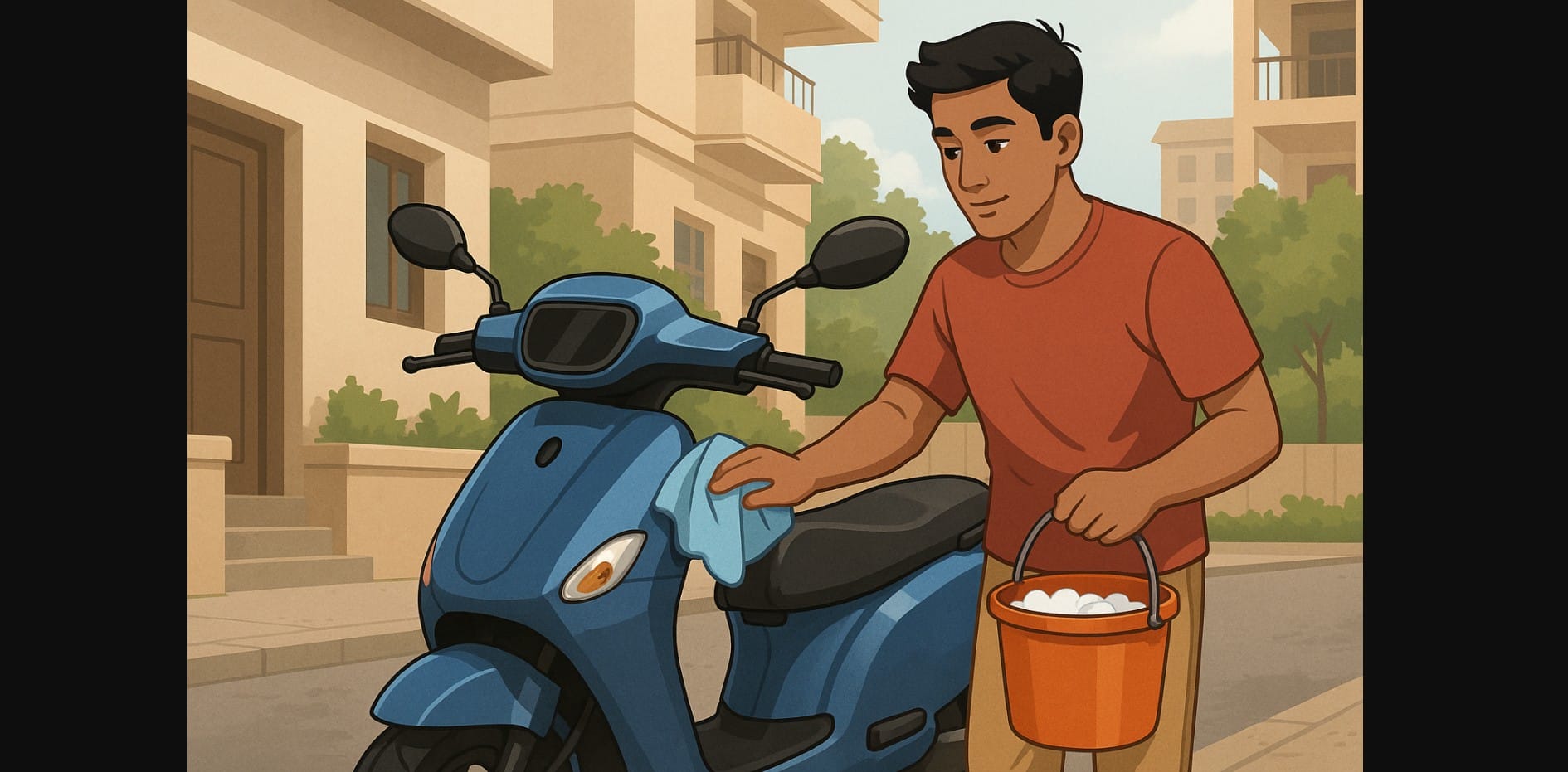
Why Washing an EV Scooter Is Not the Same as a Petrol Bike?
On the surface, electric scooters and petrol scooters look similar. But underneath, an EV hides complex electronics batteries, controllers, motor hubs, and sensitive wiring that can be damaged easily by careless washing.
In Indian conditions, dust, rain, and humidity demand regular cleaning but smart, careful cleaning makes all the difference between protecting and damaging your EV.
1. Where Most Riders Go Wrong While Cleaning Their EV Scooter
Using Pressure Jets Like Petrol Bikes
- Water jets force moisture into battery vents, controller casings, and underbody seals.
- Even scooters with IP67 ratings are not built for direct pressure jet blasts.
Spraying Water on Charging Ports and Motors
- Water in ports silently causes rust or shorts later.
- Motor hubs may get grit or water inside bearings if washed directly.
Washing Immediately After Rides
- Hot battery packs and controllers expand slightly sudden washing can push water into micro-openings not normally exposed.
Using Harsh Chemicals
- Strong detergents eat away paint, plastic seals, and corrode external metal parts weakening your EV’s defenses over time.
2. How to Clean Your Electric Scooter Without Risking Water Damage
Step 1: Preparation Before Washing
- Turn off ignition completely and remove key.
- Cover sensitive areas:
- Charging port (tape or soft cloth)
- Keyholes and open dashboards (plastic wrap or light taping)
- Let your scooter cool for 20-30 minutes after riding.
Step 2: Gentle Rinsing
- Use light water flow garden pipe, small bucket pours, no direct hard sprays.
- Pour water gently from top to bottom avoid splashing directly into ports or under the seat.
Step 3: Cleaning with Soft Tools
- Use a soft cloth or sponge dipped in mild soap water (not strong detergents).
- Focus cleaning on:
- Body panels
- Footboards
- Wheel covers and rims
- Floor mats
- Be especially gentle around joints, under the seat, and where electronic wiring runs.
Step 4: Quick and Thorough Drying
- Immediately wipe the entire scooter dry using a microfiber or cotton cloth.
- Focus especially on:
- Charging port
- Motor hub area
- Brake discs
- Underbody sections
Never leave your scooter wet and dripping trapped water speeds up rust and wiring damage.
5. How to Handle EV Scooter Sensitive Parts Like Charging Ports and Motors
| Part | Best Cleaning Practice |
|---|---|
| Charging Port | Never spray directly. Dry wipe only after rides. |
| Battery Compartment | Wipe plastic casing gently. Never pour water inside. |
| Motor Hub | Dry cloth wipe. No aggressive water splashing. |
| Brake Discs | Lightly dry wipe after washing to avoid rust films. |
| Handlebar Controls | Damp cloth wipe only. Avoid water seepage into buttons. |
6. Extra Cleaning Care You’ll Need in India’s Rains and Dust
After Dusty Rides
- Let mud dry slightly brushing dry mud off is better than washing fresh sticky mud.
- Pay attention to wheel hubs, side stand joints, and underbody wiring.
After Heavy Monsoon Rides
- Dry the scooter completely before charging.
- Inspect floorboards and seat joints for hidden puddles trapped water causes slow corrosion.
- After flood rides, check brake function lightly before going full speed again.
7. Gentle Washing, Smart Drying The Secret to a Long-Lasting EV Scooter
Electric scooters are designed to handle rain, dust, and Indian traffic but they aren’t designed for careless hosing, soaking, or chemical scrubbing.
Smart washing means:
- Longer life for batteries, motors, and controllers
- Fewer error codes triggered by trapped moisture
- A better-looking scooter for years boosting pride and resale value

