
Understanding Smartphone Taxation in India: Import Duties & GST Explained
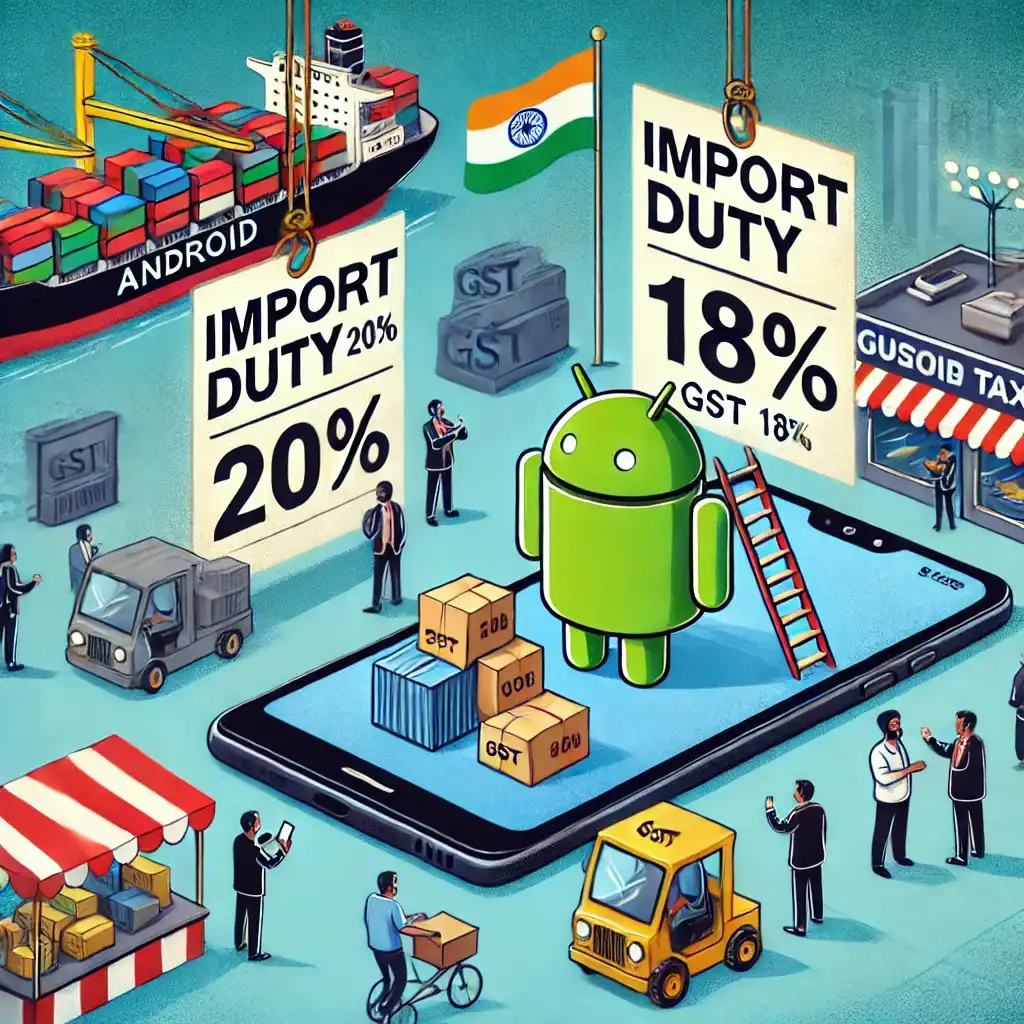
India is one of the largest smartphone markets in the world, with millions of devices sold every year. However, the final price you pay for an Android smartphone isn’t just determined by manufacturing costs or brand profit margins—it’s significantly impacted by import duties and Goods and Services Tax (GST).
While India is rapidly becoming a manufacturing hub under the “Make in India” initiative, many smartphone components (such as chipsets, OLED displays, and batteries) are still imported, making their pricing vulnerable to high import duties and fluctuating exchange rates. Additionally, GST on smartphones has remained at 18% since 2020, increasing the overall cost for consumers, especially in mid-range and flagship segments.
Import Duties on Android Smartphones in India
a. What Are Import Duties?
Import duties (or customs duties) are taxes imposed by the Indian government on goods imported from other countries. The purpose is to:
- Encourage local manufacturing (Make in India)
- Generate revenue for the government
- Protect domestic brands from foreign competition
Customs Website – https://www.cbic.gov.in/
b. Import Duties on Android Smartphones (2025)
| Category | Import Duty (Basic Customs Duty – BCD) | Applicable To |
|---|---|---|
| Fully Assembled Smartphones | 20% | Imported phones like iPhones, Google Pixel, or foreign-assembled Samsung models |
| Mobile Display Panels | 10% | OLED, AMOLED, and LCD screens |
| Mobile Battery Packs | 10% | Li-ion batteries for smartphones |
| PCB (Printed Circuit Board) Assemblies | 10% | The core electronic board inside a phone |
| Chipsets & Processors | Nil (0%) | No customs duty to encourage mobile production |
| Memory Modules (RAM, Storage, NAND flash) | Nil (0%) | Tax-free for phone assembly in India |
Key Observations:
- Phones that are fully imported (e.g., iPhones, Google Pixel, some Samsung models) face a 20% import duty.
- Local manufacturing benefits from zero duties on chipsets and storage but still incurs 10% duty on displays and batteries.
- Brands like Xiaomi, Realme, and OnePlus manufacture locally to avoid the 20% import duty, keeping prices competitive.
GST on Android Smartphones in India
a. What is GST?
The Goods and Services Tax (GST) is a value-added tax levied on the supply of goods and services in India. It applies to both imported and locally manufactured smartphones.
GST Website – https://cbic-gst.gov.in/
b. GST Rate on Smartphones
- Before March 2020: Smartphones were taxed at 12% GST.
- After April 1, 2020: The GST rate increased to 18%, making smartphones more expensive by 6% overnight.
c. How GST is Applied to Smartphone Pricing?
Example Calculation (Assuming Base Price = ₹30,000)
| Cost Component | Before March 2020 (12% GST) | After April 2020 (18% GST) |
|---|---|---|
| Base Price (Excluding Tax) | ₹30,000 | ₹30,000 |
| GST Applied | ₹3,600 (12%) | ₹5,400 (18%) |
| Final Price | ₹33,600 | ₹35,400 |
Impact: The 6% GST increase has directly affected smartphone affordability, particularly in the budget and mid-range segments.
How Import Duties and GST Together Affect Smartphone Pricing?
Import Duties + GST = Increased Retail Price
When a fully assembled smartphone is imported, it incurs:
- 20% Import Duty – Raises the base price
- 18% GST – Increases the final price paid by consumers
Example: Google Pixel 8 Pro (Imported Phone) Pricing Breakdown
| Component | Amount (in ₹) |
|---|---|
| Base Cost of Google Pixel 8 Pro | ₹60,000 |
| Import Duty (20%) | ₹12,000 |
| Subtotal (Before GST) | ₹72,000 |
| GST (18%) | ₹12,960 |
| Final Retail Price | ₹84,960 |
Example: Xiaomi 13 Pro (Locally Manufactured Phone) Pricing Breakdown
| Component | Amount (in ₹) |
|---|---|
| Base Cost of Xiaomi 13 Pro | ₹50,000 |
| No Import Duty (Manufactured in India) | ₹0 |
| Subtotal (Before GST) | ₹50,000 |
| GST (18%) | ₹9,000 |
| Final Retail Price | ₹59,000 |
Key Takeaways:
- Imported flagship smartphones (Google Pixel, iPhone, some Samsung models) are more expensive due to the 20% import duty.
- Locally manufactured smartphones (Xiaomi, Realme, Samsung India-made models) benefit from zero import duty, making them cheaper than imported phones.
- GST increases the final price of all smartphones, regardless of whether they are imported or locally made.
Strategies Used by Smartphone Brands to Minimize Tax Impact
a. Increasing Local Manufacturing (“Make in India”)
- Brands like Samsung, Xiaomi, Realme, and Oppo manufacture over 80% of their devices in India to avoid the 20% import duty.
- Apple started assembling iPhones in India, reducing prices for some models (e.g., iPhone 15 and iPhone SE).
b. Importing Components Separately & Assembling Locally
- Brands import displays, chipsets, and batteries separately (10% duty) instead of fully assembled phones (20% duty).
- This method helps brands save costs and keep smartphone prices competitive.
c. Adjusting Product Pricing & Margins
- Budget brands (Xiaomi, Realme) absorb some tax increases to keep prices stable.
- Flagship brands (Apple, Samsung) pass the costs to consumers, making premium devices even more expensive.
Summary: The True Impact of Import Duties & GST on Smartphones
- Import duties directly affect the price of fully assembled smartphones (e.g., iPhones and Google Pixel devices) as they attract a 20% customs duty, making them significantly more expensive than locally manufactured models.
- Smartphone brands reduce costs by manufacturing locally, but key components such as chipsets, batteries, and display panels still incur 10% import duties, leading to price adjustments.
- GST on smartphones remains at 18%, increasing the final price—even for devices manufactured in India. The GST increase from 12% to 18% in 2020 raised smartphone prices across all segments.
- Locally manufactured brands like Xiaomi, Realme, Samsung, and Vivo have an advantage as they avoid the 20% import duty, making their devices more competitively priced.
- Premium smartphones see the highest price hikes due to tax policies—imported models like the iPhone 16, Google Pixel 9, and Sony Xperia series face both import duties and GST, increasing costs significantly.
Consumers can save money by:
- Buying locally manufactured smartphones (Samsung, Xiaomi, Realme) instead of fully imported ones.
- Waiting for festive sales (Amazon, Flipkart) to take advantage of discounts.
- Using trade-in and exchange offers to reduce the impact of GST and import duties.
- Opting for previous-generation flagships instead of newly launched models that include recent tax adjustments.
Final Thought: If you’re planning to buy a smartphone in 2025, understanding how import duties and GST impact pricing can help you make an informed decision. Choosing locally assembled models, timing purchases during sales, and leveraging trade-in offers can help you get the best deal despite high taxes.

