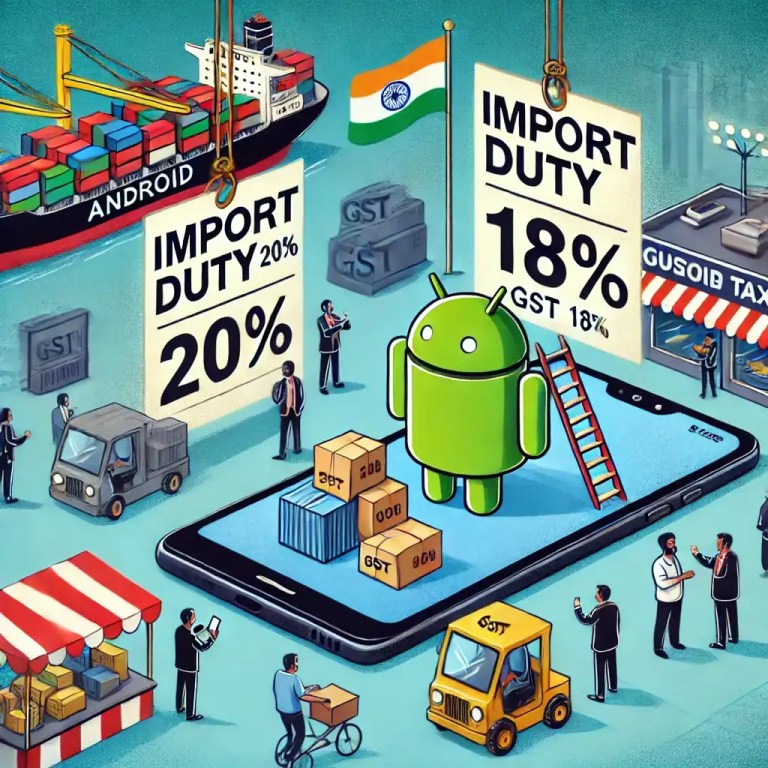
The Indian smartphone market is one of the fastest-growing in the world, but its pricing is influenced by multiple factors, one of the most significant being the fluctuation of the Indian rupee against the US dollar. While it may seem that every dip in the rupee leads to an immediate price hike, the reality is more complex.
Smartphone pricing is shaped by:
- Import costs – Essential components like processors, camera sensors, and OLED displays are sourced from global suppliers.
- Local manufacturing under “Make in India” – Reduces reliance on imports but doesn’t eliminate all costs.
- Market competition & brand strategies – Companies adjust margins, cut features, or offer discounts to maintain affordability.
- Inflation & consumer spending trends – Currency devaluation affects overall purchasing power and demand.
With the rupee weakening to record lows of ₹87 per USD in early 2025, consumers and manufacturers alike are adjusting to a shifting pricing landscape. In this article, we take a deep dive into how rupee fluctuations impact smartphone prices, the strategies brands use to counteract rising costs, and what Indian consumers can do to make smart purchasing decisions.
Flagship Smartphones: Premium Features at Premium Prices
Flagship smartphones represent the pinnacle of technology, offering cutting-edge features, superior build quality, and the latest innovations. In 2025, several flagship models have been introduced in the Indian market:
| Model | Launch Date | Price (INR) | Key Features |
|---|---|---|---|
| Samsung Galaxy S25 Ultra | January 2025 | ₹141,999 | Snapdragon 8 Elite, 6.9-inch QHD+ Dynamic AMOLED 2x, 200MP quad-camera setup, 5000mAh battery |
| OnePlus 13 | January 2025 | ₹69,998 | Snapdragon 8 Gen 3, 6.7-inch Fluid AMOLED, Hasselblad-tuned cameras, 5000mAh battery |
| iQOO 13 5G | January 2025 | ₹54,999 | Snapdragon 8 Gen 3, 6.78-inch AMOLED, 50MP triple-camera setup, 4700mAh battery |
| Vivo X200 Pro | January 2025 | ₹94,999 | MediaTek Dimensity 9300, 6.8-inch AMOLED, ZEISS optics, 5000mAh battery |
| Realme GT 7 Pro | January 2025 | ₹59,998 | Snapdragon 8 Gen 3, 6.7-inch Super AMOLED, 108MP primary camera, 5000mAh battery |
Pricing Trends and Factors
- Technological Advancements: The integration of advanced processors, high-refresh-rate displays, and superior camera systems contributes to the premium pricing of flagship models.
- Brand Positioning: Brands like Samsung and OnePlus position their flagship devices to cater to consumers seeking top-tier performance and are willing to invest in premium products.
- Economic Factors: While the Indian government has reduced import duties on smartphone components, leading to potential cost savings for manufacturers, these reductions may not immediately translate to lower consumer prices. Manufacturers might utilize the savings to enhance profit margins or invest in other areas.
Budget Smartphones: Affordability Meets Functionality
The budget smartphone segment remains crucial in India, addressing the needs of cost-conscious consumers without compromising essential features. In 2025, notable budget models include:
| Model | Launch Date | Price (INR) | Key Features |
|---|---|---|---|
| vivo T3x | April 2024 | ₹11,872 | Snapdragon 6 Gen 1, 6.72-inch FHD+ LCD, 50MP dual-camera, 6000mAh battery |
| CMF Phone 1 | July 2024 | ₹13,777 | MediaTek Dimensity 7300, 6.67-inch FHD+ Super AMOLED, 50MP dual-camera, 5000mAh battery |
| realme 14x | December 2024 | ₹13,929 | MediaTek Dimensity 6300, 6.67-inch HD+ IPS LCD, 50MP dual-camera, 6000mAh battery |
| Moto G45 5G | January 2025 | ₹10,710 | MediaTek Dimensity 700, 6.5-inch HD+ display, 48MP triple-camera, 5000mAh battery |
| POCO M7 Pro | February 2025 | ₹14,299 | Snapdragon 695, 6.6-inch FHD+ display, 64MP dual-camera, 5000mAh battery |
Pricing Trends and Factors
- Component Cost Reduction: Advancements in technology and mass production have led to decreased costs for components like processors and displays, enabling manufacturers to offer feature-rich devices at lower prices.
- Government Policies: The 2025 Union Budget’s exemption of customs duties on specific smartphone components aims to reduce production costs, potentially leading to more affordable devices for consumers.
- Market Competition: Intense competition among brands like Xiaomi, Realme, and Motorola fosters aggressive pricing strategies, benefiting consumers with more choices at competitive prices.
Comparative Insights
- Price Differential: Flagship smartphones are priced significantly higher, often exceeding ₹1,00,000, while budget smartphones remain below the ₹15,000 mark.
- Target Audience: Flagship devices cater to consumers seeking the latest technology and premium features, whereas budget smartphones appeal to those prioritizing essential functionalities and affordability.
- Feature Set: While flagships offer superior performance, advanced camera systems, and premium build quality, budget smartphones provide satisfactory performance for everyday tasks, often compromising on high-end features to maintain cost-effectiveness.
Indian Consumer Considerations
- Assessing Needs: Consumers should evaluate their requirements, determining whether high-end features justify the investment in a flagship device or if a budget smartphone suffices for daily use.
- Budget Constraints: Financial considerations play a crucial role; it’s essential to balance desired features with affordability.
- Value for Money: If you prioritize performance, longevity, and flagship features, investing in a premium smartphone can be justified, especially considering software updates and hardware durability over multiple years. However, if your usage is moderate (social media, calls, and light gaming), a budget smartphone can be a more cost-effective option.
- Buying Strategies:
- Wait for Sales: Flagship smartphones often see price drops during festive seasons or brand-specific launch events. For example, Amazon Great Indian Festival and Flipkart Big Billion Days offer significant discounts.
- Consider Older Flagships: Instead of spending on a newly launched high-end device, purchasing last year’s flagship at a discounted price can be a great strategy. Phones like the Samsung Galaxy S24 Ultra (2024) or OnePlus 12 Pro often receive ₹10,000–₹20,000 discounts after a new model launches.
- Explore Trade-in Offers: Brands like Apple, Samsung, OnePlus, and Xiaomi provide exchange programs, allowing consumers to get discounts by trading in older devices.
- Buy During Pre-Order Periods: Many brands bundle free accessories or extended warranty periods with pre-order purchases, making them a great deal.
Future Outlook: How Will Smartphone Prices Evolve in India?
As we move deeper into 2025 and beyond, several factors will continue influencing smartphone pricing trends in India:
a. Greater Localization of Production
- Government incentives under the “Make in India” scheme are driving more manufacturers to set up local production units.
- Companies like Apple, Samsung, and Xiaomi are increasing domestic production, reducing dependence on imports and thereby stabilizing prices.
- By 2026, over 80% of premium smartphones in India are expected to be assembled or manufactured locally, further reducing import-related price hikes.
b. Technological Advancements Driving Cost Reduction
- Chipset manufacturing costs are expected to decline as companies like MediaTek and Qualcomm introduce cost-efficient processors with better performance at a lower price.
- Display manufacturing is shifting to India, reducing reliance on imported OLED and AMOLED panels from South Korea and China.
- Battery and charging technology improvements will bring longer battery life at a lower cost, benefiting budget and mid-range smartphone users.
c. Premiumization of the Indian Market
- The average selling price (ASP) of smartphones in India is rising due to increasing consumer demand for premium features such as foldable displays, AI-powered cameras, and 5G connectivity.
- By 2026, the mid-range segment (₹30,000–₹50,000) is expected to grow, as consumers shift from budget to premium smartphones.
- Flagship adoption is increasing—Apple’s iPhones and Samsung Galaxy S series have seen a 40% YoY growth in India, proving that more Indians are investing in premium devices.
d. AI & Software Ecosystem Driving Premium Pricing
- Smartphones are increasingly relying on AI for optimization, including AI-driven photography, personalized recommendations, and battery management.
- Brands investing heavily in software ecosystems (e.g., Samsung’s One UI, Apple’s iOS, Google’s Pixel experience) will continue justifying premium pricing.
- Extended software support (5+ years of OS updates) is becoming a new standard, making premium devices more appealing over time.
Final Thoughts: Should You Buy a Flagship or Budget Smartphone in 2025?
Go for a Flagship Smartphone If:
- You want long-term value—flagships receive longer software updates (5+ years).
- You need the latest technology—high-end processors, best-in-class cameras, OLED screens, and AI-powered features.
- You use your phone for productivity or gaming—flagships offer better multitasking and top-tier gaming performance.
- You plan to use the phone for 3+ years—flagships hold resale value and last longer without performance drops.
Choose a Budget Smartphone If:
- You need a secondary or basic-use phone—for calls, social media, and everyday tasks.
- You upgrade frequently—if you change phones every 1–2 years, budget devices are cost-efficient.
- You don’t need high-end cameras or gaming performance—most budget models handle basic photography and media consumption well.
- You’re looking for the best price-to-performance ratio—mid-range processors like the Snapdragon 7 series or Dimensity 9300 offer great efficiency at a lower cost.
Summary: The Future of Smartphone Pricing in India Amidst Rupee Fluctuations
- Flagship smartphones experience the most impact from rupee depreciation due to reliance on high-end imported components like Snapdragon and MediaTek’s premium chipsets, Sony camera sensors, and OLED displays.
- Budget and mid-range smartphones remain relatively stable, as brands like Xiaomi, Realme, and Samsung rely on localized production and cost-cutting measures to offset rising costs.
- Local manufacturing under the “Make in India” initiative has softened price increases, but brands still depend on imported components, making pricing sensitive to currency fluctuations.
- Consumer buying strategies matter more than ever – festive sales, exchange offers, and pre-order deals are some of the best ways to get better pricing.
- Technology advancements are helping stabilize costs – battery life improvements, chipset optimizations, and more efficient production help counterbalance rising expenses over time.
Final Advice: If you’re looking to buy a smartphone in 2025, timing your purchase during discount seasons, leveraging trade-in offers, and choosing locally produced models can help you get the best value despite rupee fluctuations.