
Used Car Buying Checklist India – Inspect Smart and Avoid Mistakes
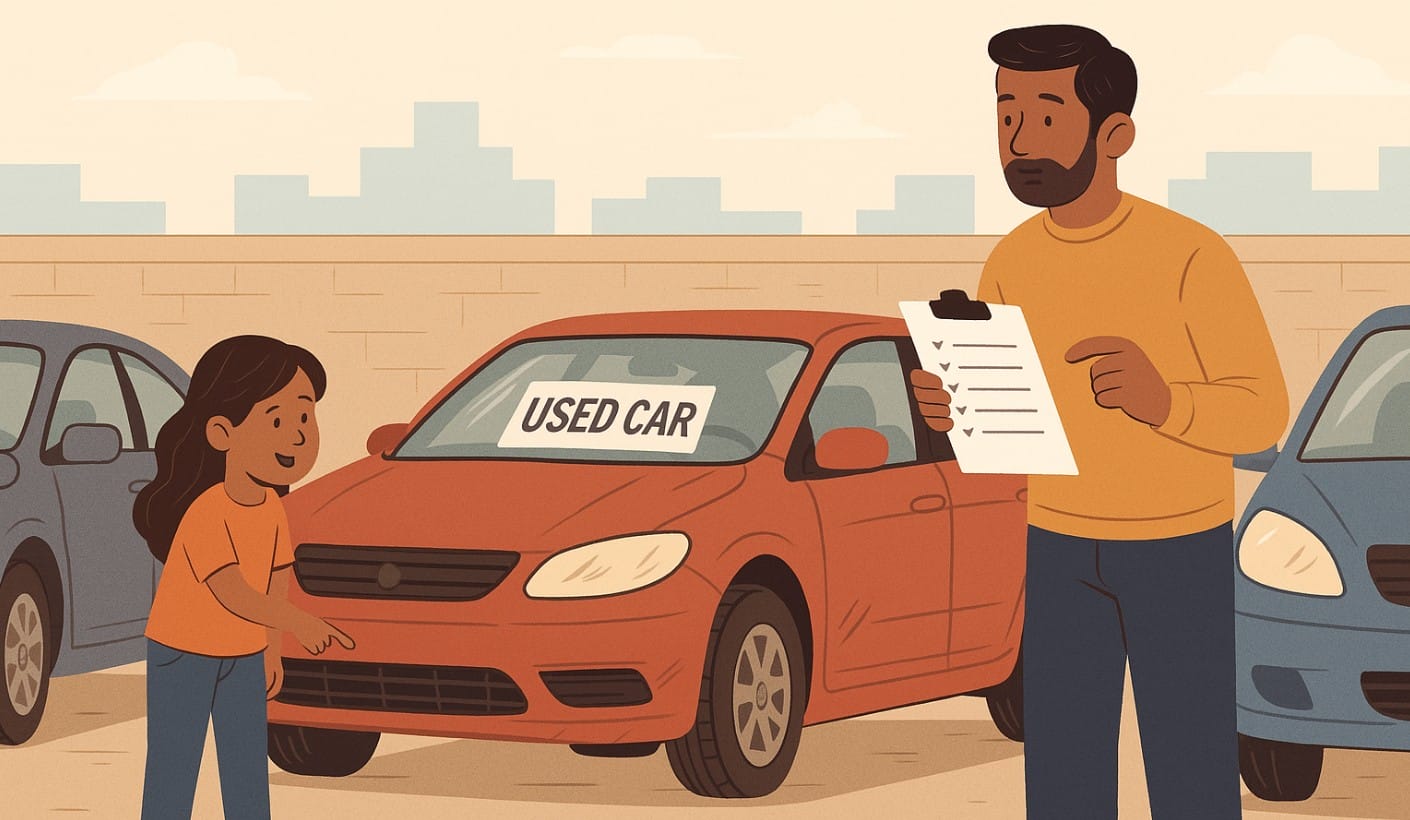
Don’t Just Trust the Shine – Buying a used car in India can be a smart way to save money but only if you know what you’re getting into. A freshly polished car may look perfect from the outside, but hidden problems could cost you thousands in repairs later.
This guide helps you inspect a used car step by step including the exterior, interior, engine, test drive, and documents so you can make a confident decision and avoid regret.
1. Start with the Used Car Exterior
The body tells you more than you think.
What to look for:
- Check the paint and panels – Any mismatched paint, wavy panels, or rust spots can indicate accident repairs.
- Inspect panel gaps – Uneven spacing between doors, bumpers, or bonnet could mean poor repair work.
- Examine the tyres – Uneven tyre wear could signal misaligned wheels or suspension problems.
- Inspect headlamps, taillights, and indicators – Cracks, condensation inside, or mismatched units hint at past damage.
Bring a flashlight and inspect the car during daylight for best visibility.
2. Check the Used Car Interior Carefully
A neat interior can show how the car was used or abused.
Key things to examine:
- Seats and upholstery – Look for tears, stains, or heavy wear (especially on the driver’s seat).
- Dashboard condition – Check for fading, cracks, or warping near the AC vents or windshield.
- Electronics – Test every button: windows, AC, infotainment, power mirrors, steering controls, horn.
- Odometer reading – A 10-year-old car with 25,000 km on the clock? Be cautious. Cross-check with service records.
A heavily used car with a low odometer may have been tampered with.
3. Pop the Hood – Inspect the Car Engine Bay
Even if you’re not a mechanic, basic checks can reveal a lot.
Things to check:
- Engine cleanliness – Slight dust is normal. Oil stains or wetness may point to leaks.
- Fluid levels – Check engine oil (pull the dipstick), brake fluid, coolant, and washer fluid.
- Belts and hoses – Look for cracks, frays, or swelling.
- Battery – Check the manufacturing date. Most batteries last 3-4 years.
Start the engine and listen. Knocking sounds or excessive vibration could signal serious wear.
4. Look Underneath the Used Car
Use a mirror or your phone torch for a quick underbody check.
Look for:
- Rust or corrosion – especially around the chassis or silencer
- Signs of welding or patchwork – could mean structural damage
- Leaks – from the engine, gearbox, or coolant system
Avoid cars with serious rust, especially near structural components or suspension mounts.
5. Take a Proper Test Drive
Never buy without driving the car even if it looks great.
What to feel and hear:
- Acceleration and gear shifting – Smooth, without jerks or delay
- Steering response – Car should drive straight without pulling
- Brakes – Should feel firm and stop straight without vibration
- Suspension – Listen for knocks, squeaks, or bounces on speed breakers
- AC performance – It should cool fast and not stall the engine
Drive in both city and open road conditions if possible.
6. Cross-Check All Used Car Documents
Documentation can protect you from future problems or prove you’re being scammed.
Must-haves:
- RC Book (Registration Certificate) – Check name, engine/chassis number, and ownership type (private, commercial, company)
- Insurance – See if it’s active. Also check claim history if available
- PUC Certificate – Ensure it’s valid
- Loan NOC (if applicable) – If the car was financed, make sure there’s a valid No Objection Certificate
- Service History – Ask for records, especially if it’s dealer-serviced
- RTO Forms – Make sure the seller provides Forms 29 & 30 for ownership transfer
Use the Vahan portal (vahan.parivahan.gov.in) to verify ownership and registration details.
7. Bonus Tips to Stay Safe
- Buy directly from the owner when possible – You’ll get more transparency
- Get a mechanic inspection – Especially for cars older than 5 years or over 75,000 km
- Avoid QR code payment scams – You don’t need to scan anything to receive money
- Meet in daylight in a public place for all in-person discussions or test drives
- Check resale value and parts availability if it’s an uncommon brand or discontinued model
If anything feels off walk away. There are always more cars in the market.
8. Walk Away If You are Not Satisfied
You don’t need to be a car expert to make a smart used car purchase in India. You just need a checklist, a keen eye, and a bit of patience. Don’t get swayed by polish and promises. Ask the right questions, verify every detail, and take your time.

