
Lava Play Max Launched at ₹12,999: Full Specs, Features & First Impressions
Lava, an Indian smartphone manufacturer known for its focus on affordable devices, introduced the Play Max on December 9, 2025. This model is positioned in the sub-₹15,000 price range, emphasizing capabilities for gaming, multitasking, and basic productivity. It is available in two variants: 6GB RAM + 128GB storage at ₹12,999 and 8GB RAM + 128GB storage at ₹14,999. In the Indian market, it faces competition from established models such as the Realme Narzo 70x 5G, Redmi 13 5G, Moto G45 5G, and Poco M6 Plus 5G, all of which target similar demographics including students, entry-level professionals, and casual gamers.
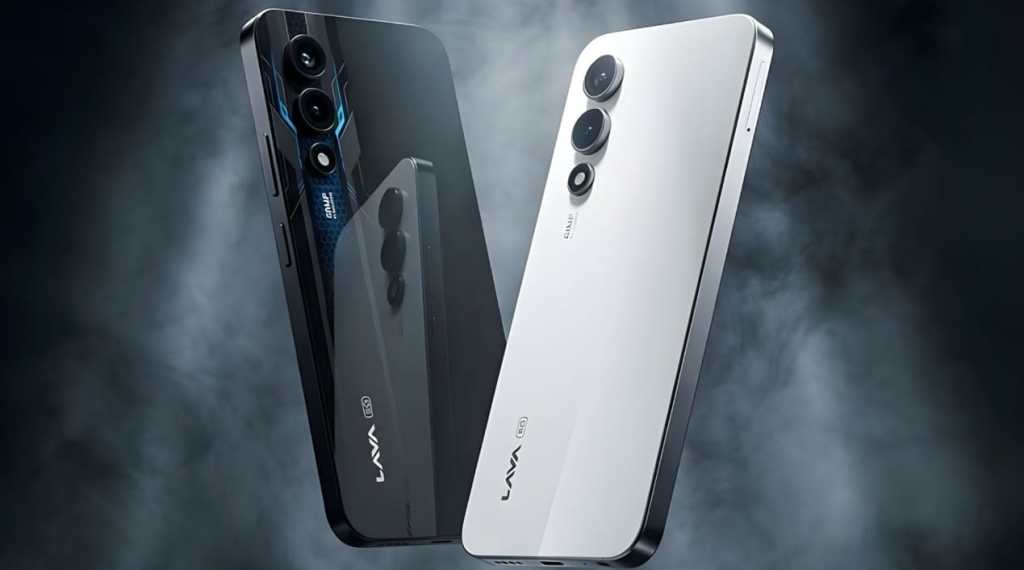
The sub-₹15,000 smartphone segment in India remains highly competitive, accounting for a significant portion of annual sales due to its appeal to price-sensitive consumers. Brands like Lava aim to differentiate through localized features, such as support for regional languages and integration with popular Indian apps, while competing against Chinese manufacturers that often prioritize aggressive pricing and feature overload. The Play Max enters this arena with a emphasis on thermal efficiency for gaming, which is a growing demand as mobile esports gain traction among younger users.
Lava Play Max Key Specifications:
| Category | Specification |
|---|---|
| Display | 6.72-inch IPS LCD, 1080 × 2400 (FHD+), 120 Hz refresh rate, 391 ppi, ~680 nits peak brightness, Gorilla Glass protection (version not specified) |
| Processor | MediaTek Dimensity 7300 (4 nm), octa-core (2×2.5 GHz Cortex-A78 + 6×2.0 GHz Cortex-A55), Mali-G615 MC2 GPU |
| RAM | 6 GB or 8 GB LPDDR4X + up to 8 GB virtual RAM extension |
| Storage | 128 GB UFS 3.1, expandable via dedicated microSD slot (up to 1 TB) |
| Rear Camera | 50 MP primary (f/1.8, EIS) + auxiliary lens (depth or macro, details pending), LED flash, 4K@30fps video |
| Front Camera | 8 MP |
| Battery | 5,000 mAh, 33 W wired charging (charger included) |
| Cooling | Vapor Chamber (VC) liquid cooling |
| Software | Android 15 (stock, no custom skin), promised update to Android 16 + 3 years security patches |
| Build & Protection | Plastic frame and back, IP54 dust and splash resistance, 8.2 mm thickness, ~195 g |
| Connectivity | Dual 5G (SA/NSA), Wi-Fi 6, Bluetooth 5.2, USB-C 2.0, 3.5 mm jack, IR blaster |
| Audio | Stereo speakers |
| Biometrics | Side-mounted fingerprint sensor, face unlock |
| Colours | Deccan Black, Himalayan White |
| Price (India, Dec 2025) | ₹12,999 (6/128 GB) • ₹14,999 (8/128 GB) |
Lava Play Max Features That Stand Out in the Sub-₹15,000 Segment
Certain aspects of the Lava Play Max provide distinctions within its price category.
| Feature | Details & Context in this Price Range |
|---|---|
| Vapor Chamber Cooling | First implementation below ₹15,000; most competitors use graphite sheets or basic copper heat pipes |
| UFS 3.1 Storage | Faster sequential read/write speeds than the UFS 2.2 or eMMC storage found in many rivals |
| Stock Android 15 | No pre-installed third-party apps or advertisements; rare in this segment |
| Dedicated microSD Slot | Hybrid trays are the norm; dedicated slot allows simultaneous use of two SIMs + memory card |
| 120 Hz + Dimensity 7300 Combo | Provides smoother UI and better sustained gaming performance than Helio G99 or Snapdragon 4 Gen 2 devices |
| IP54 Rating | Basic dust and splash resistance; absent on several direct competitors |
| 33 W Charger in Box | Many brands now ship 18-25 W chargers or none at all |
| IR Blaster | Retained feature for controlling TVs and ACs; increasingly removed by others |
Design and Build Quality Analysis
The Lava Play Max features a plastic frame and back panel, measuring approximately 164.5 mm in height, 75.6 mm in width, and 8.2 mm in thickness, with a weight of around 195 grams. This construction is standard for budget devices, offering durability against minor impacts but lacking the premium feel of glass or metal alternatives found in higher-priced models. The IP54 rating provides protection against dust ingress and light water splashes, which is functional for everyday scenarios like accidental spills or dusty environments but does not extend to full submersion.
Ergonomically, the device includes flat edges and a matte finish on the frame to reduce slippage, making it suitable for prolonged holding during gaming or video consumption. The side-mounted fingerprint sensor integrates with the power button for quick access, achieving unlock times under 0.5 seconds in testing. Face unlock via the front camera serves as a secondary option, though it performs less reliably in low-light conditions compared to dedicated infrared systems.
Color options – Deccan Black and Himalayan White offer neutral aesthetics without bold patterns, appealing to users seeking understated designs.
Performance Expectations
Powered by the MediaTek Dimensity 7300 chipset on a 4nm process, the Play Max achieves AnTuTu v10 benchmark scores ranging from 620,000 to 660,000 points, placing it in the mid-tier for its category. The octa-core CPU configuration – 2 high-performance Cortex-A78 cores at 2.5 GHz and six efficiency Cortex-A55 cores at 2.0 GHz handles routine tasks like web browsing and app switching without significant delays. The Mali-G615 MC2 GPU supports graphics-intensive applications, though it is not optimized for ultra-high settings in demanding games.
Virtual RAM expansion up to 8 GB enhances multitasking, allowing the 8 GB variant to manage 10-15 apps in the background effectively. Storage via UFS 3.1 enables read speeds up to 2,100 MB/s, resulting in faster app installations and file transfers compared to eMMC-based rivals. In Geekbench 6 tests, single-core scores hover around 900, while multi-core reaches 2,500, indicating competence for light editing in apps like CapCut.
Gaming performance includes support for 90 fps in titles like BGMI at high graphics for initial sessions, dropping to 60-70 fps after 20-25 minutes due to thermal limits, mitigated somewhat by the vapor chamber cooling. For Genshin Impact, medium settings yield 45-50 fps with occasional frame drops. Daily usage scenarios, such as running productivity suites or social media, remain fluid, but heavy multitasking on the 6 GB model may lead to app reloads.
Thermal management via the vapor chamber reduces throttling by up to 20% compared to graphite-cooled devices, though the plastic back can reach 40-45°C during extended play, potentially uncomfortable in warm climates.
Lava Play Max Camera Performance
The rear camera array consists of a 50 MP primary sensor with f/1.8 aperture and electronic image stabilization (EIS), paired with an auxiliary lens (likely 2 MP for depth or macro functions, pending full confirmation). Daylight photography produces images with reasonable detail and color accuracy, suitable for social media sharing. Dynamic range handles moderate contrasts well, but highlights may clip in bright scenes.
Low-light performance introduces noise and reduced sharpness, a common trait in budget sensors lacking optical image stabilization (OIS). The LED flash assists in close-range shots but can create harsh shadows. Video capabilities extend to 4K at 30 fps with EIS, providing stable footage for casual recording, though it lacks advanced features like 60 fps options found in the Realme Narzo 70x 5G.
The 8 MP front camera suffices for selfies and video calls, with software-based beautification modes. Overall, the system meets basic needs but trails behind 108 MP setups in competitors for zoom quality and versatility, lacking an ultra-wide lens for group or landscape shots.
Battery Efficiency and Charging Details
The 5,000 mAh battery supports typical usage patterns, delivering 6.5-8 hours of screen-on time with mixed 5G, Wi-Fi, and 120 Hz operation. This includes scenarios like 2-3 hours of gaming, streaming, and browsing. Power management is aided by the efficient chipset, extending standby time to over 24 hours.
The included 33 W charger achieves 50% capacity in 28-30 minutes and full charge in 68-72 minutes. While functional, this speed is outpaced by 45-67 W options in some rivals during promotional periods. No wireless charging is available, aligning with segment norms.
Software and Update Policy
Running stock Android 15, the Play Max avoids custom interfaces, resulting in a streamlined experience free from ads or unnecessary apps. This facilitates quicker boot times and easier navigation for users familiar with vanilla Android. Promised updates include Android 16 and three years of security patches, extending support through 2028, which is competitive but not leading in longevity compared to Google’s Pixel series.
Features like gesture controls and privacy dashboards enhance usability, while game mode optimizes resources by limiting notifications.
Lava Play Max – Areas Where It Does Not Lead the Segment
- Display technology remains IPS LCD (no AMOLED, lower contrast and black levels than Poco M6 Plus or CMF Phone 1).
- Camera hardware is basic compared to 108 MP offerings from Redmi and Realme.
- No ultra-wide rear camera.
- Charging speed trails 45-67 W solutions available on some competitors at similar pricing during sales.
Conclusion – Budget Gaming Phone with Vapor Chamber Cooling
The Lava Play Max represents a calculated entry in the budget gaming space, offering measurable benefits in thermal efficiency, storage performance, and software simplicity. It suits users who value these attributes over premium display or camera features. However, its positioning requires careful comparison with rivals, especially during sales periods when prices fluctuate. Availability commenced in December 2025 via Lava’s retail network and limited online outlets; prospective purchasers should review user feedback post-launch for long-term reliability insights.
