
Don’t Settle for Short Backup: Choose the Inverter Battery That Lasts
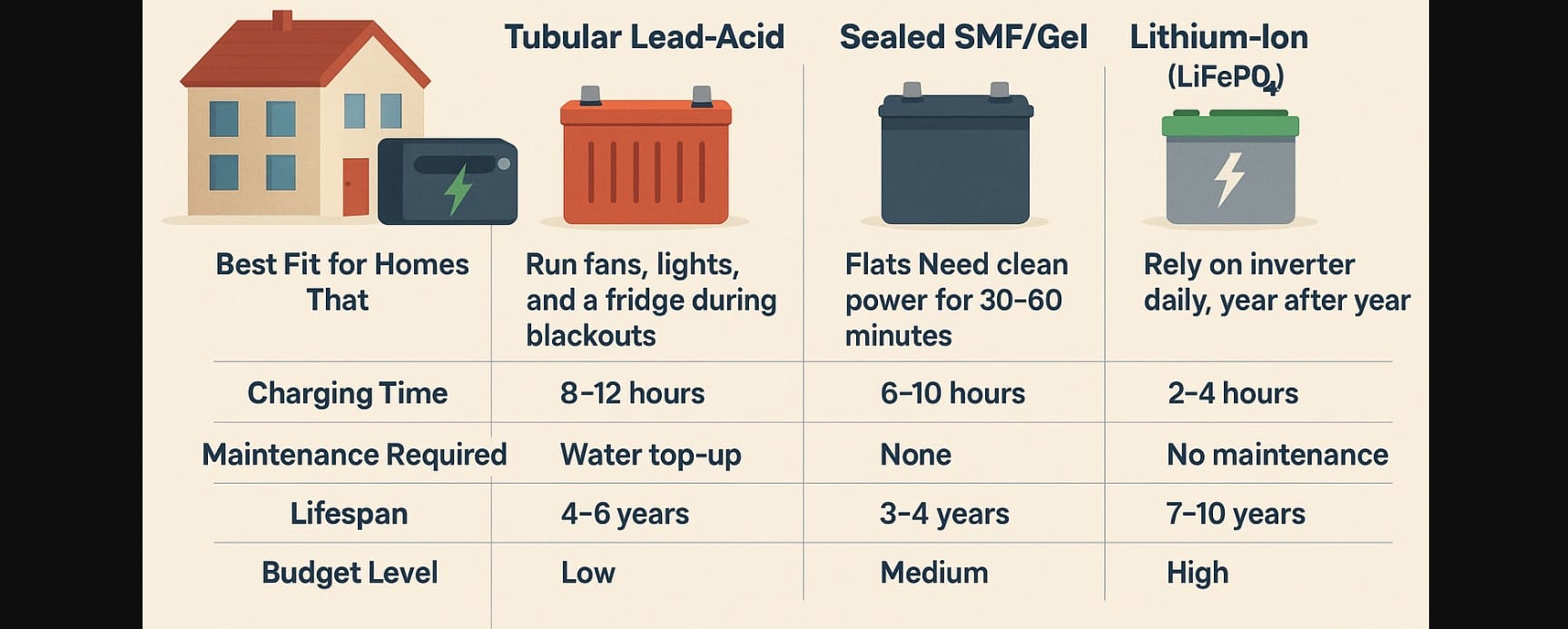
Inverters are common in Indian homes, providing essential backup during power outages, but many can’t effectively handle a 4-5 hour power cut. The problem is usually not the inverter itself; it’s the battery that often falls short.
Some batteries drain quickly under load, while others require regular maintenance, which many users neglect due to busy lifestyles. Picking the right battery is crucial, as it not only ensures a longer-lasting performance but also helps you stay cool and comfortable during outages.
1. Three Battery Options That Power Homes in India
| Type | Charging Time | Maintenance Required | Lifespan | Budget Level |
|---|---|---|---|---|
| Tubular Lead-Acid | 8-12 hours | Water top-up needed | 4-6 years | Low |
| Sealed SMF/Gel | 6-10 hours | None | 3-4 years | Medium |
| Lithium-Ion (LiFePO₄) | 2-4 hours | None | 7-10 years | High |
2. Best Fit for Homes That Run Fans, Lights, and Fridge During Blackouts
Tubular lead-acid batteries are the most common in Indian households because they handle higher loads like:
- Multiple ceiling fans
- LED lights in all rooms
- Medium-sized refrigerators
- Television or Wi-Fi router
You’ll find them in homes where cuts happen often or last longer than an hour. They’re easy to find and affordable, but they need regular water, good ventilation, and space.
3. Preferred for Flats That Need Clean Power for 30-60 Minutes
Sealed SMF (AGM or Gel) batteries are used where power cuts are short and loads are light.
These batteries usually run:
- 1-2 ceiling or pedestal fans
- A couple of lights
- One Wi-Fi router or phone charger
You’ll find them in 1BHK or compact 2BHK apartments where people work from home or need silent operation.
These batteries don’t leak, don’t need servicing, and fit under desks but they’re not meant for running big appliances or long hours.
4. Best Choice for Homes That Rely on Inverter Daily, Year After Year
Lithium-ion (LiFePO₄) batteries are gaining popularity in Indian cities, especially in homes that already use:
- Solar hybrid inverters
- High-efficiency appliances
- Backup for AC, fridge, washing machine
These batteries last longer than anything else, charge quickly, and take up very little space.
They’re ideal for people who:
- Don’t want to replace batteries every 3 years
- Don’t want to maintain or check anything
- Need fast recharging between daily power cuts
- Want to use them with solar panels
But they cost more, and they only work well if your inverter supports lithium batteries with a battery management system (BMS).
5. Match Your Battery to Your Home’s Backup Needs
| Household Profile | Best Battery Option |
|---|---|
| 3BHK with fridge, lights, fans | Tubular Lead-Acid (150Ah+) |
| 1BHK with only Wi-Fi and lighting needs | SMF/Gel (100Ah or smaller) |
| 2BHK with short daily power cuts | Lithium-Ion (80-120Ah) |
| Independent home with solar inverter | Lithium-Ion (solar-ready) |
| Rural home with unpredictable long cuts | Tubular (easy to refill and replace) |
6. Sudden Inverter Battery Failures Reasons
- Using a 100Ah battery for a 3-hour fridge and fan backup
- Skipping water refills in lead-acid batteries during peak summer
- Placing the battery in enclosed kitchen corners or near gas cylinders
- Connecting a lithium battery to an old inverter with no compatibility check
- Choosing only by price and ignoring long-term use patterns
7. Choose Better – Battery Deciding Factors
- How long are your power cuts each day or week?
- What do you actually run during blackouts just fans and lights or more?
- Is there someone who can maintain the battery regularly?
- Are you planning to move to solar or want faster charging in future?
- Do you have room for a big lead-acid battery or want a compact setup?
8. Match your battery to your usage, and budget
One neighbor’s battery can last 6 years, while another might only last 18 months. The difference comes from choosing the right type for the right use.
- If you want clean backup with no noise or leaks, lithium is worth the money.
- If you want proven performance at a budget, tubular still works just take care of it.
- If you just want the Wi-Fi and light to stay on for 45 minutes, sealed gel batteries get it done.

